

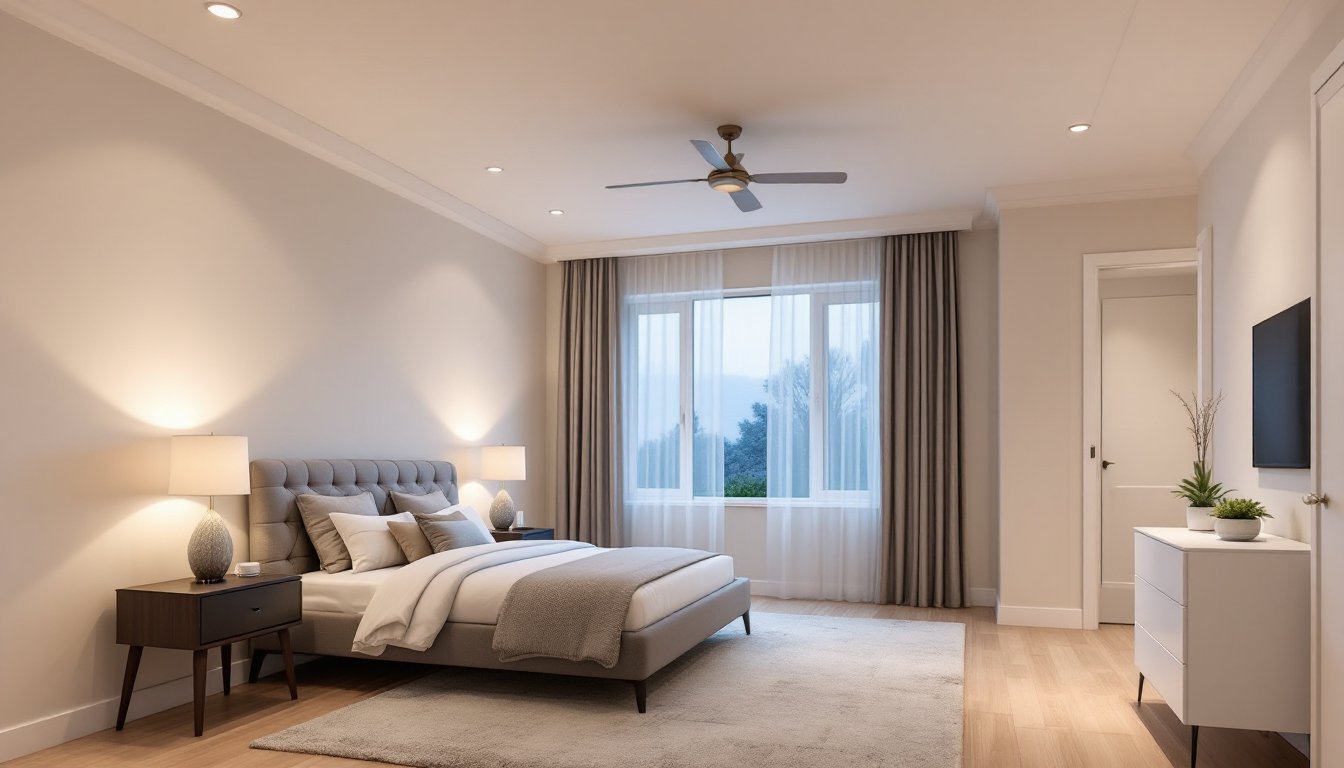
Recessed lighting transforms a bedroom from a basic sleeping space into a properly lit sanctuary. Unlike bulky fixtures that collect dust or limit ceiling fan placement, recessed lights sit flush with the ceiling, providing clean lines and adjustable illumination exactly where it’s needed. Whether someone’s renovating an older home or finishing new construction, understanding spacing, bulb selection, and dimming options makes the difference between harsh overhead glare and a bedroom that actually feels comfortable at every hour. This guide walks through the planning, product choices, and installation considerations that lead to a professional-looking recessed lighting setup, without the guesswork or expensive mistakes.
Table of Contents
ToggleKey Takeaways
- Bedroom recessed lighting provides clean ceiling lines and even light distribution, making it ideal for spaces with standard 8-foot ceilings or ceiling fans that require a low-profile fixture.
- Plan for one recessed light per 25–30 square feet of floor space with 10–20 lumens per square foot; a 12×14-foot bedroom typically needs 5–7 fixtures for comfortable ambient lighting.
- Choose warm white LED bulbs (2700K–3000K) with a CRI of 90 or higher and avoid placing fixtures directly over the bed to prevent glare and promote relaxation.
- Install dimmable LED-compatible dimmer switches that support smooth dimming to 10% or lower, and consider smart controls to adjust brightness for different times of day or activities.
- Use IC-rated (Insulation Contact) housings to safely contact insulation, map the ceiling cavity before cutting to avoid joists and HVAC ducts, and verify all electrical work meets NEC standards and local codes.
- Map your fixture layout on paper or painter’s tape before cutting holes, positioning lights around the perimeter or in a grid pattern with 4–6 feet spacing to eliminate dark corners and shadows.
Why Recessed Lighting Works Perfectly for Bedrooms
Bedrooms demand versatile lighting that handles morning routines, late-night reading, and everything between, and recessed fixtures deliver that flexibility without compromising ceiling height or style.
Low-profile design means no fixtures hanging down into the space. That’s critical in rooms with standard 8-foot ceilings or ceiling fans. Recessed cans typically require only 4–6 inches of clearance above the ceiling, and remodel housings work in spaces with as little as 3 inches.
Unlike a single ceiling fixture that creates a central hotspot and dark corners, recessed lights distribute illumination evenly across the room. Positioning fixtures around the perimeter or in a grid eliminates shadows in closets, seating areas, and dressing zones.
Recessed lighting also layers seamlessly with other sources. Task lighting at a vanity, accent lights on artwork, or bedside lamps all work together when recessed fixtures provide the ambient base. Dimming capability, standard with LED retrofits and most new installs, lets users dial brightness down for relaxation or up for tasks like folding laundry or selecting clothes.
Finally, recessed fixtures integrate cleanly with smart home systems. Most LED retrofit kits and new IC-rated housings support dimmer switches, and many accept smart bulbs or modules that tie into voice control and automation routines.
How Many Recessed Lights Do You Need in a Bedroom?
The formula isn’t one-size-fits-all, but a practical rule keeps bedrooms from feeling like operating rooms or caves.
Start with room dimensions. For general ambient lighting, aim for one recessed light per 25–30 square feet of floor space. A 12×14-foot bedroom (168 square feet) typically needs 5–7 fixtures. Larger master suites may require 8–10, especially if the layout includes alcoves, walk-in closets, or sitting areas.
Next, consider lumens per square foot. Bedrooms benefit from 10–20 lumens per square foot for comfortable ambient light. Lower wattage works for relaxation-focused spaces: higher output suits multi-use rooms where someone reads, works, or gets dressed. A 150-square-foot bedroom needs roughly 1,500–3,000 total lumens. If each fixture uses a 650-lumen LED, that’s 3–5 lights.
Ceiling height also matters. Standard 8-foot ceilings handle 4-inch or 5-inch housings spaced closer together. Vaulted or 10+ foot ceilings may need 6-inch cans with higher lumen output to throw light effectively to the floor.
Don’t forget task zones. If there’s a vanity, reading nook, or desk area, add dedicated fixtures beyond the ambient count. Closets deeper than 3 feet should have their own recessed light, separate from the bedroom grid.
Always check local codes. Some jurisdictions require minimum foot-candle levels in sleeping areas, though bedroom lighting isn’t as strictly regulated as kitchens or bathrooms.
Best Recessed Lighting Layout for Bedrooms
Even spacing matters, but so does placement relative to furniture and traffic patterns.
Perimeter layout positions fixtures 24–36 inches from walls, spaced 4–6 feet apart along the room’s edges. This creates a soft wash of light that prevents dark corners and makes the room feel larger. It’s ideal for bedrooms with ceiling fans or large central fixtures that already occupy the middle of the ceiling.
Grid layout distributes lights evenly across the entire ceiling in rows. Spacing between fixtures should equal roughly half the distance from the fixture to the floor. For an 8-foot ceiling, that’s about 4 feet between cans. Grids work well in larger master suites or rooms without a central feature to avoid.
Avoid placing recessed lights directly over the bed, unless someone enjoys waking up to a spotlight in their face. Instead, flank the bed with fixtures positioned over nightstands or slightly toward the foot of the bed. If reading in bed is a priority, wall-mounted sconces or adjustable task lights handle that better than overhead cans.
Task-focused placement means adding lights where activities happen: over dressers, inside closets (with the door open), or above seating areas. Use narrower beam angles (35–40 degrees) for task zones and wider floods (80–110 degrees) for general ambient lighting.
Map the layout on paper or painter’s tape on the ceiling before cutting any holes. Live with the tape for a day or two to see how fixture positions align with furniture. Adjustments are free at this stage, after drywall’s cut, not so much.
Choosing the Right Bulb Type and Color Temperature
Not all LEDs are created equal, and color temperature makes or breaks bedroom ambiance.
Start with bulb type. LED is the only practical choice in 2026, long lifespan (15,000–50,000 hours), low heat output, and compatibility with dimmers. Avoid old-school incandescent or halogen retrofits: they’re inefficient and generate excessive heat in enclosed housings. CFL bulbs are obsolete and most don’t dim smoothly.
Next, choose between integrated LED fixtures and retrofit trim kits. Integrated units have the LED built into the housing, no separate bulb. They’re efficient and slim but require replacing the entire fixture when the LED eventually fails. Retrofit kits install into existing recessed housings and use replaceable LED modules or standard bulbs, offering flexibility at the cost of a slightly bulkier profile.
Color temperature is measured in Kelvin (K) and dramatically affects mood. Bedrooms benefit from 2700K–3000K (warm white), which mimics incandescent bulbs and promotes relaxation. Anything above 3500K skews blue-white and feels clinical, fine for a garage, harsh for a sleeping space. Some fixtures offer tunable white LEDs that shift from 2700K to 5000K via app or remote, letting users adjust warmth throughout the day.
CRI (Color Rendering Index) should be 90 or higher if accurate color matters, helpful when selecting clothes or applying makeup. Budget LEDs often sit around CRI 80, which can make colors look flat.
Check the fixture’s beam angle. Narrow spots (25–40 degrees) concentrate light for tasks. Wide floods (80–120 degrees) spread ambient light evenly. Most bedrooms work best with 60–90 degree beams for general lighting.
Dimming and Smart Controls for Bedroom Lighting
A bedroom without dimmable lights is a missed opportunity. Dimming extends bulb life, saves energy, and makes the space usable at any hour.
Most LED recessed lights dim, but not all dim smoothly or to the same minimum level. Look for fixtures or bulbs labeled “dimmable to 10% or lower.” Cheap LEDs often flicker or cut out above 20%, which isn’t dim enough for late-night navigation or winding down before sleep.
Pair LEDs with a compatible LED dimmer switch. Old-style incandescent dimmers can cause buzzing, flickering, or shortened LED lifespan. Modern LED dimmers (like Lutron’s Diva or Caseta lines) use different circuitry designed for low-wattage loads. Expect to spend $20–60 per switch depending on features.
Smart dimmers and switches add app control, voice commands, and scheduling. Lutron Caseta, Leviton Decora Smart, and TP-Link Kasa switches integrate with Alexa, Google Assistant, and Apple HomeKit. Set lights to gradually brighten in the morning or dim automatically at bedtime. Some systems support scenes, “Movie Night” drops lights to 20%, while “Getting Dressed” ramps to 80%.
Alternatively, use smart bulbs in standard recessed fixtures. Philips Hue, LIFX, and others offer tunable white or color-changing LEDs controlled via app, even without replacing switches. The tradeoff: smart bulbs require the wall switch to stay on, which can confuse guests or kids.
If wiring multiple bedroom zones, say, perimeter lights separate from closet lights, install separate dimmers for each circuit. That granularity prevents needing to light the whole room just to grab a shirt from the closet.
Installation Tips and Common Mistakes to Avoid
DIYers comfortable with basic electrical work can install recessed lighting, but there are critical steps that separate clean installs from code violations or fire hazards.
Check for IC rating if fixtures will contact insulation. IC-rated (Insulation Contact) housings dissipate heat safely when buried in blown-in or batt insulation. Non-IC cans require 3 inches of clearance on all sides, difficult to maintain and often ignored, creating a fire risk. In 2026, most new construction requires IC-rated fixtures in insulated ceilings.
Use remodel housings for existing ceilings. These clip directly to the drywall without requiring access from above. New construction housings nail to joists before drywall goes up, wrong application means cutting bigger holes or climbing into the attic.
Map the ceiling cavity before cutting. Locate joists with a stud finder and mark them. Recessed cans typically need 6–8 inches of clearance and must fit between joists (usually 16 or 24 inches on center). Hitting a joist, HVAC duct, or plumbing line mid-install is a headache that requires patching and re-cutting.
Wire according to NEC standards. Most recessed lights connect via 14/2 or 12/2 Romex on a 15- or 20-amp circuit. Use proper wire nuts or push-in connectors, secure cables with clamps, and ensure the circuit isn’t overloaded. Bedrooms often share circuits with outlets, check total load. If uncomfortable with electrical work, hire a licensed electrician. Permit requirements vary by jurisdiction: some areas require permits and inspections for new circuits or additional fixtures.
Safety gear is non-negotiable: safety glasses when cutting drywall, gloves when handling sharp housing edges, and a voltage tester before touching any wires. Turn off the breaker and verify it’s dead, don’t trust the switch alone.
Common mistakes include spacing lights too far apart (leaving dark zones), installing fixtures directly over the bed, forgetting to account for insulation clearance, and pairing non-dimmable LEDs with dimmer switches. Measure twice, cut once, and test everything before patching and painting.
Conclusion
Bedroom recessed lighting delivers clean aesthetics, flexible control, and even illumination when planned and installed correctly. By calculating the right number of fixtures, mapping a layout that avoids glare over the bed, choosing warm LED bulbs, and adding dimmers or smart controls, anyone can create a lighting setup that works from sunrise to midnight. Take time during the planning phase, proper spacing, IC-rated housings, and code-compliant wiring prevent headaches and safety issues down the road.