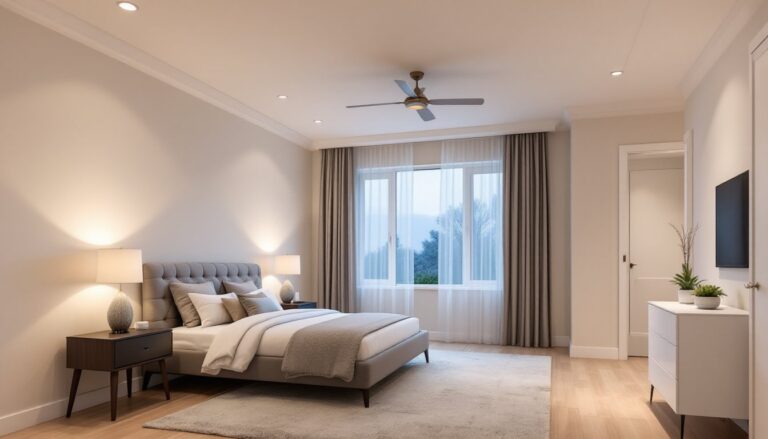

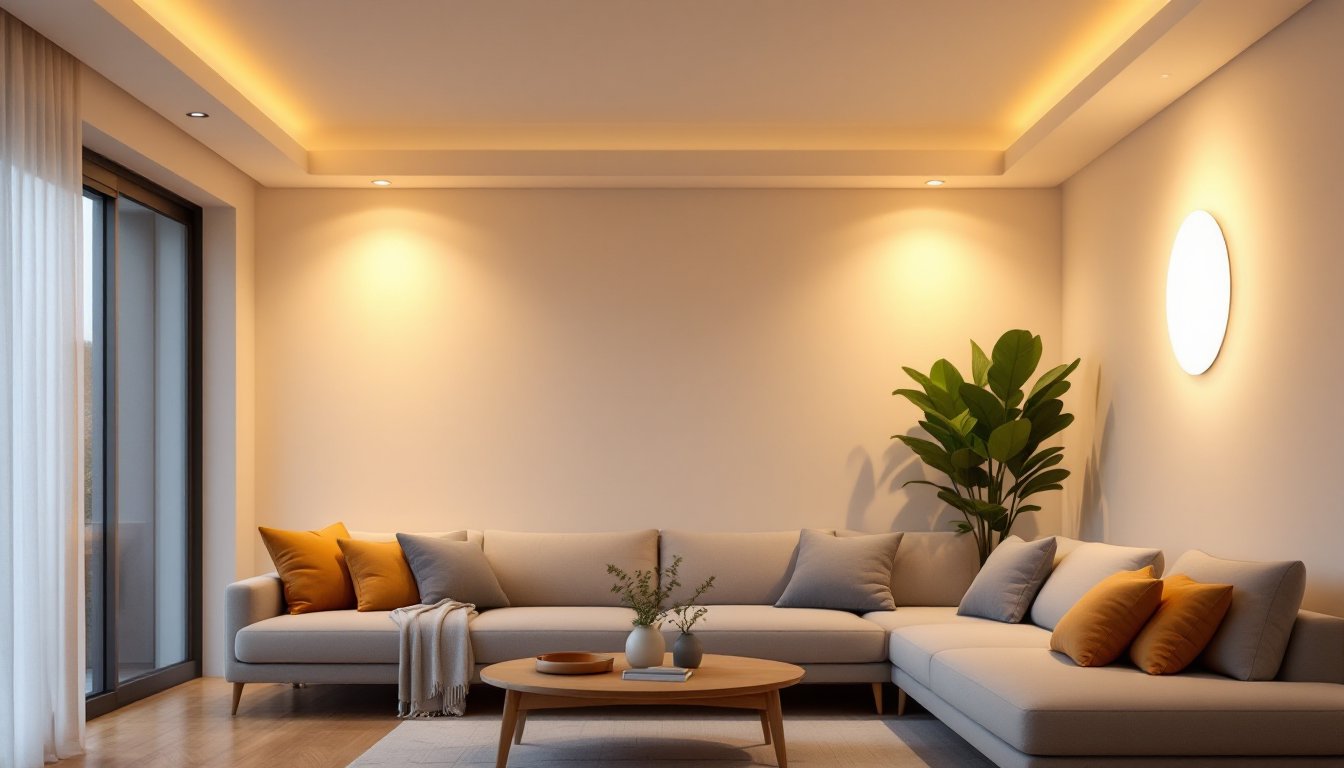
Recessed lighting has become a go-to for clean, modern home design, and the shift to LED technology has made it more practical than ever. The phrase “85W LED recessed lighting” doesn’t mean the fixture uses 85 watts, it refers to an LED that produces light equivalent to an older 85-watt incandescent, while drawing only a fraction of that power. The 2700K designation describes the color temperature, landing in the warm, inviting range that works well in living spaces where comfort matters. This guide walks through what these fixtures offer, where they shine, and how to choose and install them without the guesswork.
Table of Contents
ToggleKey Takeaways
- 85W LED recessed lighting draws only 12-18 actual watts while producing 1,100-1,400 lumens equivalent to traditional incandescent bulbs, cutting energy costs by 80-85 percent.
- The 2700K color temperature delivers warm, inviting light that flatters skin tones and complements residential spaces like living rooms, bedrooms, and dining areas without the harsh glare of cooler alternatives.
- LED fixtures last 25,000-50,000 hours (15-30 years), generate significantly less heat, and reduce maintenance burden compared to incandescent bulbs that require frequent replacement.
- Choose IC-rated or airtight housings, dimmable LED modules compatible with your switch type, and trim styles suited to your room—baffle for glare reduction, reflector for maximum output, or eyeball for directional control.
- Proper installation requires ceiling layout confirmation, correct housing clearance (6-8 inches diameter, 6-10 inches height), adherence to NEC guidelines, and often a local permit to ensure code compliance and safety.
What Is 85W LED Recessed Lighting and Why Choose 2700K?
An 85W equivalent LED recessed light typically draws between 12 to 18 actual watts while producing the same brightness, measured in lumens, as an old-school 85-watt incandescent bulb. That translates to roughly 1,100 to 1,400 lumens, depending on the fixture design and LED quality. This makes them suitable for task lighting, ambient coverage in medium to large rooms, or accent work where a softer wash of light is preferred.
The 2700K color temperature sits at the warm end of the spectrum. Measured in Kelvin, it mimics the glow of traditional incandescent bulbs, think cozy, slightly amber-toned light rather than the stark white of a hospital corridor. For comparison, 3000K edges into neutral white, 3500K to 4000K reads as cool white, and 5000K and above gets into daylight territory.
Homeowners often choose 2700K for spaces where ambiance matters more than clinical visibility: living rooms, bedrooms, dining areas, and hallways. It flatters skin tones, softens wood grain, and doesn’t create the harsh shadows or blue cast that higher Kelvin ratings can produce. If the goal is a space that feels inviting rather than institutional, 2700K is the starting point.
Key Benefits of 85W LED Recessed Lights in 2700K
Energy Efficiency and Cost Savings
The jump from incandescent to LED means a drop in power consumption by about 80 to 85 percent. An 85W-equivalent LED drawing 15 watts costs roughly $1.80 per year to run at typical residential rates (based on three hours daily use at $0.13/kWh), compared to over $10 annually for the incandescent it replaces. Multiply that across a whole home’s worth of recessed fixtures, and the savings add up quickly.
LED lifespan ranges from 25,000 to 50,000 hours depending on the manufacturer and usage. That’s between 15 and 30 years at moderate use, far longer than the 1,000 to 2,000 hours an incandescent manages. Fewer ladder trips to swap bulbs, fewer disposal runs, and lower maintenance over the long haul.
LEDs also generate less heat. Incandescent bulbs waste most of their energy as thermal output, which can stress ceiling insulation and add load to air conditioning in warm months. LED fixtures stay cooler, reducing fire risk in enclosed cans and keeping attic temperatures more manageable.
Warm Ambiance and Color Temperature Advantages
2700K lighting creates a relaxed, residential feel that higher color temperatures can’t replicate. It works particularly well in spaces where people gather, unwind, or sleep. The warm cast reduces eye strain during evening hours and helps signal the body’s natural wind-down response, unlike the blue-rich light from cooler LEDs that can interfere with circadian rhythms.
This color temperature complements warm-toned interiors, wood cabinetry, earth-toned paint, brass or copper fixtures, and doesn’t clash with existing incandescent or halogen sources if the home is in transition. For spaces with a lot of natural wood, brick, or warm textiles, 2700K enhances rather than fights the palette.
That said, it’s not ideal everywhere. Workshops, garages, and task-heavy kitchens often benefit from cooler, higher-lumen sources that improve visibility and color accuracy. Knowing where warm light serves the function, and where it doesn’t, keeps a lighting plan from feeling one-note.
Best Rooms and Applications for 2700K Recessed Lighting
Living rooms and family rooms are natural fits. Recessed lights in 2700K can provide general illumination without the glare of overhead fixtures, and they layer well with table lamps, sconces, or dimmable track lighting. Spacing them about 4 to 6 feet apart in a grid or along the perimeter creates even coverage without hot spots.
Bedrooms benefit from the softer glow, especially when fixtures are dimmable. Positioning recessed lights away from directly over the bed, angled toward closets, dressing areas, or artwork, avoids harsh downlight on faces and keeps the space calming. Pairing them with a dimmer switch allows for flexibility between reading light and ambient mood.
Dining rooms pair well with 2700K when the goal is intimacy and warmth. A centered chandelier or pendant often takes the lead here, but recessed perimeter lighting at 2700K fills in shadows and highlights architectural details without competing for attention.
Hallways and entryways need enough light for safe navigation, but not the cold brightness of a commercial space. An 85W-equivalent LED in 2700K every 6 to 8 feet keeps the path visible while maintaining a welcoming tone. In homes with artwork or wainscoting, angled or eyeball-style recessed trims let homeowners highlight features without adding more fixtures.
Kitchens are trickier. Task zones, countertops, islands, sinks, often call for 3000K to 4000K for better color rendering when cooking or cleaning. But if the kitchen doubles as a social hub, using 2700K in the dining nook or seating area creates a warmer transition. Mixing color temperatures within one space requires intention: zones should feel distinct rather than accidental.
Avoid 2700K in laundry rooms, workshops, or garages where task precision matters. The warm cast can make it harder to distinguish colors, spot stains, or line up cuts. Higher Kelvin ratings and higher lumen output serve those spaces better.
How to Choose the Right 85W LED Recessed Fixtures
Start with the housing type. New construction housings (also called “new work” or “rough-in” cans) install before drywall goes up, nailing directly to ceiling joists. Remodel housings (“old work”) fit into finished ceilings using clips that grip the drywall. If the project involves an existing ceiling, remodel housings are the only practical option without tearing down material.
Check whether the location requires IC-rated (insulation contact) or airtight housings. IC-rated fixtures can touch blown-in or batt insulation without overheating. Airtight models prevent conditioned air from escaping into the attic, which matters in climate zones where energy codes or comfort are priorities. Many current LED housings are both IC-rated and airtight, but it’s worth confirming on the spec sheet.
Trim style affects both appearance and light distribution. Baffle trims reduce glare with ribbed interiors, reflector trims maximize output with smooth finishes, and eyeball or gimbal trims allow directional aiming. Choosing the wrong trim can make an 85W-equivalent fixture feel dim or harsh, even if the lumen output is correct.
Look for dimmable LED modules if the room will use a dimmer switch. Not all LEDs dim smoothly: cheaper models may flicker, buzz, or cut out at low levels. Compatibility with the dimmer type (standard TRIAC, ELV, or 0-10V for commercial) should be listed in the product specs. If in doubt, buying from a brand that lists compatible dimmers saves return trips.
Beam angle matters for how the light spreads. Narrow spots (less than 40 degrees) work for accent lighting, while wide floods (90 degrees or more) suit general illumination. Most 85W-equivalent recessed LEDs fall in the 60- to 80-degree range, which covers ambient needs in residential spaces.
Finally, check the CRI (Color Rendering Index). A rating of 80 or higher is standard: 90 or above is considered excellent and worth seeking out for spaces where color accuracy matters, art walls, dressing areas, or anywhere fine finishes are on display.
Installation Tips and Considerations
Before cutting any holes, confirm the ceiling layout. Use a stud finder to locate joists, and mark them with painter’s tape. Recessed housings need clearance, typically 6 to 8 inches in diameter and 6 to 10 inches in height above the ceiling, depending on the model. Measure twice, especially in homes with shallow attic space or HVAC ducts that could interfere.
Turn off power at the breaker, not just the wall switch, and verify it’s off with a non-contact voltage tester. Even if the existing wiring looks simple, hidden junction boxes or shared circuits can create surprises. If the circuit is already heavily loaded, adding multiple LED fixtures is usually safe given their low draw, but it’s worth checking the panel to avoid nuisance trips.
For remodel installs, mark the cutout using the template provided (or trace the housing if no template exists). A drywall saw or oscillating multi-tool cuts cleanly without excessive vibration. After the hole is cut, fish the electrical cable into the housing’s junction box. Most LED recessed lights use standard 14/2 or 12/2 NM-B cable (depending on circuit amperage), with black to black, white to white, and ground to ground or the green screw.
Follow NEC (National Electrical Code) guidelines for junction box access. If the housing doesn’t have an integral box, a separate one must be accessible and not buried in insulation. In many jurisdictions, installing new recessed lighting requires a permit and inspection, especially if it involves running new circuits or working in fire-rated ceilings. Check local code before starting.
Once wired, secure the housing (clips for remodel, nails or screws for new construction) and restore power to test. Install the trim last, most snap or twist into place. If the light feels too bright or too focused, swapping the trim or adding a diffuser lens can adjust the output without replacing the fixture.
Safety reminders: Wear safety glasses when cutting overhead. Use a dust mask if working in an attic with loose insulation. If the project involves more than a couple of fixtures or unfamiliar wiring, hiring a licensed electrician isn’t overkill, it’s smart risk management and ensures code compliance.