

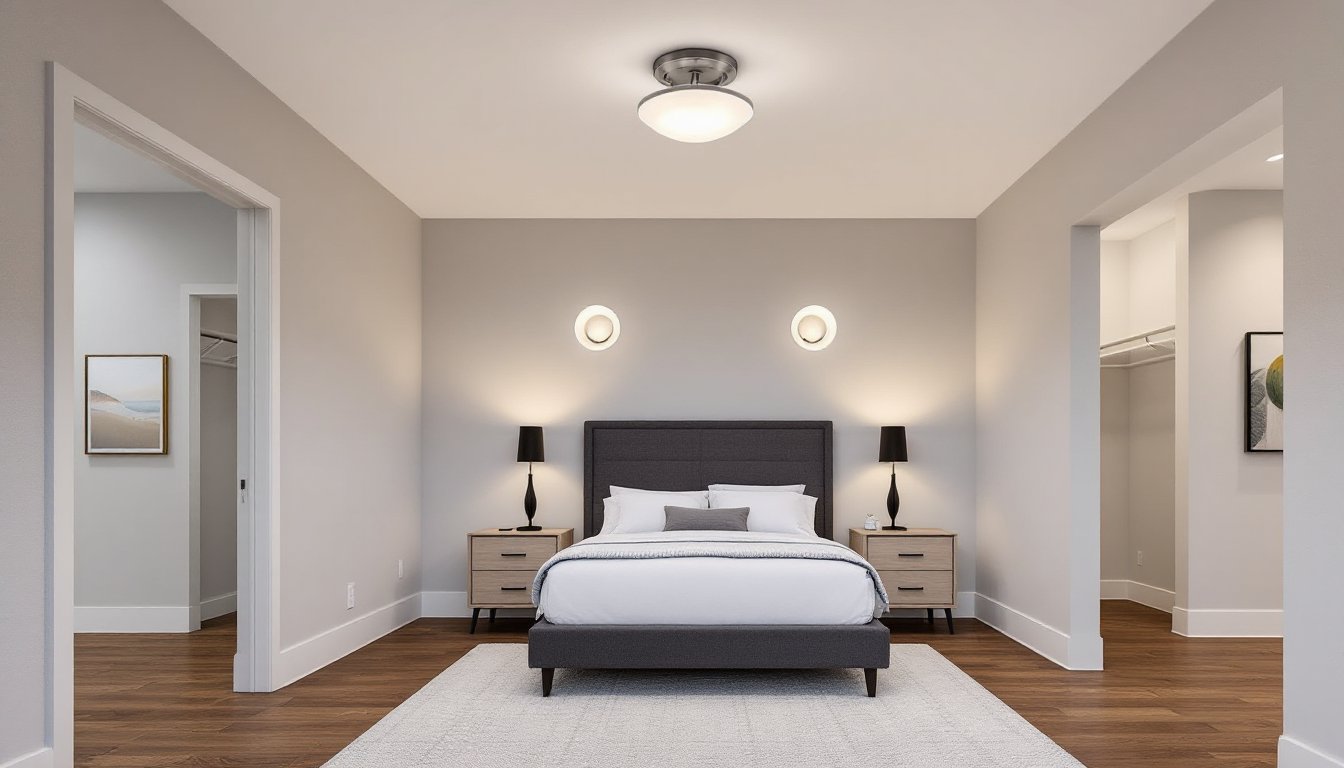
Most homeowners spend thousands on bedding and furniture, then slap a builder-grade dome light on the ceiling and call it done. That’s a mistake. Bedroom ceiling lighting affects everything from sleep quality to how well someone can pick out a navy sock from a black one at 6 a.m. The right fixture, installed correctly and paired with smart controls, transforms a bedroom from a place to crash into a space that actually supports how people live. This guide walks through fixture types, electrical considerations, brightness specs, and layering strategies that work in real homes, not just design magazines.
Table of Contents
ToggleKey Takeaways
- Bedroom ceiling lighting directly affects sleep quality and functionality, with warm, dimmable fixtures supporting healthier circadian rhythms by suppressing blue-spectrum light that disrupts melatonin production.
- Flush mount and semi-flush fixtures work best for 8-foot or lower ceilings, while rooms larger than 150 square feet benefit from multiple smaller fixtures or supplemental recessed lighting to avoid dark corners.
- Aim for 10 to 20 lumens per square foot of bedroom ceiling lighting, with warm white bulbs in the 2700K to 3000K range and a Color Rendering Index (CRI) of 90 or higher for accurate color representation.
- Layered bedroom lighting combines ambient (overhead ceiling fixtures), task (bedside reading lights and closet illumination), and accent sources with independent controls to create flexibility without requiring occupants to leave bed to turn lights off.
- Upgrading bedroom ceiling lighting is one of the most affordable ways to improve resale value and room functionality, as installation typically uses existing electrical boxes without requiring new wiring through finished walls.
Why Bedroom Ceiling Lighting Matters More Than You Think
Ceiling fixtures serve as the primary light source in most bedrooms, but they also dictate the room’s functionality after dark. Poor overhead lighting creates harsh shadows that make reading in bed uncomfortable and morning routines frustrating. It also forces homeowners to rely on table lamps alone, which rarely provide enough illumination for tasks like folding laundry or searching a closet.
From a building perspective, ceiling lighting is often the easiest place to add a dimmer or smart control, since the electrical box is already in place. That means upgrading a fixture can deliver immediate comfort improvements without running new wire through finished walls, a project that typically requires drywall repair and paint touch-ups.
Sleep research consistently shows that blue-spectrum light suppresses melatonin production, which is why many sleep experts recommend warm, dimmable ceiling fixtures in bedrooms. Installing a fixture with adjustable color temperature (measured in Kelvin) gives occupants control over their circadian rhythm without adding a separate system. That’s not lifestyle fluff, it’s practical physiology.
Finally, ceiling lighting affects resale value. Home inspectors and buyers notice outdated or poorly installed fixtures. A bedroom with a flickering dome light or a dangling wire where a chandelier used to hang sends a signal that maintenance has been deferred. Replacing or upgrading ceiling fixtures is one of the least expensive ways to make a bedroom feel finished.
Popular Types of Bedroom Ceiling Lights
Flush Mount and Semi-Flush Fixtures
Flush mounts sit tight against the ceiling, making them ideal for rooms with 8-foot ceilings or less. They’re the workhorse of bedroom lighting: simple to install, widely available, and compatible with most dimmer switches. A standard flush mount measures 12 to 16 inches in diameter and houses two to three 60-watt-equivalent LED bulbs, providing enough ambient light for a 12×12-foot bedroom.
Semi-flush mounts drop 4 to 8 inches below the ceiling plane, adding a bit of visual interest without eating into headroom. They work well in bedrooms with tray ceilings or in homes where the existing electrical box sits slightly recessed. Both styles install on a standard round or octagonal pancake box rated for up to 50 pounds, check the box before hanging anything heavier.
One common mistake: using a flush mount as the sole light source in a large master bedroom. A single 14-inch fixture can’t evenly light a 15×18-foot space, leaving dark corners and uneven illumination. In rooms larger than 150 square feet, consider two smaller flush mounts or supplement with recessed cans.
Chandeliers and Statement Pieces
Chandeliers aren’t just for dining rooms. A bedroom chandelier adds height and drama, especially in homes with 9-foot or taller ceilings. The bottom of the fixture should hang at least 7 feet above the floor to meet IRC clearance guidelines and avoid head strikes.
Installation requires a ceiling box rated for the fixture’s weight, most decorative chandeliers weigh between 15 and 40 pounds. If the existing box is a lightweight plastic retrofit model, it’ll need to be swapped for a metal fan-rated box anchored to a joist or blocking. That’s a 30-minute job if there’s attic access above: otherwise, it may require cutting into the ceiling.
Mini chandeliers (under 20 inches wide) work well in guest bedrooms or spaces where a full-size fixture would overwhelm the room. Pair them with a dimmer to dial down the brightness at night, many decorative bulbs, especially vintage Edison styles, put out more light than expected and can feel harsh at full power.
Recessed Lighting and Track Systems
Recessed cans (also called downlights or pot lights) offer clean, unobtrusive lighting that works in modern and traditional bedrooms alike. A typical layout uses four to six 4-inch or 6-inch cans spaced evenly across the ceiling. New construction makes installation straightforward, but retrofit cans designed for remodel work allow homeowners to add recessed lighting without tearing out drywall.
Pay attention to the trim style: baffle trims reduce glare, while reflector trims maximize light output. Adjustable “eyeball” trims let users aim light toward a wall or artwork, though they’re less common in bedrooms than in kitchens or galleries.
Track lighting has come a long way from the brass monstrosities of the 1980s. Modern low-profile tracks with adjustable LED heads provide flexible task lighting, especially in multipurpose bedrooms that double as home offices or workout spaces. Track systems require a standard electrical box at the power feed point and surface-mount along the ceiling, no need to fish wire through walls.
How to Choose the Right Brightness and Color Temperature
Brightness is measured in lumens, not watts. For ambient bedroom lighting, aim for 10 to 20 lumens per square foot. A 120-square-foot bedroom needs roughly 1,200 to 2,400 lumens total from all ceiling fixtures combined. An 800-lumen bulb is equivalent to an old 60-watt incandescent: a 1,600-lumen bulb matches a 100-watt.
Most bedroom activities, reading, getting dressed, winding down, benefit from light on the lower end of that range, especially when paired with a dimmer. Overlighting a bedroom is uncomfortable and makes it harder to relax before sleep. If the room feels too bright at night, don’t just leave lights off, install a dimmer or swap in lower-lumen bulbs.
Color temperature is measured in Kelvin (K). Bulbs in the 2700K to 3000K range produce warm white light similar to incandescent bulbs and are ideal for bedrooms. 3500K to 4100K (neutral white) works if the bedroom doubles as a home office, but it can feel sterile at night. Anything above 5000K leans blue and is best avoided in sleep spaces.
Many smart bulbs and fixtures now offer tunable color temperature, allowing users to shift from warm white in the evening to cooler, more alerting light in the morning. This technology has dropped in price significantly since 2023, with quality tunable fixtures available for under $80. Just make sure the fixture is compatible with the user’s preferred smart home platform, Zigbee, Z-Wave, Wi-Fi, or Thread, before buying.
Don’t forget the Color Rendering Index (CRI). Bulbs with a CRI of 90 or higher render colors accurately, which matters when choosing clothes or applying makeup. Cheap LED bulbs often have a CRI below 80, making everything look washed out. It’s worth spending an extra few dollars per bulb for better color quality.
Layering Your Bedroom Lighting for Maximum Functionality
Relying solely on ceiling lighting leaves a bedroom flat and one-dimensional. Layered lighting combines ambient (overhead), task (reading or closet lights), and accent (wall sconces or LED strips) sources to create a flexible, functional space.
Start with the ceiling fixture as the ambient layer. It should provide general illumination without glare or harsh shadows. Add dimmers so the light level can shift from full brightness during cleaning or organizing to a soft glow at bedtime.
Task lighting handles specific activities. Bedside reading lights, whether mounted on the wall, clipped to the headboard, or built into the nightstand, should deliver at least 300 to 500 lumens directly onto the page without spilling light across the room and disturbing a sleeping partner. Adjustable swing-arm sconces work well here and free up nightstand space.
Closet lighting is often overlooked but makes a tangible difference. A battery-powered LED strip or a motion-activated puck light inside the closet prevents the need to flip on the overhead fixture just to grab a shirt. If the closet has a door, code requires a fully enclosed fixture to prevent fire hazards from contact with stored items.
Accent lighting, such as cove lighting behind a headboard or LED strips along crown molding, adds depth and visual interest. It’s optional, but in bedrooms with vaulted ceilings or architectural features, accent lighting can highlight what would otherwise disappear in shadow.
Control all three layers independently. A smart switch or a multi-gang dimmer panel near the door gives users the ability to turn on just the accent lights for a subtle nighttime pathway, or bring up all layers when vacuuming or changing sheets. Scenes programmed into a smart home hub (“Goodnight,” “Wake Up,” “Reading”) make layered lighting intuitive rather than fussy.
One final note: bedroom lighting should never require someone to get out of bed to turn it off. Whether that means installing a three-way switch near the bed, adding a remote control, or using smart bulbs with voice control, make sure the system works with how people actually live.