
In apartments and compact homes, shoes quickly become a floor-sprawling mess that eats up precious square footage. A family of three can easily own 20+ pairs, and without a plan, they’ll migrate from entryways to bedrooms, creating clutter and wasting space that could be used for actual living. Smart shoe storage isn’t about buying more furniture, it’s about leveraging vertical real estate, hidden zones, and multi-functional builds to keep footwear organized without sacrificing floor area. The right approach transforms dead space into functional storage, keeping shoes accessible while maintaining clean sightlines and walkways.
Table of Contents
ToggleKey Takeaways
- Vertical shoe storage solutions, such as wall-mounted racks and over-door organizers, maximize limited floor space by using wall height instead of room width to keep compact homes organized and clutter-free.
- Shoe storage matters in small spaces because it protects footwear investment, contains dirt near entry points, and frees up valuable square footage—a well-placed rack can house 15 pairs in the footprint of a single boot.
- Multi-functional furniture like storage benches, ottoman cubes, and toe-kick drawers hide shoes while serving dual purposes, making them ideal for apartments where every square foot counts.
- Before implementing shoe storage solutions, measure total shoe pairs, account for seasonal rotation (winter boots need 12–14 inches of depth), and verify wall and clearance dimensions to ensure the right fit.
- Renters should prioritize non-permanent shoe storage options like freestanding racks and over-door organizers, while homeowners can invest in wall-mounted and built-in solutions for better aesthetics and durability.
- DIY and budget-friendly alternatives like PVC pipe cubbies, repurposed crates, and pegboard walls deliver customizable, affordable shoe organization without requiring expensive materials or advanced carpentry skills.
Why Smart Shoe Storage Matters in Compact Living
Shoes are bulky, oddly shaped, and multiply faster than most people expect. In a 300-square-foot studio or a narrow entryway, leaving them on the floor creates tripping hazards and makes spaces feel chaotic. Poor storage also shortens shoe lifespan, piled boots crush sneakers, and dirt transfers between pairs.
Effective shoe storage does three things: it protects the investment (leather and suede need airflow), keeps dirt contained near entry points, and frees up floor space for furniture or foot traffic. In small spaces, every square foot counts. A well-placed vertical rack or under-stair cubby can house 15 pairs in the footprint of a single pair of boots.
Before buying or building, count total pairs per household member and plan for seasonal rotation. Winter boots take more depth (12–14 inches) than summer sandals (6–8 inches). Measure shoe dimensions and available wall, closet, or under-furniture clearance before committing to a solution.
Vertical Storage Solutions That Save Floor Space
When floor space is tight, the answer is almost always upward. Vertical storage uses wall height instead of room width, leaving floors clear for movement and furniture.
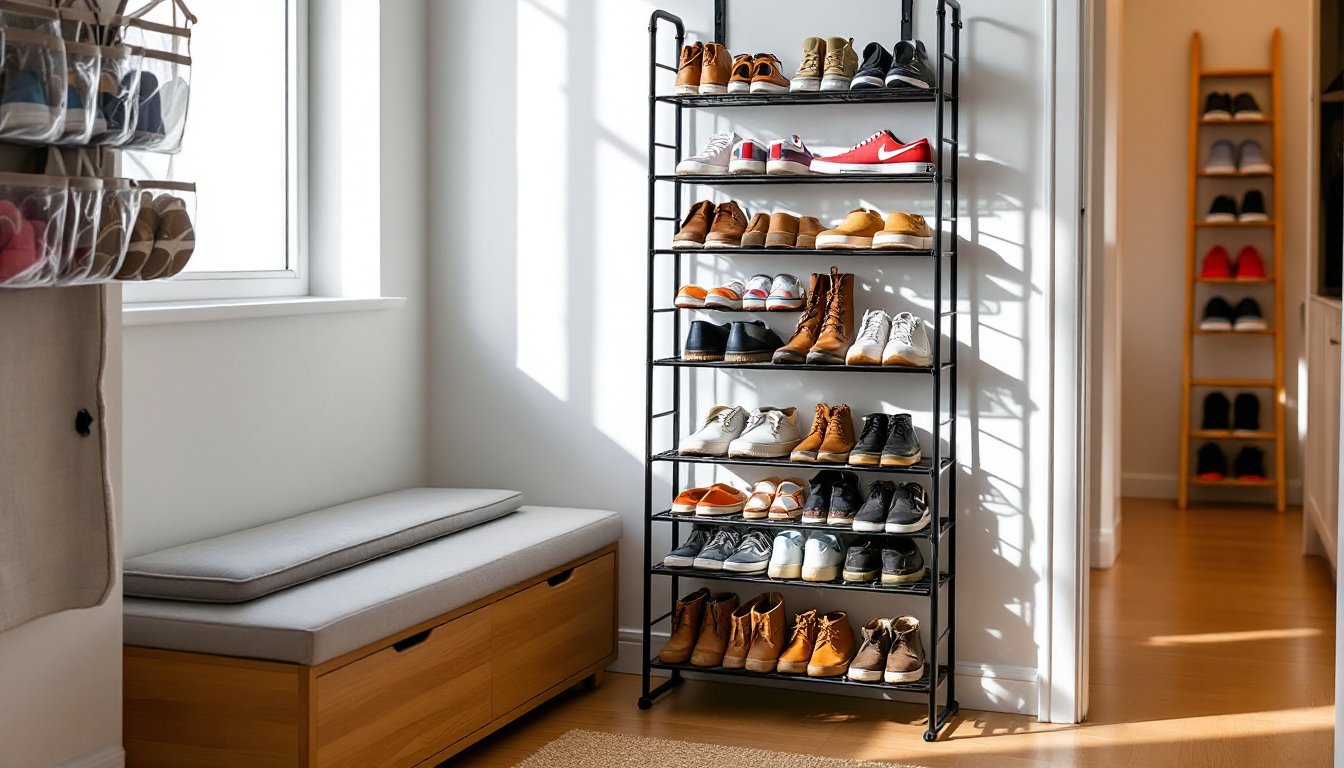
Over-the-door shoe organizers with clear vinyl pockets hold 12–24 pairs and install without tools. They work on standard 1⅜-inch solid-core doors and keep daily-wear shoes visible and accessible. Mount the organizer on the back of a bedroom or closet door for instant access without drilling.
Wall-mounted shoe racks made from metal or wood can be stacked in tiers. Install them with #8 screws into wall studs for load-bearing stability, shoes add up quickly, and drywall anchors alone won’t support 30+ pounds over time. Space shelves 6–8 inches apart for flats and sneakers, 10–12 inches for boots.
Tall narrow cabinets with angled shelves or pull-down racks fit in 12-inch-wide gaps beside refrigerators or in hallway corners. IKEA’s HEMNES and similar units are 7 inches deep, perfect for tight entryways. These keep shoes out of sight while using minimal floor real estate.
Ladder-style racks lean against walls and need no mounting. They’re portable, hold 8–12 pairs depending on rung count, and can be repositioned as needs change. Look for rubberized feet to protect flooring.
Hidden and Multi-Functional Shoe Storage Ideas
The best small-space storage does double duty or disappears entirely. Furniture that hides shoes while serving another purpose maximizes utility without adding clutter.
Storage benches with lift-top seats or pull-out drawers work in entryways and mudrooms. A 36-inch bench can hold 6–8 pairs underneath while providing a place to sit and tie shoes. Choose solid wood or ¾-inch plywood construction for durability, particle board sags under weight and moisture.
Ottoman storage cubes tuck beside sofas or at the foot of beds. Upholstered versions blend into living spaces, and stackable plastic cubes offer modular flexibility. Each 13-inch cube fits 2–3 pairs of adult shoes.
Toe-kick drawers installed beneath kitchen cabinets or bathroom vanities use the recessed 4-inch space at floor level. These shallow drawers are perfect for sandals and kids’ shoes. Installation requires basic carpentry, cut a drawer box from ½-inch plywood, add soft-close undermount slides, and attach a matching toe-kick panel.
Staircase storage is gold in small homes. If stairs have open risers or accessible sides, custom cubbies or pull-out drawers can be built into the dead space beneath each tread. This requires cutting into finished walls and possibly modifying structural members, so consult local building codes and consider hiring a carpenter if load-bearing elements are involved.
Under-Bed and Closet Door Storage Hacks
Under-bed space is consistently underutilized. Most bed frames sit 12–16 inches off the floor, enough clearance for shallow storage containers or custom-built drawers.
Rolling plastic bins with lids keep off-season shoes dust-free and accessible. Measure bed clearance first, some platform beds offer only 6–8 inches, limiting options to soft-sided bags. Label bins by season or shoe type for quick retrieval.
DIY under-bed drawers on casters can be built from 1×6 pine boards and ¼-inch plywood bottoms. Add 2-inch swivel casters rated for at least 50 pounds per set. Finish with water-based polyurethane to protect against moisture from mopping. A single drawer measuring 24 × 36 inches holds 10–12 pairs.
Closet door real estate is often wasted. Beyond fabric organizers, consider wire baskets mounted with screws into the door’s solid-core interior. Space them vertically to hold sneakers, gym shoes, or kids’ footwear. Use 1¼-inch screws that penetrate the door core without poking through the opposite side, standard interior doors are 1⅜ inches thick.
Tension rods installed horizontally near closet floors create instant heeled-shoe storage. Slide heels onto the rod by the arch. Two rods spaced 10 inches apart can hold 8–10 pairs in a 24-inch closet width. This only works for shoes with defined heels: flats and sneakers will slide off.
DIY and Budget-Friendly Shoe Organization Tips
Custom storage doesn’t require expensive materials or advanced skills. Repurposed materials and simple builds often outperform off-the-shelf solutions in tight spaces.
PVC pipe cubbies cut into 4-inch diameter sections and mounted horizontally on plywood create individual shoe slots. Glue pipes together with PVC cement, then screw the assembly to a wall or inside a closet. Each pipe holds one shoe: arrange them in a honeycomb pattern for visual interest. Paint with spray primer and acrylic topcoat for a finished look.
Wooden crate stacks from craft stores or salvaged produce crates make rustic, customizable storage. Sand rough edges, apply wood stain or paint, and stack them on their sides. Secure stacks with L-brackets to prevent tipping. Each crate holds 2–4 pairs depending on size.
Pegboard walls offer ultimate flexibility. Mount a ¼-inch pegboard panel on 1×2 furring strips to create space for hooks and pegs. Use pegboard hooks and small baskets to customize storage as shoe collections change. This approach works well in mudrooms or garage entryways.
Repurposed bookshelves turned on their sides become low-profile shoe racks. A standard 31-inch tall bookshelf laid horizontally creates three long shelves at ankle height, perfect for lining a closet floor or hallway wall. Anchor to studs if in a high-traffic area where kids or pets might knock it over.
Crown molding shelves installed 12 inches below the ceiling around bedroom perimeters store shoes out of sight. This works best for seasonal or infrequently worn pairs, accessing them requires a step stool. Install with finish nails into ceiling joists or use heavy-duty drywall anchors rated for 30+ pounds per shelf.
Choosing the Right Storage Solution for Your Space
Not every solution fits every space. Selection depends on shoe count, available square footage, household traffic patterns, and whether the space is rented or owned.
For renters, prioritize non-permanent options: over-door organizers, freestanding racks, tension rods, and furniture with built-in storage. Avoid wall-mounted solutions that leave holes, unless small finishing nails that patch easily are acceptable.
For homeowners, wall-mounted and built-in solutions offer cleaner aesthetics and better long-term durability. Invest in sturdy materials, ¾-inch maple plywood or solid pine, and proper installation into studs.
High-traffic entryways need open, grab-and-go storage. Closed cabinets slow down morning routines and encourage pile-ups. Use benches with open cubbies or wall-mounted racks within arm’s reach of the door.
Bedrooms and closets can accommodate hidden or enclosed storage since access is less urgent. Under-bed bins and tall narrow cabinets keep clutter out of sight.
Households with kids benefit from low, accessible storage that children can manage independently. Cubbies at 18–24 inches off the floor reduce nagging and teach organization habits early.
Measure twice, build or buy once. Sketch the layout, count shoes, and verify clearances before purchasing materials or furniture. A well-planned system grows with the household and adapts as needs change.
Conclusion
Small spaces don’t have to mean shoe chaos. Vertical racks, hidden compartments, and multi-functional furniture turn overlooked areas into organized storage without sacrificing livability. Start by auditing current shoe inventory, measuring available space, and choosing solutions that match daily routines. Whether it’s a DIY PVC cubby or a store-bought over-door organizer, the right system keeps floors clear and shoes protected, no extra square footage required.