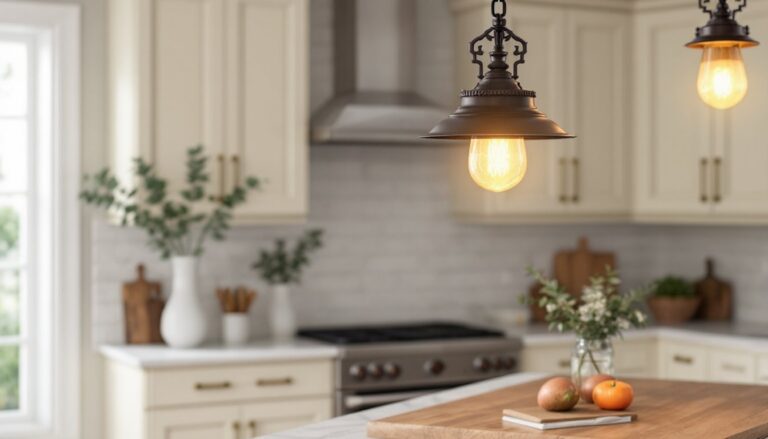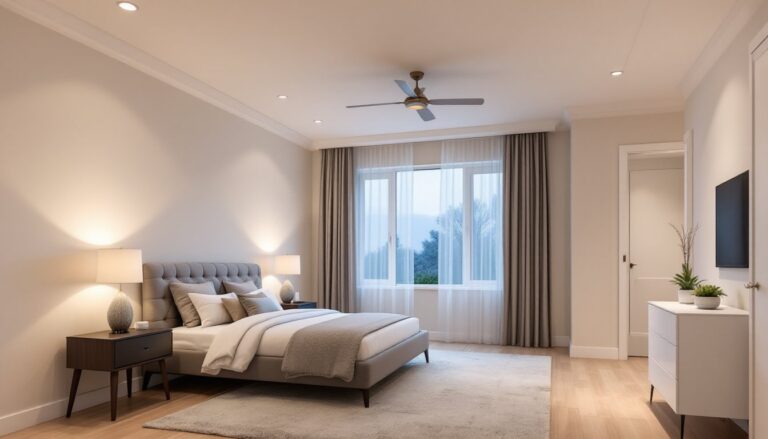

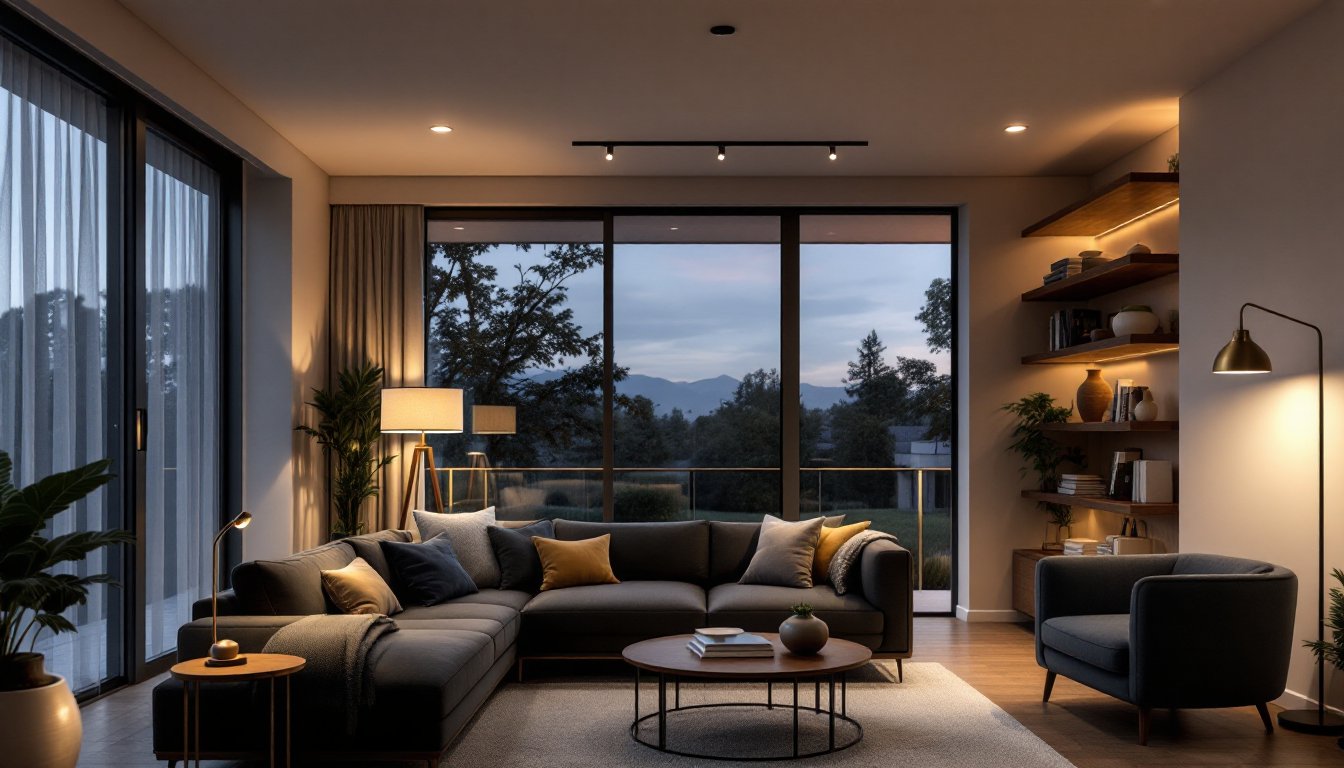
Most living rooms suffer from a single overhead fixture doing all the work, a recipe for flat, uninviting light that kills ambiance and functionality alike. Good lighting design isn’t about brightness alone: it’s about layering sources, controlling intensity, and placing fixtures where they actually serve a purpose. The difference between a room that feels like a waiting area and one that draws people in often comes down to three or four well-chosen lights on separate switches. This guide walks through practical lighting strategies that improve both the look and usability of a living room, from foundational ambient sources to accent fixtures that add drama without the guesswork.
Table of Contents
ToggleKey Takeaways
- Layered lighting design using three distinct sources—ambient, task, and accent—creates a functional and inviting living room that outperforms a single overhead fixture.
- Independent control through separate switches or dimmers allows flexible adjustment of lighting throughout the day, matching brightness to specific activities like reading or movie watching.
- Recessed downlights rated for 700–900 lumens per fixture (one per 25–30 square feet) provide effective ambient lighting without glare or harsh shadows in standard-height ceilings.
- Task lighting should be positioned at shoulder height when seated, with reading lamps and table lamps chosen to prevent glare and properly sized to avoid visibility of the bulb from across the room.
- Statement fixtures like chandeliers, linear suspensions, or arc floor lamps serve dual purposes as both focal points and light sources, with sizing formulas ensuring they complement rather than overwhelm the space.
- Smart dimmers, bulbs, and switches offer rental-friendly flexibility and energy savings, though LED-compatible dimmers must replace old incandescent controls to prevent flickering and extend bulb lifespan.
Layer Your Lighting for Maximum Impact
Professional designers rely on a three-layer approach: ambient (general illumination), task (focused light for activities), and accent (highlighting architecture or decor). Most DIY lighting failures happen when homeowners skip straight to decorative fixtures without establishing these foundational layers. A properly layered room lets occupants adjust lighting to match the activity, bright for cleaning or assignments, softer for movie nights.
The key is independent control. Each layer should operate on its own switch or dimmer, allowing flexibility throughout the day. A room with five lights on one switch is functionally no different from a single bulb, you’re either stuck with full brightness or fumbling in the dark.
Ambient Lighting Solutions
Recessed downlights (often called can lights) remain the workhorse for ambient lighting in rooms with standard 8- to 9-foot ceilings. Plan for one 4-inch or 6-inch fixture per 25–30 square feet of floor space, avoiding the common mistake of over-lighting. Use LED retrofit kits rated for 700–900 lumens per fixture in living spaces: higher outputs create glare and harsh shadows.
For rooms without attic access or where cutting into ceilings isn’t an option, flush-mount or semi-flush ceiling fixtures provide general light without the rough-in work. Choose fixtures with diffusers that spread light evenly rather than directional designs that create hot spots. Frosted glass or fabric drum shades soften the output.
Track lighting offers another alternative, especially in rentals or spaces where permanent ceiling modifications aren’t allowed. Modern low-voltage track systems use plug-in transformers and surface-mount tracks that install with basic anchors. Position tracks to wash walls rather than aiming directly down, indirect light reduces glare and makes spaces feel larger.
Ceiling height matters for fixture selection. Rooms with ceilings above 9 feet can handle pendant fixtures or chandeliers that would overwhelm a standard room. The bottom of any hanging fixture should clear 7 feet minimum from the floor to prevent head strikes.
Task Lighting for Functionality
Task lighting belongs anywhere someone reads, works, or performs detailed activities. Floor lamps with adjustable arms serve double duty as reading lights and ambient fill. Look for models with three-way switches (50/100/150-watt equivalent) or built-in dimmers. The light source should sit at shoulder height when seated, angled to prevent glare on screens or pages.
Table lamps on end tables flank seating areas effectively, but most homeowners choose shades that are too small. The bottom edge of the shade should sit at eye level when seated, typically 38–42 inches from the floor for standard sofas. Shades should be wide enough that the bulb isn’t visible from a seated position across the room.
For media consoles or built-in shelving, under-cabinet LED strips or puck lights illuminate surfaces without taking up floor or table real estate. Puck lights work well for highlighting collectibles: LED strips provide broader wash for task surfaces. Both install with adhesive backing or screws, running on low-voltage plug-in transformers that don’t require hardwiring.
Wall-mounted swing-arm lamps save space in compact living rooms, mounting directly to studs beside seating. They require a junction box, which means fishing wire through walls, manageable for someone comfortable with basic electrical work, but often worth hiring out to avoid patching mistakes. Most jurisdictions require a permit for adding new electrical circuits: check local code before cutting into walls.
Statement Fixtures That Steal the Show
A statement fixture serves as both light source and focal point, anchoring the room’s design. The mistake most DIYers make is choosing oversized fixtures that crowd the space or tiny ones that disappear visually.
Chandeliers work in living rooms with ceilings 9 feet or higher, centered over seating areas or coffee tables rather than in the room’s geometric center. A reliable sizing formula: add the room’s length and width in feet, then convert to inches for fixture diameter. A 12×15-foot room calls for roughly a 27-inch-diameter chandelier. Hang the fixture so its lowest point sits 30–34 inches above the coffee table surface.
Linear suspension fixtures suit rectangular rooms or long seating arrangements better than round chandeliers. These multi-light bars mount parallel to the sofa, spreading light evenly across the length of the seating area. They’re particularly effective in open-concept spaces where the living room lacks clear boundaries, the fixture visually defines the zone.
Arc floor lamps deliver the drama of a pendant without ceiling modifications. The weighted base sits beside or behind a sofa while the arched arm extends the light source over seating. Quality models use marble or steel bases heavy enough to prevent tipping: cheaper versions with plastic bases are tip hazards. The shade should hover roughly 60–68 inches from the floor, similar to pendant placement.
Ceiling fans with integrated light kits handle dual roles in rooms where air circulation matters. Modern designs have moved beyond builder-grade brass: look for fans with DC motors (quieter, more efficient) and reversible blades for seasonal airflow direction changes. Fan size correlates to room size: 52-inch fans for rooms up to 225 square feet, 60-inch or larger for bigger spaces.
Strategic Placement Tips for Every Corner
Placement determines whether a fixture enhances or undermines a room’s function. Start by mapping activities: where do people read, watch TV, converse, or work? Lights should support these zones without creating glare or shadows in the wrong places.
Avoid placing lights directly above TV screens. The reflection creates viewing discomfort. Instead, position ambient sources to the sides or behind the seating area, using bias lighting, a strip of LEDs behind the TV, to reduce eye strain during screen time.
Corners accumulate visual weight and often feel dark even in well-lit rooms. A tall floor lamp or uplight in a corner washes the adjacent walls with indirect light, making the room feel more open. Uplights work especially well in rooms with vaulted or cathedral ceilings where direct downlights can’t reach.
Layer heights create visual interest and eliminate flat lighting. Combine overhead fixtures (ceiling-mounted or pendants) with mid-height sources (table lamps, wall sconces) and low accent lights (floor uplights, LED strips). The eye moves through the space more naturally when light comes from multiple elevations.
Artwork and architectural features deserve dedicated accent lighting. Picture lights mount directly above frames, while adjustable track heads or monopoint fixtures highlight from a distance. Use narrow beam spreads (15–25 degrees) for accent lighting to avoid light spill onto surrounding walls. Wall-washing wider areas calls for flood beam angles of 40 degrees or more.
Symmetry matters in formal living rooms. Matching table lamps on either side of a sofa, or wall sconces flanking a fireplace, create visual balance. Asymmetrical arrangements work in casual spaces, but the visual weight should still feel balanced, a tall floor lamp on one side can offset a pair of smaller table lamps on the other.
Smart Lighting and Dimming Options
Dimmer switches transform fixed lighting into adaptable sources, but not all dimmers work with all bulbs. LED bulbs require LED-compatible dimmers: using old incandescent dimmers causes flickering, buzzing, or shortened bulb life. Lutron and Leviton manufacture reliable residential dimmers: expect to pay $20–50 per switch depending on features.
Installing a dimmer is straightforward for anyone comfortable with basic wiring: shut off power at the breaker, remove the old switch, connect the dimmer’s wires (usually color-coded), secure it in the box, and restore power. Always use a non-contact voltage tester before touching wires. If the existing box contains multiple switches or three-way wiring, the job gets complicated enough to warrant an electrician.
Smart bulbs (Philips Hue, LIFX, Wyze) offer dimming and color control without replacing switches, communicating via Wi-Fi or Zigbee protocols. They’re ideal for renters or anyone avoiding electrical work, but they require the switch to stay in the “on” position, turning it off kills power to the bulb and disables app control. Smart bulbs cost $10–50 each: whole-room setups add up fast.
Smart switches and dimmers control any bulb while adding scheduling and voice control. They replace existing switches, requiring the same installation process as standard dimmers. Brands like Lutron Caséta integrate with HomeKit, Alexa, and Google Home. These cost $40–80 per switch but work with cheap bulbs, making them more economical for controlling multiple fixtures.
Motion sensors and occupancy switches make sense in spaces where lights are frequently left on. They’re particularly useful in bonus rooms or basement living areas with infrequent use. Most models include adjustable timeout settings and ambient light sensors that prevent daytime triggering.
For whole-home lighting control, centralized systems like Lutron RadioRA or Control4 offer scene programming and integration with shades and climate control. These systems require professional installation and start around $2,000–$5,000 depending on complexity, overkill for most single-room projects but worth considering during whole-house renovations.
Conclusion
Effective living room lighting comes down to variety and control, multiple sources at different heights, each serving a specific purpose and adjustable independently. Start with solid ambient coverage, add task lighting where activities happen, then layer in statement pieces and accents. The result is a room that works harder and looks better, no matter the time of day or activity.