
Art glass pendant lighting bridges function and fine art, casting homes in unique patterns of color and light. Unlike mass-produced fixtures, these handcrafted pieces showcase skilled artisan techniques, glassblowing, staining, fusing, that make each pendant slightly different from the next. They anchor kitchens, dining rooms, and entryways with visual weight while delivering task or ambient light. For DIYers planning a lighting upgrade, understanding the types, installation considerations, and design potential of art glass pendants helps match the right fixture to the room’s demands and electrical setup.
Table of Contents
ToggleKey Takeaways
- Art glass pendant lighting combines handcrafted artisan techniques like glassblowing, staining, and fusing to create unique, visually striking fixtures that deliver both task and ambient light.
- Proper installation of art glass pendants requires verifying circuit de-energization, understanding electrical connections (black, white, and ground wires), and confirming that standard junction boxes can safely support the fixture’s weight of 8–20 pounds.
- Art glass pendant styles—including blown glass, Murano, stained glass, and mosaic designs—scatter or diffuse light differently, with opaque or patterned glass reducing light output by 40–70% and requiring higher-lumen LED bulbs as compensation.
- Kitchen islands, dining tables, and entryways are ideal placement locations for art glass pendants, with specific height requirements: 30–36 inches above countertops, 30–34 inches above dining tables, and minimum 6 feet 8 inches clearance in doorways.
- When choosing art glass pendant lighting, balance fixture scale (approximately the room’s length plus width converted to inches), select bulb type based on the glass transparency and your lighting needs, and confirm dimmable LED compatibility with your existing switches.
- Handblown art glass pendants from studios typically range $200–$800, while imported pieces start around $80–$150, and always wear safety glasses and work gloves during installation to prevent injuries from sharp edges and falls.
What Is Art Glass Pendant Lighting?
Art glass pendant lighting refers to ceiling-mounted fixtures where the shade or body is crafted from decorative glass using artisan methods. The glass component, whether blown, fused, slumped, or stained, becomes the defining feature, often overshadowing the electrical hardware.
Pendant fixtures hang from a canopy via cord, chain, or rigid stem, distinguishing them from flush-mount or semi-flush ceiling lights. Art glass types include hand-blown glass shaped while molten, stained glass assembled from colored pieces held by came or foil, and fused glass where separate sheets melt together in a kiln. Some designs layer techniques: a blown base with fused accents or etched patterns.
These fixtures arrive as hardwired units requiring junction-box mounting or plug-in models with a cord and standard plug. Hardwired installations demand basic electrical knowledge, shutting off the circuit breaker, connecting black (hot), white (neutral), and green or bare (ground) wires inside the box. Local codes (often based on NEC Article 410) govern fixture weight limits for standard octagon boxes: most art glass pendants weigh 8–20 pounds, staying within typical box ratings. Heavier fixtures may require a fan-rated pancake box or ceiling brace.
Safety note: Always verify the circuit is de-energized with a non-contact voltage tester before touching wires. If the ceiling has knob-and-tube wiring or no ground conductor, consult a licensed electrician.
Why Choose Art Glass Pendants for Your Home
Art glass pendants deliver visual impact that stamped-metal or plastic shades can’t match. The light passing through colored or textured glass creates dynamic patterns on walls and ceilings, shifting with the time of day and bulb choice.
Handcrafted uniqueness appeals to homeowners looking to avoid cookie-cutter décor. Because each piece involves manual shaping or assembly, subtle variations in color swirl, bubble placement, or seam width ensure no two fixtures are identical. This individuality suits rooms where the lighting becomes a focal point, island pendants in a kitchen or a statement piece above an entryway console.
Durability of quality art glass often exceeds expectations. Annealed glass, properly cooled during fabrication, resists thermal shock. Pendant shades rarely experience the stress of touched surfaces (like table lamps), so chips and cracks are uncommon if handled carefully during installation. Maintenance involves occasional dusting and wiping with glass cleaner: avoid abrasive pads that scratch.
Light quality matters. Translucent or opalescent glass diffuses LED or incandescent bulbs, softening glare. Transparent colored glass tints the light output, an amber pendant warms a space, while cobalt blue cools it. Dimmer compatibility depends on the bulb type and fixture wiring. Most art glass pendants accept standard medium-base (E26) bulbs: confirm maximum wattage on the socket label to prevent overheating. LED bulbs (9–12 watts) stay well below most 60-watt limits and reduce heat buildup inside the shade.
Popular Art Glass Pendant Styles and Designs
Design vocabulary helps narrow options when shopping online or at lighting showrooms. Styles range from traditional Tiffany reproductions to contemporary abstract forms.
Blown Glass Pendants
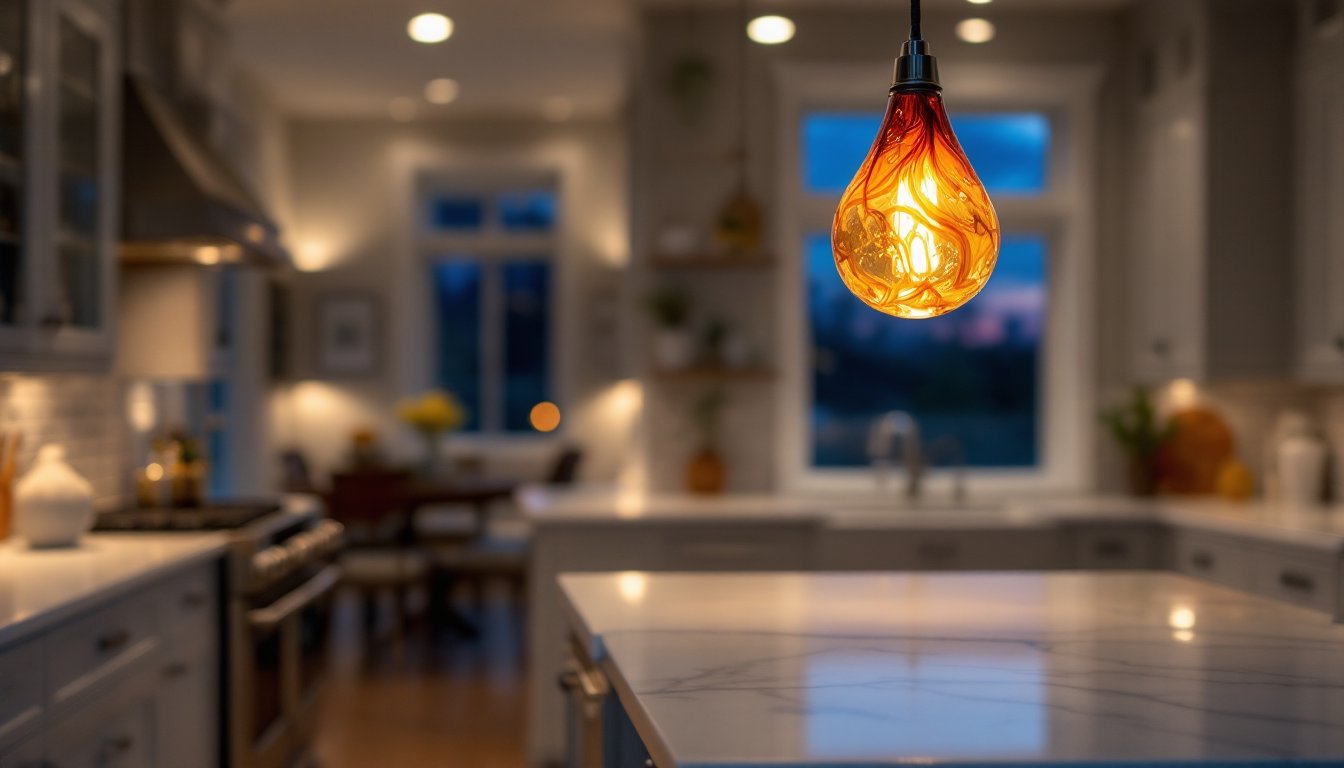
Hand-blown pendants start as molten glass on the end of a blowpipe, shaped with tools and gravity. The artisan can introduce color by rolling the gather in crushed glass frit, trap air bubbles for texture, or pull the form into organic teardrops, spheres, or irregular shapes.
Murano-style pendants originate from or emulate glasswork on Murano island near Venice, often featuring vibrant colors, gold or silver leaf inclusions, and elaborate canes (rods of patterned glass stretched thin and embedded). These work well over dining tables where the fixture hangs at eye level when standing.
Seeded or crackle glass incorporates intentional imperfections. Seeded glass traps tiny bubbles: crackle glass is plunged into cold water mid-process to create fracture lines within the wall thickness. Both scatter light unpredictably, adding sparkle. Expect 10–20% less direct downlight compared to smooth clear glass due to internal refraction.
Installation tip: Blown-glass pendants arrive pre-wired with a socket and cord. Adjust cord length before mounting: most cords thread through a hollow stem or canopy. Trim excess carefully, once cut, re-splicing requires electrical tape or wire nuts inside the canopy, which can crowd a shallow box.
Stained Glass and Mosaic Pendants
Stained glass pendants assemble small pieces of colored glass, each cut from sheet stock, joined by copper foil (Tiffany method) or lead came (traditional method). Designs range from geometric Mission/Craftsman patterns to figurative florals and Art Nouveau curves.
Copper foil technique wraps each glass edge in adhesive-backed foil, then solders the seams. This allows tighter curves and finer detail but requires more labor. Lead came uses H-section lead channels that grip the glass edges: it’s faster for straight lines and large panels but limits intricate work.
Mosaic pendants apply small glass tiles (tesserae) to a metal or resin form, grouted like tile. They’re heavier and often cone- or dome-shaped, directing light downward. Check the fixture’s listed weight: anything over 15 pounds benefits from a ceiling fan brace or blocking installed between joists.
Light output: Opaque or densely patterned stained glass blocks 40–70% of bulb lumens. Specify higher-lumen LED bulbs (800–1100 lumens for general lighting) to compensate. Avoid high-heat incandescent bulbs in enclosed stained-glass shades: trapped heat can soften solder joints over time. Most manufacturers list a maximum wattage: respect it.
Where to Use Art Glass Pendant Lighting
Placement dictates both aesthetic success and code compliance. Pendants require adequate headroom and structural support.
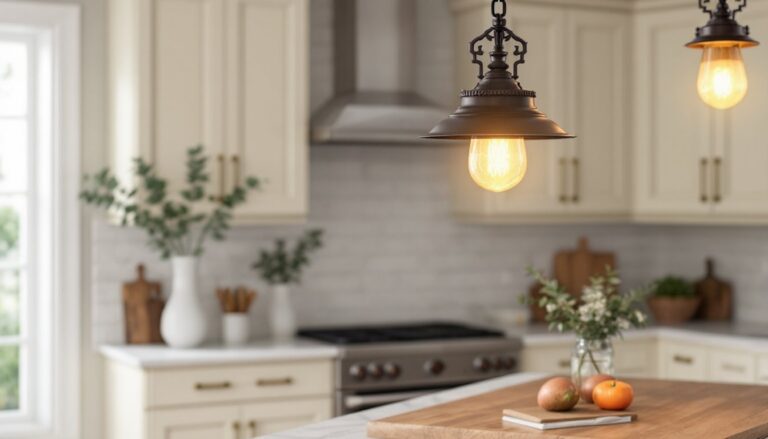
Kitchen islands are the most common application. Hang two or three matching pendants spaced 24–30 inches apart, centered over the island. The bottom of the shade should clear the countertop by 30–36 inches to prevent head bumps while allowing task light to reach the work surface. Use a tape measure and painter’s tape to mock up positions before drilling.
Dining tables suit larger single pendants or a linear cluster. Center the fixture over the table, not the room, and hang it 30–34 inches above the tabletop for a standard 30-inch table height. If the table is adjustable or the ceiling exceptionally high, adjust accordingly. Dimmer switches let diners shift from bright task light during meals to soft ambient glow.
Entryways and foyers benefit from statement pendants that greet visitors. In two-story entries, a large pendant can fill vertical space without crowding sightlines. Ensure the bottom clears door swings and typical adult height (minimum 6 feet 8 inches from finished floor per IRC, though 7 feet is more comfortable). If the foyer has a staircase, verify that anyone descending won’t strike their head.
Bathrooms work with pendants flanking mirrors or over soaking tubs, provided the fixture is wet- or damp-rated per NEC 410.10. Art glass pendants near showers or tubs must carry a UL listing for damp or wet locations: many decorative glass fixtures are dry-rated only. Don’t assume: check the label.
Bedroom nightstands can use pendant lights as space-saving alternatives to table lamps. Hardwire them to a switched outlet or add inline cord switches. Keep glass away from flailing arms, hang slightly beyond the mattress edge and 18–24 inches above the nightstand surface.
How to Choose the Right Art Glass Pendant
Selection involves balancing scale, color, bulb type, and installation logistics.
Scale matters. A pendant’s diameter or width should relate to the surface below. A common rule: add the room’s length and width in feet, then convert to inches for approximate fixture diameter. A 10×12-foot dining room suggests a 22-inch pendant. Islands and tables allow tighter scaling, aim for the fixture width to be one-half to two-thirds the table width for visual balance. Err smaller in rooms with low ceilings (under 8 feet): oversized pendants overwhelm the space.
Color and transparency affect both aesthetics and function. Transparent colored glass alters light hue, great for mood but problematic for task lighting where color accuracy matters (kitchen prep, reading nooks). Opaque or frosted glass provides even diffusion but reduces total output. Layered or textured glass sits in between. If unsure, request a sample or visit a showroom to see the fixture lit with the intended bulb type.
Bulb compatibility isn’t universal. Vintage-look Edison bulbs pair well with clear or seeded glass but emit warm (2200–2700 K) light and lower lumens per watt. Modern LEDs fit most sockets and run cooler, extending the life of delicate glasswork. Check if the socket is candelabra (E12) or medium (E26) base: adapters exist but add bulk inside the shade. Dimmable LEDs require compatible dimmer switches, older rotary dimmers cause flicker or buzzing.
Mounting height and cord management require planning. Most pendants ship with 6–10 feet of cord or chain. Cord locks or S-hooks allow adjustment, but trimming cord is permanent. If ceiling height exceeds 10 feet, order extension kits from the manufacturer. Sloped ceiling adapters (also called sloped ceiling canopies) keep the pendant plumb on angled ceilings: standard canopies leave the fixture tilted.
Budget and sourcing: Handblown art glass pendants from U.S. or European studios range $200–$800 per fixture, depending on size and complexity. Imported or production art-glass pieces start around $80–$150. Antique stained-glass shades or reproduction Tiffany-style fixtures can exceed $1,000. Prices fluctuate with glass availability and artisan demand. Online retailers offer broader selection, but in-person inspection reveals color accuracy and build quality better than photos.
Installation readiness: Confirm the existing junction box is rated for the fixture weight. Standard plastic round boxes support up to 50 pounds if properly fastened to a joist or brace: cheaper boxes nailed to drywall alone will fail. If replacing a flush-mount with a pendant, the box must be accessible and code-compliant. Hire a licensed electrician if the box is corroded, the wiring is outdated, or you’re uncomfortable working with live circuits. Permits are rarely required for like-for-like fixture swaps, but adding new circuits or relocating boxes triggers inspection requirements in most jurisdictions.
Safety: Wear safety glasses when handling glass shades and work gloves to avoid cuts on sharp edges. Use a sturdy step ladder tall enough that you’re not reaching overhead, falls cause more DIY injuries than electrical shocks. Keep the work area clear of kids and pets: dropped glass shatters into dangerous shards.