
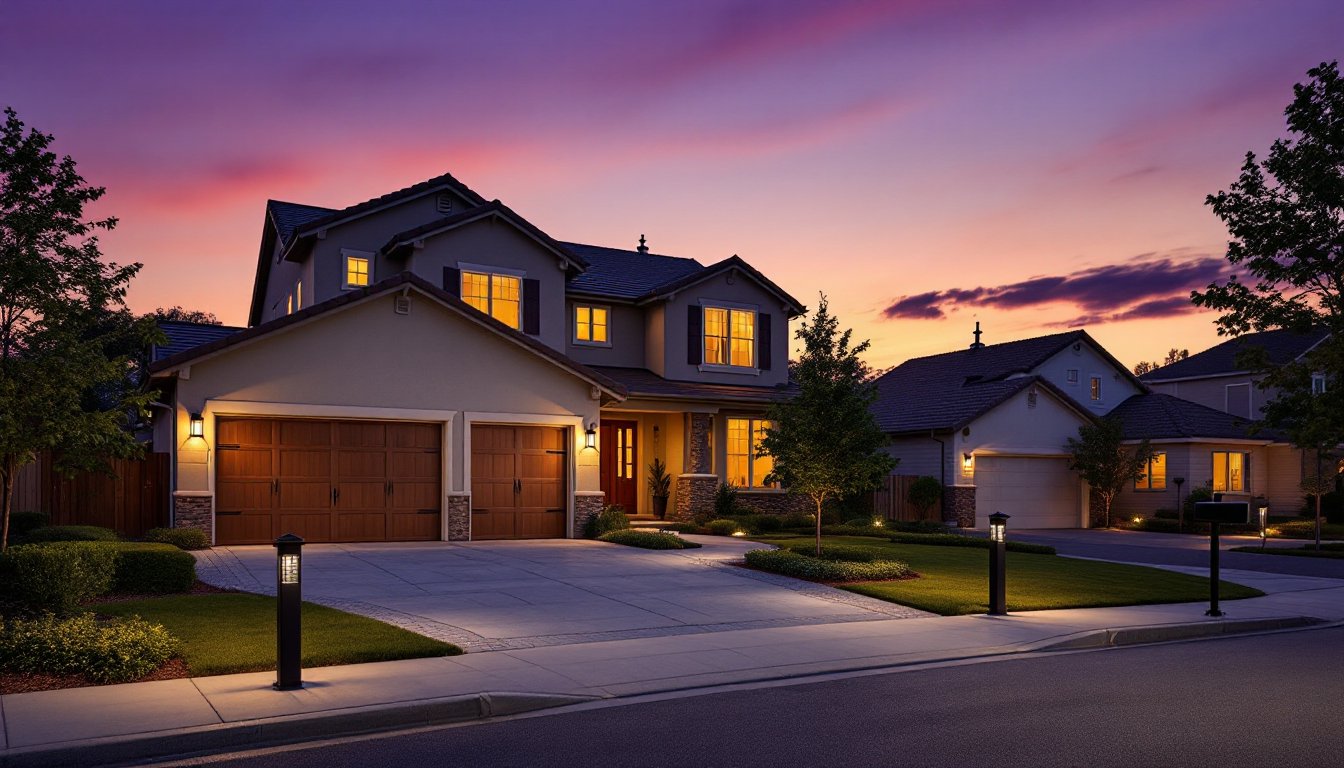
Outdoor lighting that turns itself on at sunset and off at sunrise isn’t magic, it’s dawn to dusk technology, and it’s one of the smartest upgrades a homeowner can make. No timers to program, no switches to remember, just reliable light when it’s needed. Whether the goal is security, safety on walkways, or simply coming home to a well-lit driveway, these fixtures handle the work automatically. They’re powered by a simple photocell sensor that reads ambient light levels and triggers the bulb accordingly. Installation is straightforward for most homeowners, and the energy savings over leaving lights on all night add up quickly.
Table of Contents
ToggleKey Takeaways
- Dawn to dusk outdoor lighting uses a photocell sensor to automatically turn lights on at sunset and off at sunrise, eliminating the need for manual switches or programmable timers.
- These fixtures enhance home security by providing consistent perimeter illumination that deters intrusions and eliminate dark zones, while also improving safety around walkways, driveways, and entryways.
- LED bulbs paired with dawn to dusk technology deliver significant energy savings—using just 9–15 watts and costing only a few dollars per year—while lasting 15,000–25,000 hours compared to incandescent alternatives.
- Optimal placement for dawn to dusk lighting includes porches, garages, driveways, perimeter lines, and detached structures, with sensors positioned away from the bulb’s direct light to prevent malfunction.
- Quality dawn to dusk fixtures are affordable ($20–$60 for most residential applications) and require minimal installation, with no app, Wi-Fi, or complex home automation needed.
What Is Dawn to Dusk Outdoor Lighting?
Dawn to dusk lighting refers to outdoor light fixtures equipped with a photocell sensor (also called a photosensor or light sensor) that detects natural light levels. When ambient light drops below a preset threshold, typically around dusk, the sensor activates the bulb. At dawn, when light levels rise, the sensor shuts the bulb off.
These fixtures come as integrated units (sensor built into the fixture housing) or as standalone bulbs with embedded sensors that screw into a standard E26 socket. Either way, the principle is the same: the photocell does the thinking, so the homeowner doesn’t have to.
Unlike motion-sensor lights that respond to movement, dawn to dusk fixtures stay on continuously from sunset to sunrise. That makes them ideal for perimeter lighting, driveway illumination, and anywhere consistent visibility matters more than energy conservation tied to occupancy.
Most photocells are cadmium sulfide (CdS) sensors. They’re reliable, inexpensive, and last for years. The sensor itself draws negligible power, usually less than a watt, so there’s no meaningful energy penalty for the automation.
How Dawn to Dusk Lights Work
The photocell sensor measures the intensity of visible light hitting its surface. Inside the sensor, a photoconductive cell changes electrical resistance based on light exposure. In bright conditions, resistance is low and the circuit remains open, keeping the light off. As darkness falls, resistance increases until it crosses a threshold, closing the circuit and allowing current to flow to the bulb.
There’s no manual switch involved (though the fixture still needs to be on a powered circuit). The sensor essentially acts as an automatic relay. Most sensors are calibrated to trigger around 10 lux or less, roughly equivalent to late dusk.
One key detail: the sensor must be positioned where it can read natural light, not the fixture’s own bulb. Otherwise, the light will flicker or fail to turn on, once the bulb lights up, the sensor “sees” that light and shuts off, creating a loop. Quality fixtures place the sensor on top or to the side of the housing, away from the bulb’s direct output.
Some models include adjustable sensitivity or time-delay features, though most residential units use fixed factory settings. The simplicity is a benefit, fewer points of failure, fewer settings to troubleshoot.
Benefits of Installing Dawn to Dusk Outdoor Lights
Security tops the list. A well-lit exterior deters opportunistic intrusions. Unlike motion lights that only activate when someone’s already on the property, dawn to dusk fixtures provide constant illumination, eliminating dark zones where intruders might approach unnoticed.
Energy efficiency follows closely. Because the lights operate only during nighttime hours, they consume far less energy than fixtures left on 24/7. Paired with LED bulbs, a typical dawn to dusk light might use just 9–15 watts and run roughly 12 hours per night, costing only a few dollars per year in electricity.
Convenience can’t be overstated. No more forgetting to turn on porch lights before leaving for the evening or fumbling with timers that drift out of sync with seasonal daylight shifts. The photocell adjusts automatically as days lengthen or shorten.
Safety improves around steps, walkways, and driveways. Consistent lighting reduces trip hazards and makes it easier to navigate the property after dark, important for households with elderly residents or frequent guests.
Finally, these fixtures add a layer of home automation without complexity. No app, no hub, no Wi-Fi required. Just screw in a bulb or wire a fixture, and the system runs itself.
Best Locations for Dawn to Dusk Lighting Around Your Property
Entryways and porches are obvious candidates. A dawn to dusk fixture at the front door ensures visitors can see house numbers, and homeowners never return to a dark porch.
Garages and driveways benefit from overhead or wall-mounted fixtures. Position lights to illuminate the approach and parking area without blinding drivers. A dusk-to-dawn wall pack or barn light works well here.
Walkways and steps call for low-level path lights or bollard fixtures with integrated sensors. These keep foot traffic safe without overlighting the yard. Spread fixtures every 8–10 feet for even coverage.
Perimeter and property lines gain security with dusk-to-dawn floodlights or area lights on poles. Place these along fence lines, at corners, or near sheds and outbuildings. Make sure sensors face away from the bulbs and have a clear view of the sky.
Backyard patios and decks can use softer fixtures, think wall sconces or pendant-style barn lights, if the goal is ambiance plus automation. Avoid aiming bright floodlights at seating areas: instead, mount them higher to wash walls or fences.
Detached structures like workshops, barns, or storage sheds are perfect for standalone dawn to dusk bulbs in weatherproof sockets. They provide light when needed without running dedicated circuits for timers.
Choosing the Right Dawn to Dusk Light Fixtures
Selecting the right fixture starts with understanding bulb type, features, and application. Here’s what matters.
LED vs. Traditional Bulbs
LED bulbs are the clear winner for dawn to dusk applications. A typical 9W LED replaces a 60W incandescent, cutting energy use by 85%. LEDs last 15,000–25,000 hours, years of nightly use, while incandescents burn out in under a year under the same schedule.
Color temperature matters. For security and task lighting, choose 5000K (daylight) for crisp, white light that renders colors accurately. For entryways and decorative applications, 2700K–3000K (warm white) feels more inviting. Most dawn to dusk LED bulbs are available in both ranges.
Halogen and CFL options still exist but aren’t recommended. Halogens run hot and waste energy. CFLs struggle with frequent on/off cycles and cold weather performance, both issues for outdoor sensors.
Key Features to Look For
Weather resistance is non-negotiable. Look for fixtures rated IP65 or higher (dust-tight and protected against water jets). For coastal or high-humidity areas, consider corrosion-resistant materials like powder-coated aluminum or marine-grade plastics.
Photocell placement should be external and shielded from the bulb’s light. Some budget fixtures bury the sensor inside translucent housings, these often malfunction.
Bulb replaceability adds flexibility. Integrated LED fixtures (where the LED is permanent) are sleek and efficient, but if the diode fails, the whole fixture gets replaced. Fixtures with standard E26 sockets allow bulb swaps and upgrades.
Lumen output should match the application. A porch light might need 800–1200 lumens: a driveway floodlight could require 2000–3000 lumens. Overlighting wastes energy and creates glare.
Adjustable heads or swivel mounts help direct light exactly where it’s needed, especially for wall packs and floodlights.
Finally, check if the fixture is compatible with existing wiring. Most 120V fixtures wire directly into junction boxes, straightforward for anyone comfortable with basic electrical work. Always shut off power at the breaker, use a non-contact voltage tester, and follow NEC guidelines. If the installation involves new circuits or exterior conduit runs, consider hiring a licensed electrician.
A quality dawn to dusk fixture isn’t expensive, expect to spend $20–$60 for most residential applications, but choosing one built to last makes the difference between years of reliable service and constant bulb swaps or sensor failures.