
Storing fuel safely isn’t just about buying a tank and filling it up. Whether someone’s powering a backup generator, fueling farm equipment, or keeping a construction site running, proper fuel storage requires understanding regulations, choosing the right container, and maintaining fuel quality over time. Poor storage leads to contamination, leaks, fines, and potential fire hazards. This guide walks through the key decisions homeowners and small-scale operators face when setting up fuel storage, from selecting tank materials and capacities to meeting code requirements and preventing degradation. The right approach protects both property and the fuel investment.
Table of Contents
ToggleKey Takeaways
- Fuel storage solutions require careful selection of tank type, capacity, and material based on fuel type and usage frequency to prevent contamination, leaks, and safety hazards.
- Double-wall tanks are now required by most jurisdictions for permanent fuel storage installations over 60 gallons, offering secondary containment that protects against environmental damage and costly cleanup.
- Proper regulatory compliance including setback distances, spill containment, venting, grounding, and permits is essential—ignoring these requirements can result in fines, removal orders, and liability.
- Regular maintenance such as quarterly inspections, water monitoring, fuel rotation, and annual filter replacement directly extends fuel lifespan and prevents equipment damage.
- Initial fuel storage investment ranges from $300–$500 for basic tanks to $8,000–$15,000 for installed underground systems, but quality construction pays off through durability, lower operating costs, and 10–30 year warranties.
- Preventing fuel degradation requires controlling temperature, blocking contamination entry points, treating diesel with biocide, and testing fuel annually to catch problems before they damage equipment.
Understanding Fuel Storage: Types and Applications
Fuel storage solutions vary widely depending on what’s being stored and why. The most common residential and small commercial applications include gasoline for lawn equipment and generators, diesel for backup power or farm machinery, propane (typically stored as liquid under pressure), and kerosene for heaters.
Portable containers, jerrycans, safety cans, and plastic jugs, work for small volumes (typically 1 to 5 gallons) and short-term use. Metal safety cans with flame arrestors are required in many jurisdictions for gasoline storage indoors or in enclosed spaces. These meet UL 30 or FM approval standards and include spring-closing lids and spout covers.
Stationary tanks range from 50-gallon residential tanks up to multi-thousand-gallon agricultural or commercial units. Materials include steel (durable but prone to rust without coatings), polyethylene (corrosion-resistant and lighter, common in double-wall designs), fiberglass (excellent chemical resistance, often used for diesel and waste oil), and aluminum (lightweight, used mainly in specialty applications).
Applications dictate design. A homeowner running a standby generator might install a 120-gallon above-ground diesel tank with a gravity-feed system. A farm may use a 500-gallon or larger skid tank for refueling tractors and equipment on-site. Each scenario requires different venting, spill containment, and fill methods. Understanding fuel type, volume needs, and usage frequency shapes the entire storage strategy.
Choosing the Right Fuel Storage Tank for Your Needs
Tank selection starts with capacity. Calculate consumption based on equipment runtime and refueling frequency. A 20 kW standby generator burning roughly 2 gallons of diesel per hour at 50% load will consume about 240 gallons over a five-day outage. Building in a buffer is smart, aim for 1.5x estimated need.
Wall thickness and construction matter. Single-wall tanks are lighter and cheaper but offer no secondary containment: if they leak, fuel goes straight to the ground. Double-wall tanks include an inner and outer shell with an interstitial space that can be monitored for leaks. Most jurisdictions now require double-wall designs for any permanent installation over 60 gallons, especially near water sources or in groundwater protection zones.
Consider fuel compatibility. Not all tanks handle all fuels. Polyethylene works well for diesel and kerosene but isn’t rated for gasoline due to permeation and static buildup risks. Steel tanks need interior coatings or linings to resist corrosion from water and microbial growth in diesel. Fiberglass handles a broad range of petroleum products and resists UV degradation better than polyethylene.
Above-Ground vs. Underground Storage Options
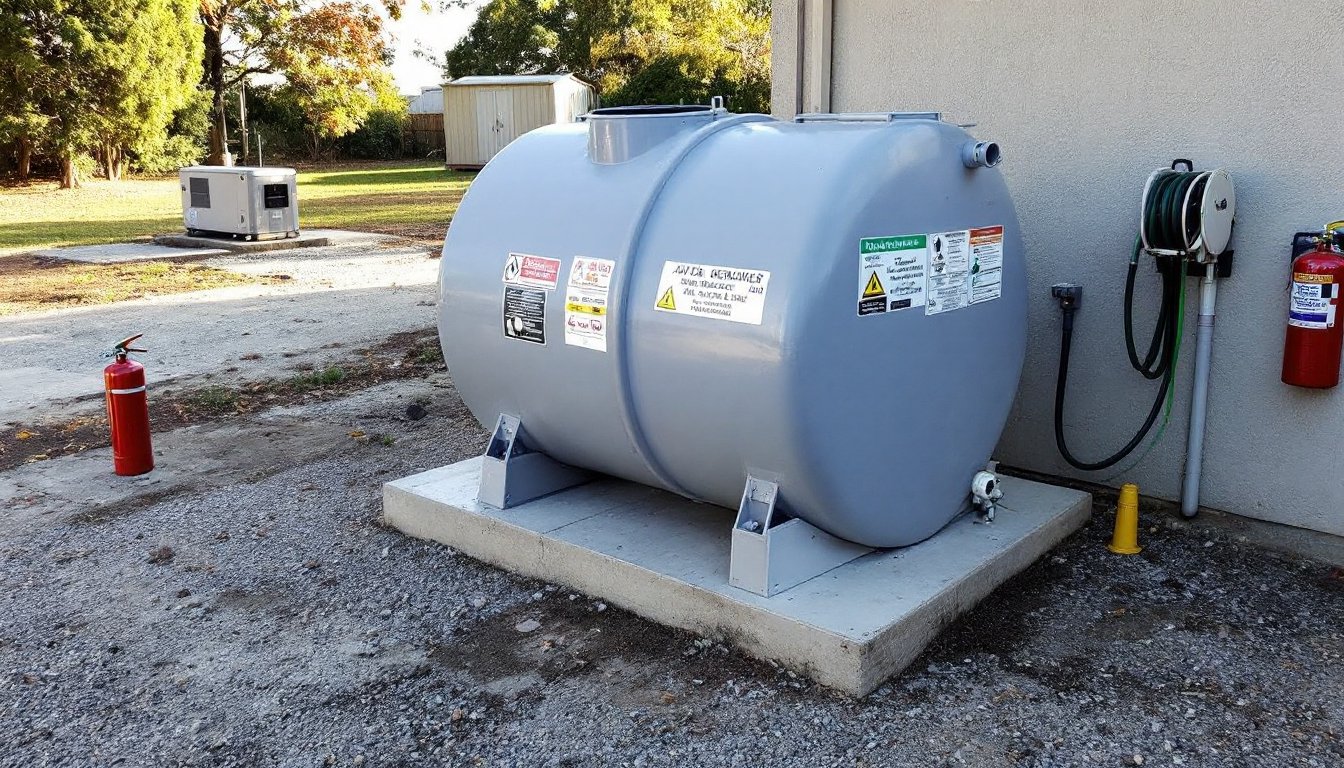
Above-ground storage tanks (ASTs) are easier to install, inspect, and maintain. They don’t require excavation, so setup costs stay lower. Drawbacks include exposure to temperature swings (which accelerate condensation and fuel degradation), UV exposure for plastic tanks, and aesthetic or zoning concerns in residential areas. ASTs typically sit on a concrete pad or steel saddle mounts and must be at least 10 feet from property lines and 5 feet from buildings per fire code (distances vary by local jurisdiction and tank size).
Underground storage tanks (USTs) keep fuel out of sight and protect it from temperature extremes and UV. Installation costs are significantly higher due to excavation, backfill, and sometimes specialized bedding material. Modern USTs must meet EPA regulations including corrosion protection (cathodic protection or fiberglass construction), spill and overfill prevention, and leak detection systems. USTs require permits in nearly all jurisdictions and regular inspections. They’re common in agricultural and commercial settings but rarely used residentially due to cost and regulatory burden.
For most homeowners, a double-wall polyethylene or steel AST in the 100–300 gallon range offers the best balance of cost, accessibility, and compliance.
Essential Safety Standards and Regulatory Compliance
Fuel storage is heavily regulated at federal, state, and local levels. The EPA oversees underground storage tanks and spill prevention for larger facilities. The NFPA 30 (Flammable and Combustible Liquids Code) sets requirements for tank construction, venting, spacing, and fire protection. Local fire marshals enforce these codes and often add jurisdiction-specific rules.
Key compliance requirements include:
- Setback distances: Tanks must be a minimum distance from buildings, property lines, and ignition sources. For example, a 300-gallon gasoline AST typically requires 20 feet from any building with openings.
- Spill containment: Tanks over a certain size (often 55 gallons) need secondary containment equal to 110% of the tank’s capacity. This can be a double-wall tank, a containment basin, or a spill pallet.
- Venting: Tanks must vent pressure and allow airflow during filling and temperature changes. Vent pipes should terminate at least 12 feet above ground and away from building openings to prevent vapor accumulation.
- Grounding and bonding: Especially critical for gasoline. Tanks and fill equipment must be electrically bonded to prevent static discharge, which can ignite vapors.
- Labeling: Tanks must display contents, hazard warnings, and emergency contact info.
- Permits: Many areas require a storage permit for tanks over 60 gallons or any gasoline storage. Check with the local fire department or building authority before installation.
Fire suppression should be accessible. A Class B fire extinguisher (rated for flammable liquids) should be within 30 feet of any fuel storage area. Never locate tanks under power lines or near heat sources like HVAC exhausts.
Ignoring these rules can result in fines, removal orders, or liability if a spill or fire. When in doubt, consult a licensed tank installer or fire marshal before purchasing equipment.
Best Practices for Fuel Storage Maintenance and Monitoring
Fuel doesn’t stay fresh indefinitely. Gasoline degrades in 3–6 months without stabilizers: diesel lasts 6–12 months under good conditions but is prone to microbial growth and water contamination. Regular maintenance keeps fuel usable and prevents costly tank repairs.
Inspect tanks quarterly. Look for rust, dents, leaks, and damage to fittings, vents, and fill caps. Check for standing water around the base, a sign of spills or leaks. For double-wall tanks, monitor the interstitial space with a sensor or manual gauge to detect breaches.
Keep tanks full when possible. Empty space allows air and moisture to condense inside, especially with temperature swings. Water sinks to the bottom of fuel tanks and promotes rust in steel tanks or microbial growth (“diesel bug”) in diesel. Use a water-finding paste on a dipstick to check for free water: if detected, pump it out or use a fuel/water separator filter.
Rotate fuel regularly. Use and refill tanks rather than letting fuel sit for years. For long-term storage, add a fuel stabilizer (for gasoline) or biocide (for diesel) per manufacturer instructions. Note dosage carefully, over-treating can create its own problems.
Check and replace fuel filters on dispensing equipment annually or per the equipment manual. Clogged filters indicate contamination upstream.
Preventing Contamination and Fuel Degradation
Contamination enters through vents, fill caps, and condensation. Install a vent screen or filter to block debris and insects. Use a locking fill cap to prevent tampering and keep out rain.
Temperature control helps. Above-ground tanks in direct sunlight heat up during the day and cool at night, cycling air and moisture through vents. Shade the tank with a roof or cover, or paint steel tanks white or light colors to reflect heat.
For diesel, microbial contamination is the top enemy. Bacteria and fungi feed on the interface between fuel and water, forming sludge that clogs filters and corrodes tanks. Prevent it by keeping water out, treating fuel with biocide, and testing fuel periodically with a field test kit (available from fuel suppliers).
Fuel testing should happen annually for long-term storage or if equipment starts running rough. Labs or mobile services can check for water content, microbial growth, sediment, and fuel stability. Catching problems early prevents equipment damage and costly fuel replacement.
Cost Considerations and Long-Term Investment Value
Initial costs vary widely. A basic 60-gallon single-wall polyethylene diesel tank might run $300–$500. A 300-gallon double-wall steel AST with spill containment can cost $1,500–$3,000. Add another $300–$800 for a concrete pad, fuel pump, and hose reel. Professional installation (recommended for anything over 100 gallons) adds $500–$1,500 depending on site prep and local labor rates.
Underground tanks start around $3,000 for the tank alone, with total installed costs often exceeding $8,000–$15,000 once excavation, backfill, piping, leak detection, and permits are included.
Ongoing costs include:
- Fuel stabilizers or biocides: $20–$50 per treatment, typically once or twice a year.
- Inspection and testing: $100–$300 annually if using a service, less if done in-house.
- Permits and compliance: Some jurisdictions charge annual fees for storage permits ($50–$200).
- Insurance: Notify your homeowner’s or commercial insurer. Some policies exclude fuel storage or require riders.
The payback comes from convenience, fuel price hedging (buying in bulk when prices dip), and reliability during outages. A homeowner who buys diesel in bulk for a generator can save 10–20% vs. per-gallon retail, recouping tank costs over a few years. Farms and contractors often see faster returns due to higher consumption.
Choose quality over bargain pricing. A cheap single-wall tank that leaks after three years costs far more in cleanup, fines, and replacement than a properly built double-wall unit. Tanks from reputable manufacturers typically carry 10–30 year warranties and meet or exceed UL, ASTM, or Steelite standards.
Budget for the full system, tank, containment, pump, filtration, and installation, not just the tank itself. Cutting corners on safety or compliance isn’t worth the risk.