
Choosing the right hanging light for a dining room isn’t just about style, it’s about scale, function, and creating the right ambiance for both weeknight dinners and special occasions. In 2026, homeowners are moving away from generic builder-grade fixtures and opting for statement pieces that anchor the room. Whether the goal is a single dramatic chandelier or a row of coordinated pendants, the fixture should complement the table size, ceiling height, and overall design without overwhelming the space. This guide walks through the most effective hanging lighting ideas, with practical advice on sizing, installation, and making design choices that actually work.
Table of Contents
ToggleKey Takeaways
- Hanging dining room lighting should balance scale, function, and ambiance by matching the fixture diameter to table size and maintaining 30–36 inches clearance above the tabletop for safety and comfort.
- Pendant lights remain the most versatile choice due to their flexibility in size, style, and installation, with options ranging from 8-inch globes to 24-inch shades and dimmer-compatible designs for glare reduction.
- Statement chandeliers work best in rooms with 9+ foot ceilings and require a heavy-duty junction box rated for the fixture’s weight (typically 20–60 pounds) to prevent installation failure.
- Linear suspension fixtures are purpose-built for rectangular tables and should span at least two-thirds of the table length, with integrated LED options requiring careful color temperature selection before purchase.
- Clustering multiple pendants in odd numbers (2, 3, or 5) creates visual impact and balance, but requires a multi-port canopy or separate junction boxes for proper wiring.
- Mix metal finishes intentionally—keeping warm metals (brass, copper, gold) and cool metals (chrome, nickel, black) separate—with no more than three finishes per room to achieve a curated rather than chaotic look.
Why Pendant Lights Remain the Most Popular Choice
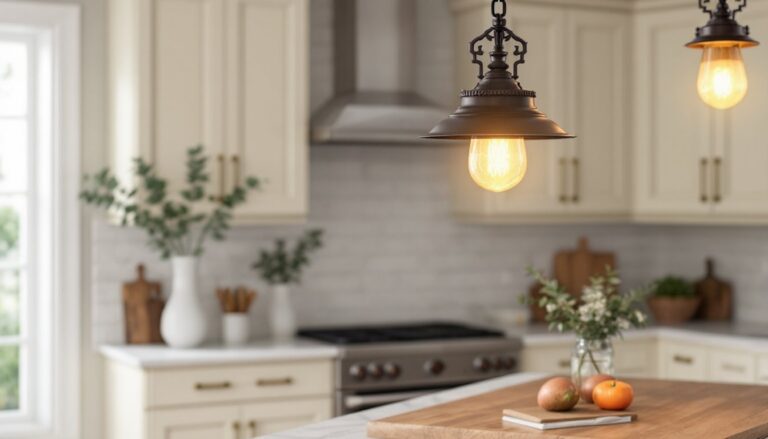
Pendant lights continue to dominate dining rooms because they offer flexibility in scale, style, and installation. Unlike flush-mount or semi-flush fixtures, pendants hang down from the ceiling on a cord, chain, or rod, drawing the eye downward and creating a focal point directly over the table.
They’re available in an enormous range of sizes, from compact 8-inch glass globes to oversized 24-inch drum shades, making it easier to match the fixture to the room’s proportions. Installation is straightforward for anyone comfortable working with a junction box and basic wiring, though it’s always smart to shut off power at the breaker and use a voltage tester before starting.
Pendants also excel at task lighting. By concentrating light where people actually sit and eat, they reduce the need for additional overhead fixtures. Look for pendants with diffusers or frosted glass to minimize glare. Clear glass or open-cage styles can be dramatic but may require dimmer switches to avoid harsh lighting during dinner.
For renters or homeowners avoiding hardwiring, plug-in pendant kits with swag hooks offer a temporary solution. Just make sure the cord length is adjustable and the ceiling can support the weight, most standard drywall anchors hold up to 50 pounds, but it’s safer to screw into a joist or use a ceiling fan brace.
Statement Chandeliers for Formal Dining Rooms
Chandeliers bring formality and presence, especially in dining rooms with high ceilings (9 feet or taller). Traditional multi-arm chandeliers with candelabra bulbs still work in classic interiors, but 2026 trends lean toward modern interpretations: geometric frames, mixed metals, and asymmetrical designs that feel less stuffy.
When selecting a chandelier, the weight and junction box capacity matter. Many decorative chandeliers weigh between 20 and 60 pounds. If the existing box isn’t rated for the load, it needs to be replaced with a fan-rated or heavy-duty box anchored to a ceiling joist or brace. This isn’t optional, undersized boxes can fail and cause the fixture to fall.
Chandeliers with adjustable chain or rod lengths are ideal for rooms with varying ceiling heights. The standard rule is to hang the bottom of the fixture 30 to 36 inches above the table surface, ensuring clearance for people seated and standing. In rooms with ceilings over 10 feet, add 3 inches of chain for every additional foot of ceiling height.
Dimmable LED bulbs are the best choice for chandeliers. They reduce energy costs, last longer, and allow mood control. Avoid mixing bulb temperatures in a single fixture, stick with one color (typically 2700K to 3000K warm white) for consistent light quality.
Modern Linear Suspension Fixtures for Rectangular Tables
Linear suspension lights are purpose-built for rectangular or oval dining tables, where a single pendant or round chandelier would leave the ends of the table underlit. These fixtures typically range from 36 to 60 inches long, with some custom options extending to 72 inches or more.
Installation is similar to a standard pendant, but the canopy and mounting plate are often larger to accommodate multiple downrods or a wider junction box. Some linear fixtures include integrated LED panels, which simplify bulb replacement but make future upgrades harder. If going with integrated LEDs, confirm the color temperature and lumen output before purchase, most are not adjustable after installation.
These fixtures work especially well over farmhouse tables, modern wood slabs, and glass-top tables. The linear form echoes the table’s shape and creates visual balance. For tables longer than 8 feet, consider a fixture that spans at least two-thirds of the table length.
Linear lights are also a smart choice for open-concept spaces where the dining area shares a room with the kitchen or living room. The horizontal emphasis helps define the dining zone without adding visual clutter. Pair with a dimmer to control brightness during different times of day.
Layering Multiple Pendants for Visual Impact
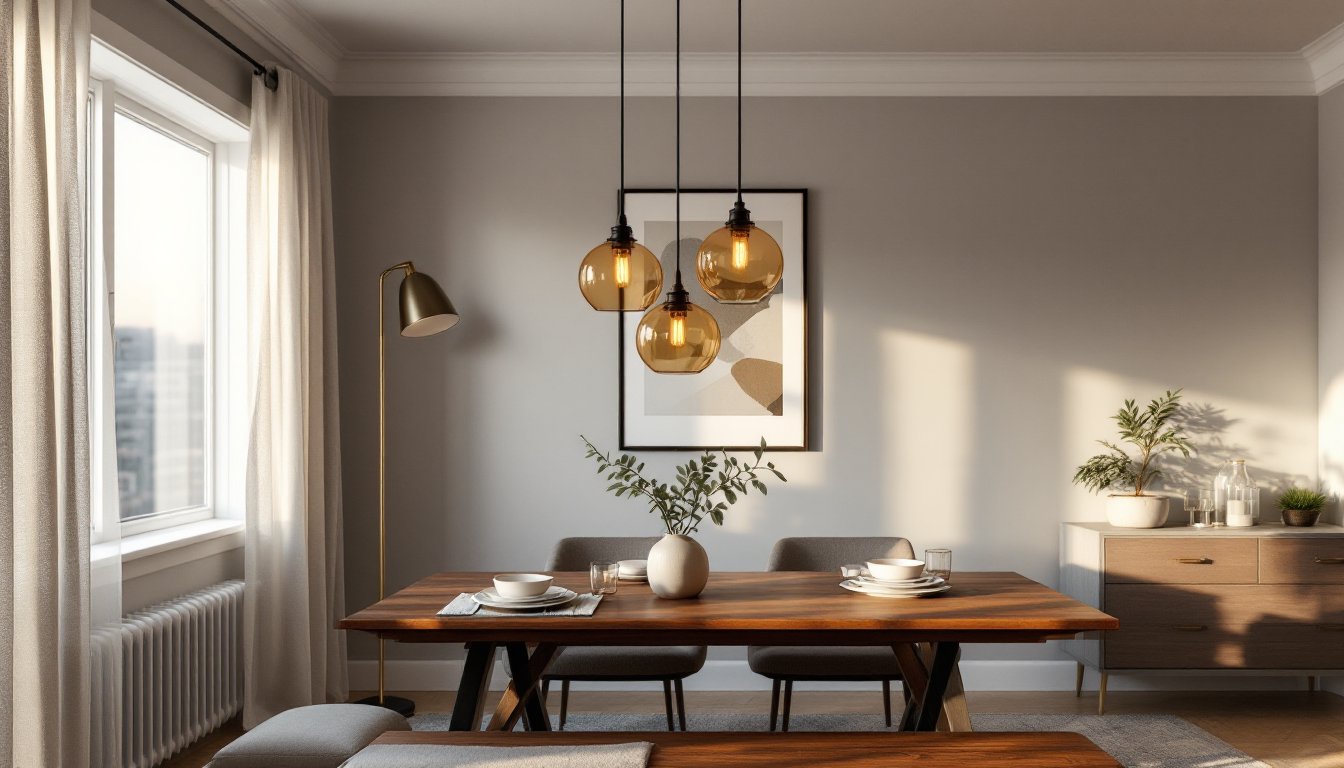
Clustering two, three, or five pendants over a dining table creates rhythm and allows for more creative expression. Odd numbers tend to feel more balanced, though two matching pendants work well over smaller round or square tables.
The key challenge is wiring. If the ceiling has a single junction box, a multi-port canopy or a ceiling plate with integrated splitters is necessary. These distribute power to multiple cords from one electrical source. Alternatively, spacing pendants along a track or installing separate boxes (which requires running new wire through the ceiling) offers more flexibility but adds complexity.
When hanging multiple pendants, maintain consistent spacing and height. For three pendants over a 72-inch table, a common layout is one centered and the other two spaced 18 to 24 inches toward each end. All should hang at the same height unless the design intentionally staggers them.
Safety note: If installing new junction boxes, make sure they’re supported by blocking between joists, not just drywall. Each box should be rated for the weight of its pendant. For ceilings with limited attic access, hiring an electrician may be the smarter move.
Mixing pendant styles, like pairing a large globe with smaller cage pendants, can work but requires a steady design hand. Keep finishes and color tones coordinated to avoid a mismatched look.
How to Choose the Right Size and Height for Your Fixture
Getting the proportions wrong is one of the fastest ways to make a dining room feel off. A fixture that’s too small disappears: one that’s too large overwhelms the space and creates head-bumping hazards.
For round or square tables, the fixture diameter should be about one-half to two-thirds the width of the table. A 48-inch round table pairs well with a pendant or chandelier that’s 24 to 32 inches wide.
For rectangular tables, use the formula: add the room’s length and width (in feet), then convert to inches for fixture diameter. A 12 x 14-foot dining room suggests a fixture around 26 inches wide. Linear fixtures follow different rules, aim for two-thirds to three-quarters of the table length.
Hanging height is critical for both function and safety. The bottom of the fixture should sit 30 to 36 inches above the tabletop. Lower works for intimate settings: higher is better if tall centerpieces or candlesticks are common. Measure from the table surface, not the floor, table heights vary from 28 to 30 inches.
For rooms with ceilings above 8 feet, add 3 inches of drop per additional foot. A 10-foot ceiling means the fixture should hang 36 to 42 inches above the table. Always use adjustable chain or cord during installation, it’s much easier to shorten on-site than to guess beforehand.
Mixing Materials and Finishes for Unique Style
Combining different materials, metal and wood, glass and rattan, brass and matte black, adds depth and prevents a dining room from feeling too matchy. In 2026, the trend is moving toward intentional contrast rather than buying a complete set from a single collection.
Start with the fixture’s finish. Brushed brass, oil-rubbed bronze, and matte black are versatile and pair well with both modern and traditional furniture. If the dining chairs or table base have metal legs, echo that finish in the light fixture for cohesion.
Glass shades, clear, seeded, or frosted, soften industrial metal frames and allow more light diffusion. Rattan, woven cane, or wood bead chandeliers bring warmth to minimalist spaces but require regular dusting and don’t work well in high-humidity areas.
Mixing metals within a single room is acceptable as long as one finish dominates. For example, a brass chandelier works with black cabinet hardware if brass appears in at least two other places (curtain rods, picture frames, or table legs).
Avoid mixing more than three finishes in one space, it starts to look chaotic rather than curated. Keep undertones consistent: warm metals (brass, copper, gold) should stay together, and cool metals (chrome, nickel, black) likewise.
Conclusion
Selecting and installing the right hanging dining room light comes down to understanding proportions, respecting ceiling height, and matching the fixture to how the room is actually used. Whether it’s a single statement chandelier or a trio of pendants, the fixture should feel intentional, not like an afterthought. Take the time to measure, test heights with painter’s tape or cardboard templates, and don’t skip the dimmer switch. A well-chosen light transforms the dining room into a space worth gathering in.