

Healthcare facilities face unique storage challenges that go far beyond typical home or office organization. Medical supplies, pharmaceuticals, patient records, and equipment require systems that meet strict regulatory standards while maximizing limited space. Poor storage design doesn’t just create clutter, it compromises patient safety, slows clinical workflows, and can trigger compliance violations during audits. Whether managing a busy hospital ward, a small clinic, or a home healthcare setup, the right storage infrastructure protects inventory integrity, supports infection control protocols, and keeps critical supplies accessible when seconds count. This guide breaks down the essential storage solutions, key features, and space-optimization strategies healthcare environments need in 2026.
Table of Contents
ToggleKey Takeaways
- Healthcare storage solutions must meet strict FDA, HIPAA, and Joint Commission regulatory standards to ensure medication safety, patient privacy, and facility compliance.
- Specialized storage systems like mobile shelving, climate-controlled cabinets, and modular drawer units prevent inventory loss, maintain infection control, and improve clinical workflows in medical environments.
- Material durability, adjustable configurations, and proper ergonomics—including waist-to-shoulder height placement for frequently used supplies—reduce staff injuries and accelerate access to critical items.
- Security features ranging from dual locks for controlled substances to biometric access controls and electronic audit trails protect high-value medications and patient records from unauthorized access.
- Space optimization through vertical storage, zone-based organization, and point-of-use systems helps healthcare facilities maximize limited square footage while maintaining quick supply accessibility during urgent procedures.
- Proper healthcare storage infrastructure directly impacts patient outcomes, operational efficiency, and audit readiness by eliminating workflow delays and reducing medication or documentation errors.
Why Specialized Storage Matters in Healthcare Facilities
Generic shelving and cabinets can’t handle the demands of medical environments. Healthcare storage must meet infection control standards, withstand frequent cleaning with hospital-grade disinfectants, and maintain temperature and humidity controls for sensitive materials.
Regulatory compliance drives much of the design. The FDA requires pharmaceutical storage to maintain specific temperature ranges, often between 68-77°F (20-25°C) for most medications, with cold storage at 36-46°F (2-8°C) for refrigerated items. HIPAA mandates secure storage for patient records, whether physical or digital, with access controls and audit trails. The Joint Commission evaluates storage during accreditation surveys, checking for proper labeling, expiration date tracking, and separation of clean and soiled items.
Safety concerns are equally critical. Controlled substances need double-locked storage per DEA requirements. Sharps containers must be puncture-resistant and wall-mounted at specific heights. Hazardous materials require ventilated cabinets with spill containment. A dropped medication vial or misfiled patient chart can have serious consequences, making organization a patient safety issue, not just a convenience factor.
Space constraints intensify these challenges. Most healthcare facilities operate with limited square footage and high supply turnover. Storage systems must deliver high density without sacrificing accessibility, staff need to grab supplies quickly during procedures without hunting through cluttered shelves or opening multiple drawers.
Essential Types of Healthcare Storage Solutions
Medical Supply and Pharmaceutical Storage
Mobile shelving units on track systems compress storage into smaller footprints by eliminating wasted aisle space. These high-density systems work well in pharmacy stockrooms and central supply areas where staff can open specific aisles as needed. Look for units with antimicrobial powder-coat finishes that resist bacterial growth and can handle repeated disinfectant wipes.
Modular drawer systems organize smaller items like syringes, surgical instruments, and diagnostic supplies. Medical-grade models feature clear drawer fronts for quick inventory checks and dividers that can be repositioned without tools. Drawers should have smooth-glide hardware rated for thousands of open/close cycles, healthcare staff don’t have time for sticky drawers.
Climate-controlled cabinets maintain precise temperatures for medications, vaccines, and biological samples. These aren’t standard refrigerators: medical-grade units include digital temperature monitoring, automatic alerts, and backup power connections. Many facilities now use automated dispensing cabinets (ADCs) that track medication removal, verify patient IDs, and integrate with electronic health records to reduce dosing errors.
Specialty pharmaceutical storage includes separate units for controlled substances (with dual locks and access logs), hazardous drugs (ventilated cabinets with negative pressure), and flammable materials (explosion-proof construction meeting NFPA standards). Never improvise with residential-grade storage for these applications.
Patient Record and Document Management Systems
Even though electronic health records, most facilities still maintain physical documents for several years. Lateral filing systems with locking mechanisms protect patient privacy while allowing quick retrieval. Color-coded filing with year-end tabs speeds up chart rotation and identifies records due for archival.
Mobile filing cabinets on casters work well in clinics where records move between exam rooms and front offices. Look for models with locking wheels to prevent unwanted movement and central locking systems that secure all drawers simultaneously.
Off-site archival storage or digitization services help facilities comply with record retention requirements (typically 7-10 years for adult records, longer for pediatric cases) without consuming valuable floor space. Some healthcare systems now use fireproof file cabinets rated for 1-hour fire protection to safeguard paper records that haven’t been scanned yet.
Secure document destruction becomes part of the storage lifecycle. When records reach the end of their retention period, shredding services with HIPAA-compliant certificates of destruction protect against data breaches.
Key Features to Prioritize When Selecting Storage Systems
Material durability comes first. Healthcare storage takes a beating from constant use, heavy loads, and aggressive cleaning chemicals. Stainless steel resists corrosion and supports the heaviest loads but costs more. Powder-coated steel with antimicrobial additives offers a good balance of durability and cost. Avoid wood, particle board, or materials with seams and crevices that trap moisture and contaminants.
Adjustable configurations extend the useful life of storage systems. Shelves that reposition on 1-inch increments accommodate changing inventory sizes. Drawer dividers that move without tools let staff reconfigure storage as supply mixes evolve. Some modular systems allow facilities to add or remove components as departments expand.
Accessibility and ergonomics prevent staff injuries and speed workflows. Store frequently used items at waist to shoulder height (roughly 30-60 inches from the floor). Heavy items belong on lower shelves to reduce lifting strain. Pull-out shelves and rotating carousels bring supplies forward instead of forcing staff to reach into deep cabinets. Consider step stools with handrails for accessing top shelves safely, never climb on rolling carts or chairs.
Security features range from simple key locks to biometric access controls. Controlled substance storage needs dual locks (cabinet plus drawer or room plus cabinet). Electronic locks create audit trails showing who accessed storage and when, helping facilities track missing items and investigate discrepancies.
Infection control compatibility means smooth, sealed surfaces without exposed particle board edges. Avoid storage with fabric bins, cardboard boxes, or porous materials that can’t be disinfected. Look for welded seams rather than rivets or screws that create contamination harbors. Many facilities now spec touchless opening mechanisms (foot pedals or motion sensors) for high-traffic supply areas to reduce cross-contamination.
Load capacity matters more than many realize. Medical supplies are dense, a shelf full of IV fluid bags or surgical packs can exceed 200 pounds. Check manufacturer specs for load ratings per shelf and total unit capacity. Cheap residential shelving will sag or collapse under healthcare inventory weights.
Maximizing Space Efficiency in Different Healthcare Settings
Hospital central supply rooms benefit from ceiling-height storage that uses vertical space efficiently. Industrial shelving units reach 84-96 inches tall, but require rolling ladders or lifts for safe access. Combine tall static shelving for bulk storage with waist-height mobile units for active inventory. Use aisle width standards (36 inches minimum for single-person access, 48 inches for passing) to balance density with workflow.
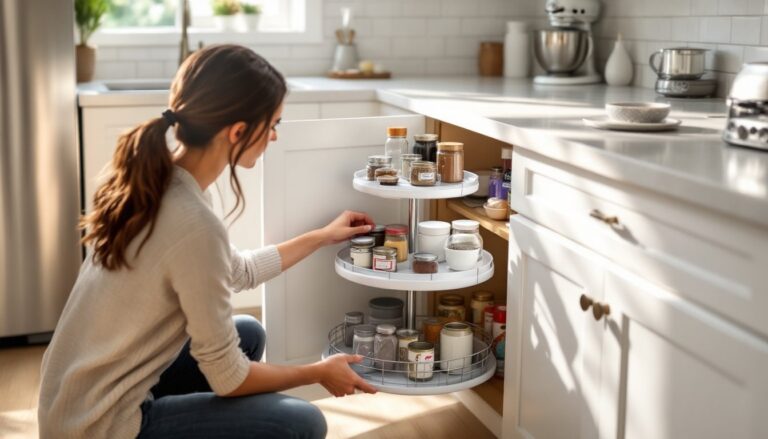
Procedure rooms and nursing stations need point-of-use storage that keeps critical supplies within arm’s reach. Wall-mounted systems with swing-out arms or pull-down bins save floor space while maintaining accessibility. Over-door organizers and corner carousel units capture wasted space. Label everything clearly, staff working in stressful situations shouldn’t have to guess what’s in each drawer.
Pharmacies should carry out zone-based storage: fast-movers in easily accessible areas, bulk storage in high-density systems, and temperature-controlled zones for refrigerated items. Bin shelving with angled shelves improves visibility and uses gravity to bring products forward as items are removed. Some pharmacies use automated robotic dispensing that stores medications at extremely high density while eliminating manual picking errors.
Small clinics can’t always justify industrial systems. Look for compact mobile units that do double duty, exam room carts that store supplies and serve as procedure surfaces, or reception desks with built-in filing. Under-counter storage and wall-mounted cabinets maximize limited footprints. Measure carefully: medical storage units often have deeper footprints than home furniture (18-24 inches typical), so confirm clearances before ordering.
Home healthcare storage needs portability and flexibility. Rolling carts with multiple drawers keep supplies organized and mobile. Over-bed tables with storage shelves hold frequently used items within patient reach. For caregivers managing multiple clients, sealed transport containers with latching lids protect supplies during travel while meeting infection control standards.
Conclusion
Healthcare storage isn’t about aesthetics, it’s infrastructure that directly impacts patient outcomes, regulatory compliance, and operational efficiency. Facilities that invest in purpose-built systems with proper materials, security features, and space optimization see measurable improvements in workflow speed, inventory accuracy, and audit readiness. Start by identifying the specific storage challenges each area faces, then select systems that address regulatory requirements while fitting the available space and budget. Well-designed storage becomes invisible to users, letting clinical staff focus on patient care instead of hunting for supplies.