
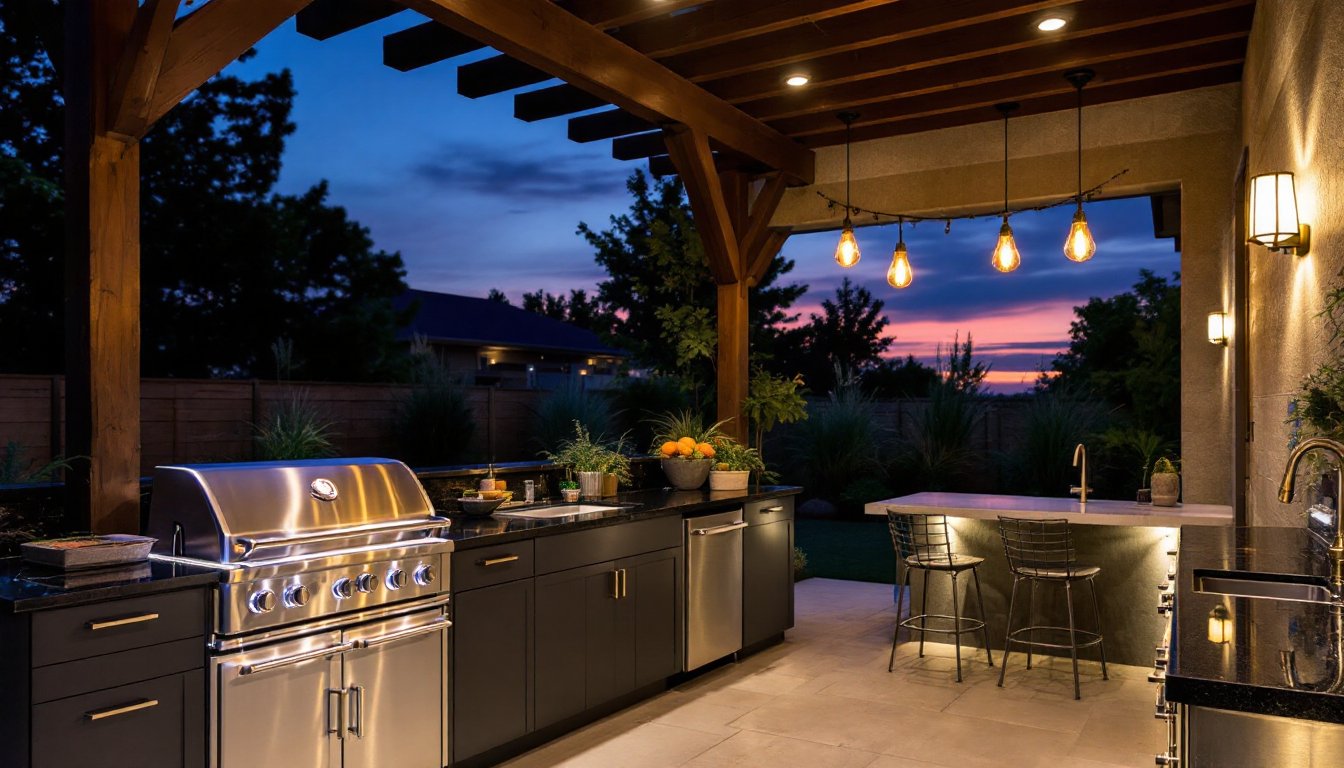
Outdoor kitchens have evolved from simple grilling stations into fully equipped cooking and entertaining zones, but without proper lighting, even the best-designed space turns into a fumbling match at dusk. Modern outdoor kitchen lighting isn’t just about visibility: it’s about creating a functional, safe, and inviting environment that extends usability well after sunset. Poor lighting forces squinting at grill temperatures, increases knife mishaps, and sends guests stumbling over patio edges. Strategic illumination transforms an outdoor kitchen from seasonal novelty into a year-round asset, blending task-focused brightness with ambient warmth to match both function and mood.
Table of Contents
ToggleKey Takeaways
- Modern outdoor kitchen lighting requires three essential layers—task, ambient, and accent—to balance safety, functionality, and ambiance for year-round usability.
- Task lighting in cooking zones should deliver 50-75 foot-candles using multiple fixtures like under-cabinet LED strips and grill-mounted lights to eliminate shadows and prevent food mishaps.
- All outdoor kitchen electrical work requires GFCI protection and wet-rated fixtures compliant with the National Electrical Code to prevent shock hazards and weather damage.
- LED technology reduces energy consumption by 75-80% compared to incandescent bulbs, making outdoor kitchen lighting cost-effective at roughly $5-7 monthly for typical setups.
- Smart controls and dimmers allow independent switching of task and ambient fixtures, enabling homeowners to shift from bright cooking conditions to relaxed dining atmosphere with voice commands or smartphone scheduling.
- Maintain design cohesion by repeating fixture finishes and color temperatures (3000K-4000K for task, 2200K-2700K for ambient) across all outdoor kitchen lighting elements.
Why Lighting Matters in Modern Outdoor Kitchens
Lighting addresses three critical needs in outdoor cooking spaces: safety, functionality, and ambiance. Unlike indoor kitchens with ceiling fixtures and natural daylight streaming through windows, outdoor setups contend with total darkness, weather exposure, and varying distances from the home’s electrical system.
Safety comes first. Adequate illumination prevents trips over steps, misjudged knife cuts, and burns from unseen hot surfaces. The National Electrical Code (NEC) requires GFCI protection for outdoor receptacles and fixtures, and many jurisdictions mandate weatherproof enclosures rated WP (weatherproof) or wet-location for anything exposed to direct moisture. Ignoring these standards creates shock hazards, especially around sinks and dishwashing stations.
Functionality means seeing what you’re cooking. Grills, cooktops, and prep counters need focused, shadow-free light, typically 50-75 foot-candles for detailed work. Under-lighting a cooking surface leads to guesswork on doneness and sloppy knife work. Task zones should be lit independently, so cooks aren’t relying on a single overhead bulb that casts their own shadow across the cutting board.
Ambiance shifts the space from utilitarian to livable. Once dinner’s plated, harsh overhead beams feel clinical. Dimmable, layered lighting allows homeowners to dial down intensity, creating a comfortable backdrop for dining and conversation. Modern outdoor kitchens balance these priorities without wasting energy or cluttering sightlines with mismatched fixtures.
Essential Lighting Layers for Outdoor Cooking Spaces
Effective outdoor kitchen lighting relies on layering: combining task, ambient, and sometimes accent lighting to handle different activities without over-illuminating or under-serving any zone.
Task Lighting for Prep and Cooking Areas
Task lighting delivers concentrated brightness exactly where hands and tools meet food. The grill and primary prep counter are non-negotiable zones.
- Under-cabinet LED strips: Mount these along the underside of upper cabinets or shelving above counters. Look for IP65-rated or higher fixtures to handle steam, grease splatter, and rain. Strips with 3000K-4000K color temperature provide neutral white light that renders food colors accurately without the harshness of cool daylight bulbs.
- Grill-mounted task lights: Many modern grills include integrated LED gooseneck lights, but aftermarket clamp-on LEDs work for older units. Position lights to illuminate the entire cooking surface without casting shadows from the cook’s body.
- Pendant or recessed canopy lights: If the outdoor kitchen includes a pergola or solid roof structure, recessed wet-rated cans (4-inch or 6-inch) can be installed directly above prep zones. Alternatively, low-profile marine-grade pendants resist corrosion and provide downward-focused light. Spacing matters, place fixtures 24-30 inches apart for even coverage on a standard 24-inch-deep counter.
Avoid using a single overhead fixture for task lighting. One light source creates harsh shadows: multiple smaller fixtures blend coverage and reduce glare.
Ambient Lighting for Atmosphere and Comfort
Ambient lighting fills the broader space, providing general visibility without the intensity of task fixtures. It softens the environment and ensures safe movement between zones.
- String lights and bistro bulbs: Edison-style bulbs on weather-resistant 14- or 16-gauge cord add warmth without dominating the design. String them under pergola beams, along fencing, or overhead between posts. Use dimmable LED bulbs (2200K-2700K) to mimic incandescent glow. Many newer sets are compatible with smart dimmers or plug-in controllers.
- Step and path lighting: Low-voltage LED fixtures (typically 12V systems) mark transitions between patio levels, stairs, and walkways. Brass or powder-coated aluminum housings hold up better than plastic in UV exposure and temperature swings. Path lights should cast downward pools of light, not blinding horizontal beams.
- Wall sconces and lanterns: Mount wet-rated sconces on nearby walls, posts, or the home’s exterior to provide soft, diffused light. Choose fixtures with frosted or opal glass to minimize glare. Modern styles lean toward clean geometric shapes in matte black, brushed nickel, or weathered bronze.
Ambient layers should be independently controllable. Tying everything to a single switch limits flexibility, homeowners want task lights on during cooking but may prefer only string lights during post-dinner drinks.
Top Modern Lighting Fixtures and Styles
Modern outdoor kitchen lighting in 2026 emphasizes minimalism, durability, and integration with smart home systems. Fixtures should complement architectural lines without feeling dated in three years.
LED strip and linear fixtures dominate task applications. Brands like WAC Lighting and Kichler offer outdoor-rated strips with adhesive backing and silicone coating, making installation straightforward on metal or wood surfaces. Look for products with aluminum channels that dissipate heat and protect diodes from UV degradation. Color-tunable RGBW strips are available but often unnecessary, consistent neutral white suits food prep better than shifting hues.
Flush-mount and semi-flush ceiling fixtures work under covered patios or pavilions. Choose powder-coated steel or marine-grade brass construction. Gasket-sealed lenses keep moisture and insects out. Many modern designs feature geometric cages, drum shades, or ribbed glass that diffuses light evenly. Fixtures with integrated photocells or dusk-to-dawn sensors reduce the need for manual switching.
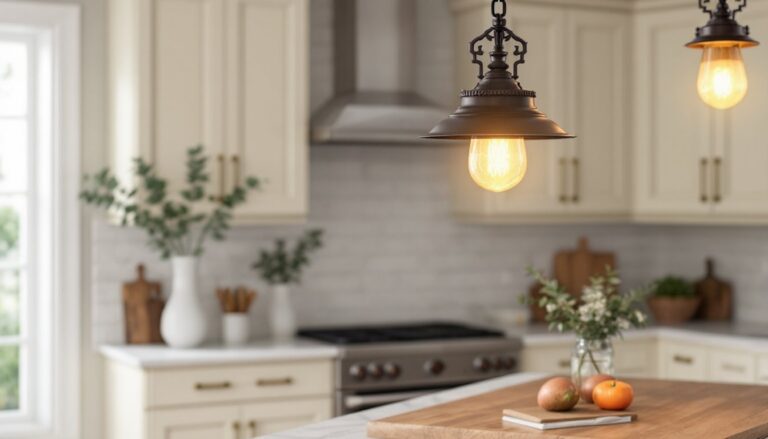
Industrial-style pendants suit kitchens with exposed beams or bar seating. Cone or dome shades in matte black or galvanized metal provide focused downlight while maintaining a clean profile. Pendant height matters, hang them 30-36 inches above counter height to avoid head-bumping but keep light concentrated.
Recessed lighting remains popular for sleek, unobtrusive coverage. Use IC-rated (insulation contact) housings if installing in an insulated ceiling structure, and always specify wet-location trim kits. Adjustable gimbal trims allow aiming at specific work zones. Pair recessed cans with compatible LED retrofit modules that snap into place, simplifying bulb changes.
Bollard and post-cap lights mark perimeters and add subtle uplighting to surrounding landscape. Squared or cylindrical bollards in powder-coated finishes resist rust. Cap lights mount atop deck posts or railing newels, defining space boundaries without cluttering counter zones.
Avoid mixing too many fixture styles. Cohesion comes from repeating finishes (all matte black, all brushed nickel) and maintaining similar color temperatures across all bulbs.
Smart Technology and Energy-Efficient Solutions
Smart controls and energy efficiency aren’t optional extras in 2026, they’re expected features that reduce operating costs and improve usability.
LED technology is standard. LEDs consume 75-80% less energy than incandescent bulbs and last 25,000-50,000 hours, meaning fewer ladder trips for replacements. Most outdoor-rated LEDs now include integrated drivers (no separate transformer needed for line-voltage fixtures). For low-voltage systems (12V or 24V), use a weatherproof transformer rated for outdoor use and mount it in a sheltered location. Calculate total wattage carefully, undersized transformers cause dimming and premature failure.
Smart switches and dimmers integrate with platforms like Lutron Caseta, Leviton Decora Smart, or TP-Link Kasa. These allow remote control via smartphone, voice commands through Alexa or Google Assistant, and scheduling, turn on path lights at sunset, dim ambient fixtures at 10 PM, shut everything off at midnight. Many systems support geofencing, triggering lights when the homeowner’s phone enters a defined radius.
Motion and occupancy sensors make sense for secondary zones like outdoor pantries or storage areas but can feel intrusive at the main cooking island. If using sensors, choose models with adjustable sensitivity and time delays to prevent false triggers from pets or wind-blown branches.
Solar-powered accent lights supplement wired systems for path marking or decorative uplighting, but they’re unreliable for task lighting. Battery capacity and panel efficiency vary wildly by product quality, and cloudy climates reduce performance. Use solar for supplemental accents, not critical illumination.
Photocell and timer controls offer simple automation without app dependence. Photocells detect ambient light levels and switch fixtures on at dusk, off at dawn. Mechanical or digital timers allow set on/off times. Both are inexpensive insurance against forgetting to turn lights off after a late gathering.
Energy costs: A typical outdoor kitchen with six 10W LED fixtures and 25 feet of LED strip (total ~100W) running 4 hours per night costs roughly $5-7 per month at average US electricity rates. Compare that to equivalent halogen or incandescent setups that could triple that figure.
Always use GFCI-protected circuits for outdoor lighting. If running new wiring, bury UF-B (underground feeder) cable at the depth required by local code, typically 12-18 inches depending on conduit use and circuit type. Pulling permits for new circuits isn’t optional: most jurisdictions require inspections for any work beyond replacing existing fixtures.
Conclusion
Modern outdoor kitchen lighting balances visibility, safety, and atmosphere through thoughtful layering and weather-appropriate fixtures. Prioritizing task illumination at prep and cooking zones, supplementing with ambient layers, and integrating smart controls creates a space that’s functional after dark and enjoyable year-round. Invest in quality wet-rated fixtures, stick to cohesive finishes, and don’t skip GFCI protection or local permit requirements. Done right, a well-lit outdoor kitchen extends living space and makes every evening cookout safer and more inviting.