

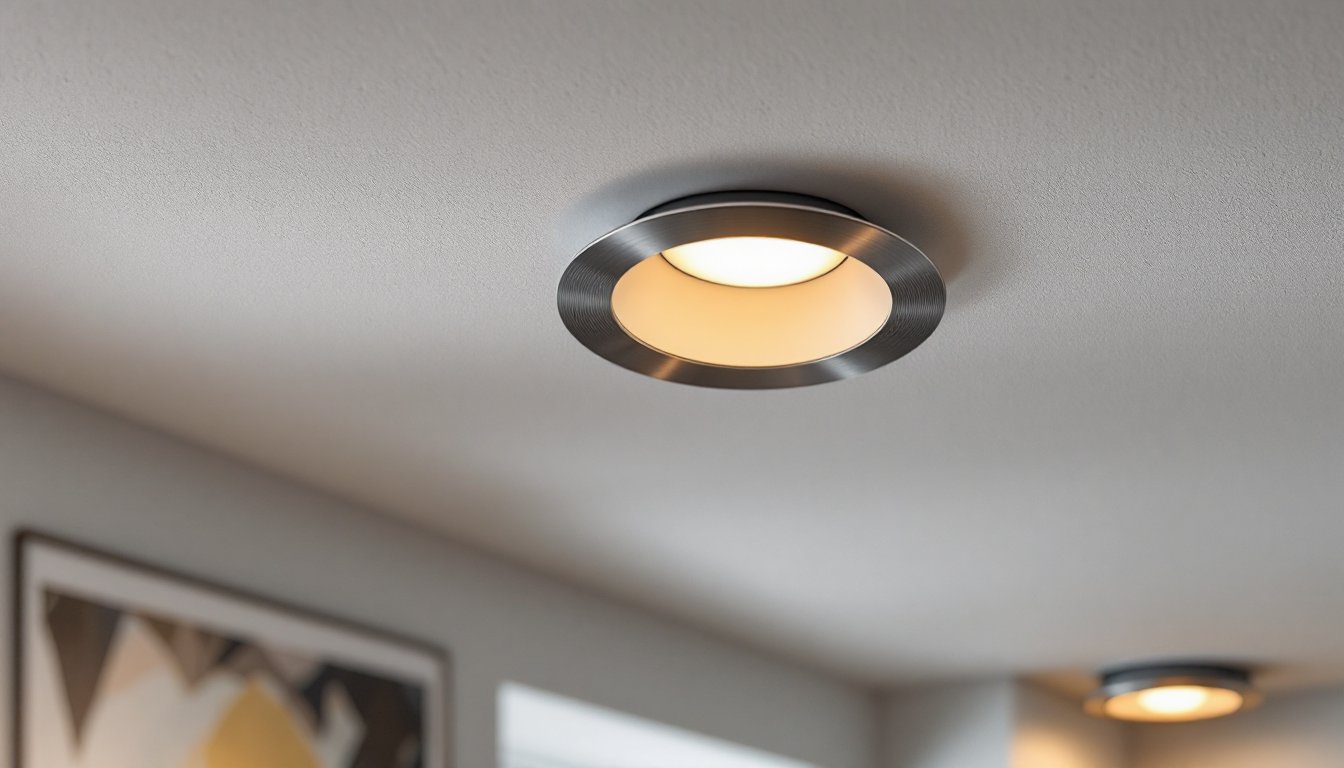
Nora Lighting has carved out a reputation in the commercial and residential lighting industry for engineering recessed fixtures that blend precision, longevity, and modern LED technology. Contractors and serious DIYers turn to Nora when they want recessed lighting that exceeds builder-grade options, fixtures designed with tighter tolerances, better thermal management, and retrofit flexibility. Whether upgrading tired halogens or roughing in new construction, understanding Nora’s product range and installation requirements helps homeowners make informed decisions that balance performance, code compliance, and budget. This guide walks through what sets Nora apart, how to choose the right fixture, and what to expect during installation.
Table of Contents
ToggleKey Takeaways
- Nora recessed lighting delivers superior build quality, optical performance, and trim flexibility compared to mass-market fixtures, with die-cast aluminum housings, advanced drivers, and modular systems that allow field changes without ceiling reopening.
- Nora LED modules achieve 70–90 lumens per watt, enabling a 12-watt fixture to replace a 65-watt incandescent and save $50–$70 per fixture over 15 years while offering TRIAC and ELV dimming down to 5–10% without flicker.
- Selecting the right Nora fixture requires measuring ceiling clearance for shallow-profile housings, confirming IC-rated (insulation contact) ratings, calculating lumen output based on room function (20–30 lm/sq ft for ambient, 50–75 lm/sq ft for task areas), and matching color temperature to space use.
- Retrofit installations using Nora’s modular trim systems allow updating existing halogen fixtures by feeding wiring into the housing’s junction box and compressing spring clips, eliminating the need for full housing replacement in finished ceilings.
- Proper insulation management, dimmer compatibility testing, and NEC Article 410 compliance are essential; non-IC housings must maintain a 3-inch air gap around insulation, and TRIAC dimmers must be verified against Nora’s tested dimmer list to prevent humming or LED strobing.
- Nora recessed lighting balances premium cost against measurable returns through lower callback rates, superior color rendering (CRI ≥90), precise photometric control, and improved long-term reliability that enhance both function and resale value.
What Is Nora Recessed Lighting?
Nora Lighting is a U.S.-based manufacturer specializing in architectural-grade recessed lighting, track systems, and linear fixtures. Founded in Los Angeles, the company focuses on LED technology and energy-efficient designs that meet commercial specifications but scale down for residential use.
Unlike mass-market can lights sold at big-box stores, Nora fixtures often feature die-cast aluminum housings, advanced driver electronics, and modular trim systems that allow field changes without replacing the entire housing. This modularity matters during remodels, swap a baffle trim for an adjustable gimbal without opening the ceiling.
Nora products typically carry IC (insulation contact) and airtight ratings, making them code-compliant in energy-conscious jurisdictions. Many lines also offer wet or damp location listings for bathrooms, covered porches, or shower installations where moisture is a concern.
The brand targets specifiers, electricians, and homeowners who prioritize dimming performance, color consistency (high CRI ratings above 90), and long-term reliability over initial cost. Expect to pay a premium compared to commodity fixtures, but with lower callback rates and better photometric control.
Why Choose Nora Recessed Lighting for Your Space
Nora fixtures deliver measurable advantages in three areas: build quality, optical performance, and flexibility.
Build quality means housings that resist warping under heat cycling, drivers rated for 50,000+ hours, and spring clips that hold trim securely after repeated adjustments. Cheaper fixtures often use plastic sockets and thin-gauge steel that deform over time, causing trims to sag or buzzing under load.
Optical performance refers to beam control and color rendering. Nora uses precision reflectors and high-CRI LEDs (Color Rendering Index ≥90) that reveal true fabric colors, wood grain, and skin tones, critical in kitchens, closets, and bathrooms. Beam spreads are documented in photometric files, so designers can predict light distribution rather than guess.
Flexibility comes from tool-free trim changes and universal mounting systems that fit standard junction boxes or new-construction brackets. Some lines accept different wattage modules, letting users increase output later without rewiring.
For homeowners tackling whole-house LED conversions or architects specifying custom builds, Nora reduces unknowns and long-term maintenance.
Energy Efficiency and LED Technology
Nora’s LED modules typically deliver 70–90 lumens per watt, outperforming old incandescent (10–17 lm/W) and halogen (12–20 lm/W) technologies by wide margins. A 12-watt Nora LED can replace a 65-watt BR30 incandescent while producing comparable light, saving roughly $50–$70 per fixture over 15 years in electricity costs at average U.S. rates.
Most Nora drivers are TRIAC and ELV dimmable down to 5–10% without flicker or dropout, compatible with Lutron, Leviton, and other leading dimmer brands. Always verify dimmer compatibility on the spec sheet: older rotary dimmers designed for resistive loads will hum or cause LED strobing.
Many product lines are ENERGY STAR certified and comply with California Title 24 mandates, which require high-efficacy lighting and automatic shutoff controls in new residential construction. This certification simplifies permit approval in strict jurisdictions.
Popular Nora Recessed Lighting Product Lines
Nora’s catalog is broad, but several lines dominate residential installations:
Cobalt™ Series offers adjustable LED modules in 2-inch, 3-inch, and 4-inch apertures. The gimbal trims tilt up to 35°, useful for accent lighting or washing walls. Housings are shallow (roughly 4 inches deep), fitting tight ceiling plenums where traditional 6-inch cans won’t clear joists or ductwork.
Onyx™ Line emphasizes retrofit convenience. These fixtures mount directly to existing 4-inch, 5-inch, or 6-inch recessed housings using spring clips, no housing replacement needed. Ideal for updating halogens in finished ceilings without drywall surgery. Available in square and round trims, multiple color temperatures (2700K–4000K), and dimmable configurations.
Iolite™ Series targets new construction with IC-rated housings approved for direct contact with blown-in or batt insulation. The airtight gasket between housing and trim reduces energy loss, a code requirement in many cold-climate states. These housings accept interchangeable trims: baffle, reflector, wall wash, or pinhole.
Lucent™ Adjustable provides high-output options (up to 1,200 lumens) for task lighting over kitchen islands, desks, or reading nooks. Gimbals rotate 350° and tilt 30°, giving precise beam placement.
Each line includes photometric data and compatibility charts on Nora’s website, critical for calculating spacing and coverage before ordering.
How to Select the Right Nora Recessed Lights
Selection hinges on ceiling type, room function, and desired light quality.
Ceiling clearance dictates housing depth. Measure from the finished ceiling surface to the nearest obstruction (joist, HVAC duct, structural beam). Shallow-profile housings (3–4 inches) suit tight plenums: standard 6-inch housings need at least 7 inches of clearance including the mounting bracket.
Insulation contact (IC rating) is non-negotiable if insulation touches the fixture. Non-IC housings must maintain a 3-inch air gap per NEC 410.116(B), which is impractical in most insulated attics or top-floor ceilings. Confirm the housing is labeled “IC Rated” on the junction box.
Lumen output and spacing depend on room size and function. General ambient lighting uses roughly 20–30 lumens per square foot in living areas: task zones (counters, vanities) need 50–75 lm/sq ft. For an 8-foot ceiling, spacing fixtures 4–6 feet apart in a grid pattern avoids hot spots and shadows. Use Nora’s spacing criterion (typically 1.0 to 1.5) from the spec sheet to calculate maximum distance.
Color temperature affects mood. 2700K mimics incandescent warmth for bedrooms and living rooms: 3000K suits kitchens and baths: 3500K–4000K works in garages or workshops where color accuracy matters. Mixing color temps in open-plan spaces looks sloppy, pick one and stick with it.
Dimming requirements should be matched to the driver. If installing a 0–10V dimmer system (common in whole-home automation), confirm the fixture accepts 0–10V control. Phase-cut (TRIAC) dimmers are more common in single-room circuits.
Trim style is partly aesthetic, partly functional. Baffle trims reduce glare: reflector trims maximize output: adjustable gimbals aim light where needed. Nora’s modular trims let users swap styles later if priorities change.
Installation Tips and Considerations
Electrical work must comply with NEC Article 410 (luminaires) and local amendments. Most jurisdictions require a permit for new recessed lighting circuits or fixture replacements that involve rewiring. Retrofit kits that plug into existing sockets may not require permits, but verify locally.
Safety first: Turn off power at the breaker and verify with a non-contact voltage tester before touching wires. Wear safety glasses when cutting drywall, dust and insulation particles are inevitable.
New construction is straightforward. Nail or screw the housing brackets to joists before drywall goes up, keeping the housing flush with the planned ceiling plane. Run 14/2 or 12/2 NM-B cable (depending on circuit amperage) to each fixture, securing cables within 8 inches of the housing per NEC 314.23. Connect hot (black), neutral (white), and ground (bare copper) to the driver’s leads using wire nuts or push-in connectors. After drywall, snap the trim into the housing clips.
Retrofit installations require cutting access holes. Locate joists with a stud finder and mark the centerline. Many Nora retrofit housings are “remodel” style with adjustable side clips that clamp onto the drywall from below, no joist attachment needed. Use a 4.5-inch hole saw for 4-inch fixtures or a 6.25-inch saw for 6-inch fixtures. Feed existing circuit wiring into the housing’s junction box, make connections, then compress the spring clips and push the housing into the ceiling until flush.
Insulation management: If the space above is insulated, slide the insulation back 3 inches around non-IC housings or lay it directly over IC-rated units. Airtight gaskets (included on many Nora IC fixtures) compress against the ceiling drywall when the trim seats, sealing the thermal envelope.
Dimmer compatibility testing: After installation, test dimming with a load. Some LED drivers hum or flicker at low levels if the dimmer’s minimum load isn’t met. Nora publishes tested dimmer lists: if experiencing issues, swap to a recommended model or add a load buffer.
Aim adjustable trims while standing in typical viewing positions. Lock gimbals with the set screw once aimed, vibrations from foot traffic can shift them over time.
If the project involves more than a dozen fixtures, involves structural modifications, or ties into a panel nearing capacity, hire a licensed electrician. Miswired recessed lights are a leading cause of attic fires due to overheating or arcing faults.
Conclusion
Nora recessed lighting occupies the space between commodity builder-grade fixtures and full custom specification products. The investment in better drivers, tighter beam control, and modular components pays off in fewer service calls, superior dimming, and cleaner installations. By matching housing depth to ceiling clearance, selecting appropriate color temperature and lumen output, and following NEC-compliant wiring practices, homeowners and contractors can achieve professional results that improve both function and resale value.