
Every homeowner knows the problem: garden tools leaning against the garage, pool supplies piling up on the patio, and cushions that never quite make it inside before the rain hits. Without proper outdoor storage, yards become cluttered, equipment deteriorates from weather exposure, and valuable gear gets damaged or stolen. The right storage solution protects investments, extends the life of outdoor equipment, and reclaims usable yard space. Whether someone’s dealing with a compact urban patio or a sprawling suburban lot, choosing the right outdoor storage requires understanding materials, sizing needs accurately, and organizing strategically.
Table of Contents
ToggleKey Takeaways
- Proper outdoor storage solutions protect valuable equipment from weather damage and theft, potentially extending a mower’s lifespan from three to ten seasons and keeping yard items secure.
- Choosing the right outdoor storage requires matching capacity and door size to your equipment—measure large items like riding mowers before purchasing to ensure comfortable access.
- Material selection is critical: resin resists weather but weakens over time, metal offers durability but requires anchoring, and wood provides customization but demands regular maintenance like annual sealing.
- Vertical storage, zone organization by frequency of use, and overhead shelving maximize space efficiency while keeping frequently used items accessible near the storage entrance.
- Sheds over 120 square feet typically require permits and setback compliance; always check local building codes before installation to avoid legal issues.
- Ventilation, proper flooring, and security features—from lockable hasps to reinforced structures—ensure outdoor storage remains functional, safe, and compliant with HOA regulations.
Why Outdoor Storage Is Essential for Every Homeowner
Outdoor storage isn’t about aesthetics alone, it’s about protecting assets and maintaining property value. Lawn mowers, power tools, grills, and patio furniture represent thousands of dollars in equipment that degrades rapidly when exposed to UV rays, moisture, and temperature swings.
Consider a typical gas-powered mower stored outdoors without cover. Sun breaks down plastic components, rain causes rust on metal parts, and moisture invades the fuel system. That $400 mower might last three seasons instead of ten. Covered storage extends equipment lifespan by shielding it from the elements.
Beyond equipment protection, outdoor storage addresses safety and security concerns. Tools left scattered across a yard create tripping hazards, especially for children and pets. Unsecured items also invite theft, according to property crime data, opportunistic theft of yard equipment remains common in both suburban and rural areas.
There’s also the code compliance angle. Many HOAs and local ordinances restrict visible storage of certain items. Trash bins, pool chemicals, propane tanks, and lawn equipment often must be screened from view. A proper storage solution keeps homeowners compliant while keeping the property looking intentional rather than cluttered.
Types of Outdoor Storage Solutions for Different Needs
Sheds and Large-Scale Storage Buildings
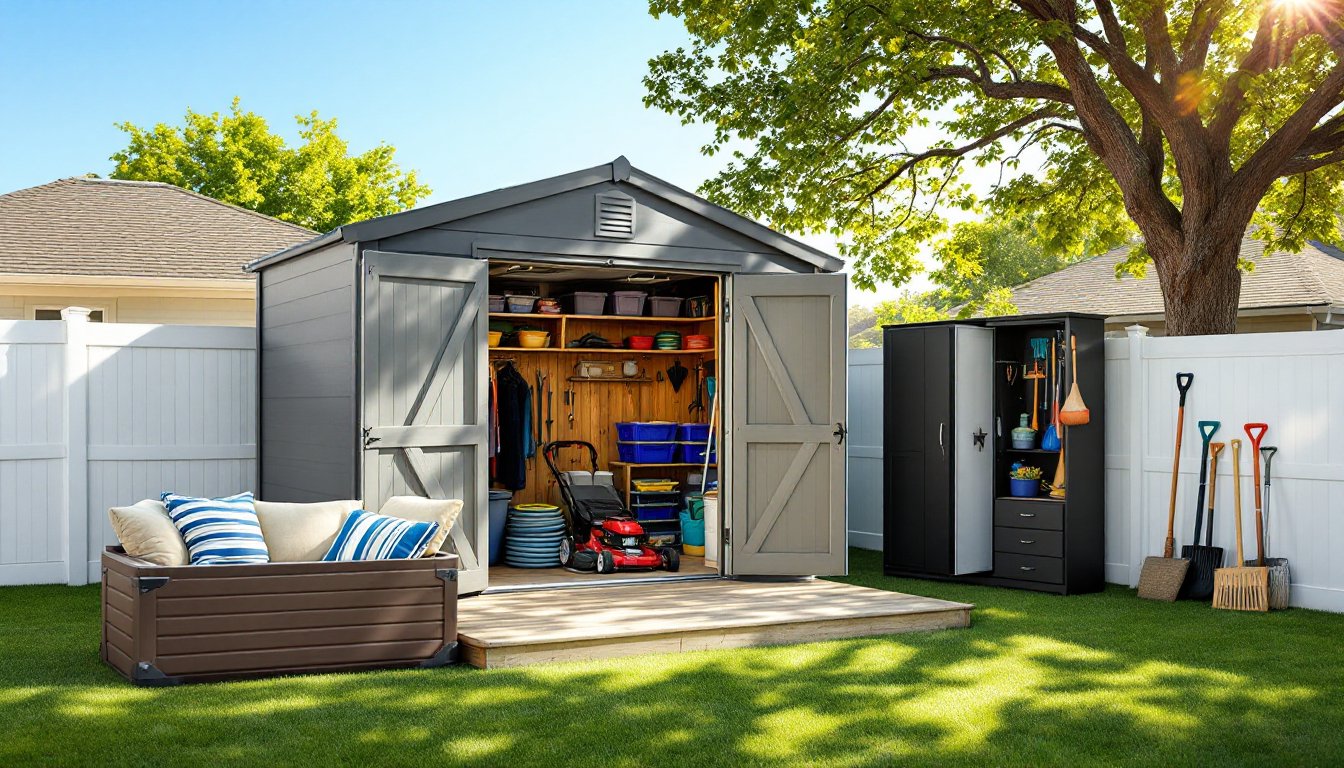
For serious storage capacity, nothing beats a dedicated shed. Standard sizes range from 6×8 feet (suitable for basic lawn equipment) to 12×16 feet or larger (accommodating riding mowers, workbenches, and bulk seasonal items).
Pre-fabricated sheds arrive as kits or fully assembled. They’re faster to install than custom builds but offer less flexibility in design. Most sit on a level foundation, either a concrete slab, gravel bed with compacted base, or pier blocks. A proper foundation prevents settling, keeps floors dry, and extends structure life.
Site-built sheds allow customization but require more skill. Builders must account for local building codes, which typically kick in once a structure exceeds 120 square feet or includes electrical service. Check with the local building department before breaking ground, many jurisdictions require permits, setback compliance (distance from property lines), and inspections.
Electrical access transforms a shed from simple storage into a functional workspace. Running a dedicated circuit requires an electrician and permits in most areas, but it enables lighting, power tool use, and climate control. For chemical storage (fertilizers, pesticides, pool chemicals), ventilation becomes critical. Install vents near the roofline to prevent fume buildup.
Deck Boxes and Compact Storage Options
Not every yard needs, or has room for, a full shed. Deck boxes handle moderate storage in tight spaces: patios, balconies, or alongside pools. Typical capacities range from 50 to 150 gallons, enough for cushions, pool toys, garden hand tools, or grilling accessories.
Look for boxes with gas struts or slow-close hinges, they prevent lid slamming and pinched fingers. Lockable latches deter theft and keep kids away from stored chemicals or sharp tools. The best deck boxes include interior organization features: dividers, tool racks, or removable trays.
Vertical storage cabinets work well for narrow spaces. These tall, slim units (often around 2 feet wide and 5-6 feet tall) fit against house walls or fences. They’re ideal for long-handled tools, rakes, shovels, brooms, that don’t fit efficiently in horizontal boxes.
Specialty solutions address specific needs:
- Trash enclosures screen bins from view and deter animals
- Bike sheds protect bicycles from weather while saving garage space
- Firewood racks with covers keep logs dry and accessible
- Hose reels and cabinets organize irrigation equipment and prevent kinking
Key Features to Consider When Choosing Outdoor Storage
Capacity matters, but access matters more. A 100-square-foot shed sounds spacious until someone realizes they can’t maneuver a riding mower through a 32-inch door. Measure large equipment before buying storage. Add 6 inches of clearance on all sides for comfortable access.
Door configuration affects usability. Double doors (5-6 feet wide) accommodate mowers and wheelbarrows easily. Single doors work for hand tools and smaller items. Consider door swing direction, outward-opening doors don’t consume interior space but need clearance in the yard.
Flooring determines what can be stored. Sheds without floors (gravel base only) work for dirty items like mowers but allow moisture infiltration. Plywood or OSB floors over treated joists keep stored items dry but require proper foundation support. For chemical storage or workspace use, consider sealed concrete for easy cleaning and impermeability.
Ventilation prevents moisture buildup and mildew. Even “waterproof” structures trap humidity from temperature changes. Install gable vents, ridge vents, or soffit vents to promote air circulation. For tool storage, this prevents rust: for chemical storage, it’s a safety requirement.
Security features range from basic to robust:
- Lockable hasps (accept a padlock)
- Integrated locking mechanisms (keyed or combination)
- Reinforced doors and walls (deter forced entry)
- Anchor points (secure structure to foundation, preventing theft of entire unit)
Weight capacity matters for shelving and overhead storage. Check manufacturer specs, cheaper units may only support 25-50 pounds per shelf, while heavy-duty systems handle 200+ pounds. Storing paint cans, power tools, and bulk materials requires robust shelving.
Best Materials for Weather Resistance and Durability
Material choice determines longevity, maintenance requirements, and cost. Here’s how common options stack up:
Resin/plastic storage dominates the deck box market and smaller sheds. High-density polyethylene (HDPE) resists rot, insects, and UV damage. It won’t rust or require painting. Downsides? It expands and contracts with temperature changes, weakens in extreme cold, and can become brittle after years of sun exposure. Quality varies wildly, thicker walls (look for double-wall construction) last longer.
Metal storage (steel or aluminum) offers excellent security and durability. Galvanized or powder-coated steel resists rust but will corrode eventually, especially in coastal or high-humidity areas. Aluminum doesn’t rust but dents more easily. Metal sheds often require assembly and must be anchored, wind can relocate an empty metal shed surprisingly far. They also conduct heat, making interiors uncomfortably hot in summer.
Wood storage provides the most natural appearance and customization potential. Pressure-treated lumber (ground-contact rated for foundation components) resists rot and insects. Cedar and redwood contain natural oils that repel moisture and pests, but they cost significantly more. Wood requires maintenance: annual sealing or staining to prevent weathering, checking for rot, and repairing damage. Lifespan depends on upkeep, a well-maintained wood shed lasts 20+ years: a neglected one deteriorates in under ten.
Composite materials blend wood fibers with plastic for low maintenance and rot resistance. They’re common in deck boxes and smaller structures. They cost more than basic wood or resin but require minimal upkeep.
For foundations and floors, use materials rated for ground contact. Concrete is permanent and moisture-proof but expensive and labor-intensive. Gravel over landscape fabric drains well and costs less but doesn’t prevent moisture migration. Pier blocks or concrete deck blocks create an elevated platform that promotes drainage and airflow.
Smart Organization Tips to Maximize Your Outdoor Storage Space
Even the largest shed becomes cluttered without a system. Start with vertical storage wherever possible. Wall-mounted racks, pegboards, and slatwalls keep floors clear and items visible. Long-handled tools hang on wall hooks: smaller hand tools go on pegboard. Label everything, it saves time and ensures items return to their designated spots.
Zone storage by use frequency and season. Keep frequently used items, mower, trimmer, common hand tools, near the door for easy access. Seasonal items (holiday decorations, winter equipment) go toward the back or on higher shelves. Store similar items together: all garden chemicals in one area (with proper ventilation and spill containment), all potting supplies in another.
Use clear containers for small parts. Hardware, sprinkler parts, and gardening accessories disappear in cardboard boxes. Transparent plastic bins with labels make inventory visible at a glance. Stack them on shelves, not on the floor where they block access and trap moisture.
Install overhead storage in sheds with sufficient height. Joists or rafters support shelving for lightweight, infrequently used items. Don’t overload, most residential shed rafters aren’t engineered for heavy loads. If adding overhead storage to an existing structure, reinforce framing as needed.
Create a maintenance station. A small workbench with tool storage, a vise, and task lighting transforms a shed into a functional workspace. Add a power strip (on a GFCI-protected circuit) for charging batteries and running small tools.
Protect items within storage. Even waterproof storage experiences temperature swings and humidity. Wrap metal tools in oil-soaked rags or use vapor-corrosion inhibitor (VCI) strips to prevent rust. Store fabric items (cushions, tarps) in sealed bags to prevent mildew and pest damage.
Use doors and lids for storage, too. The inside of a shed or deck box lid is prime real estate. Mount small baskets, magazine holders (for gloves, seed packets), or tool loops. Maximize every square inch.
Plan for future needs. Storage requirements change. Buy slightly larger than current needs allow, and design organization systems that adapt. Modular shelving, adjustable wall systems, and stackable containers offer flexibility as storage needs evolve.
Outdoor storage done right protects equipment, organizes chaos, and reclaims yard space. Whether installing a 10×12 shed or adding a deck box to a small patio, choosing appropriate materials, sizing correctly, and organizing intentionally makes the difference between functional storage and an outdoor junk pile.