
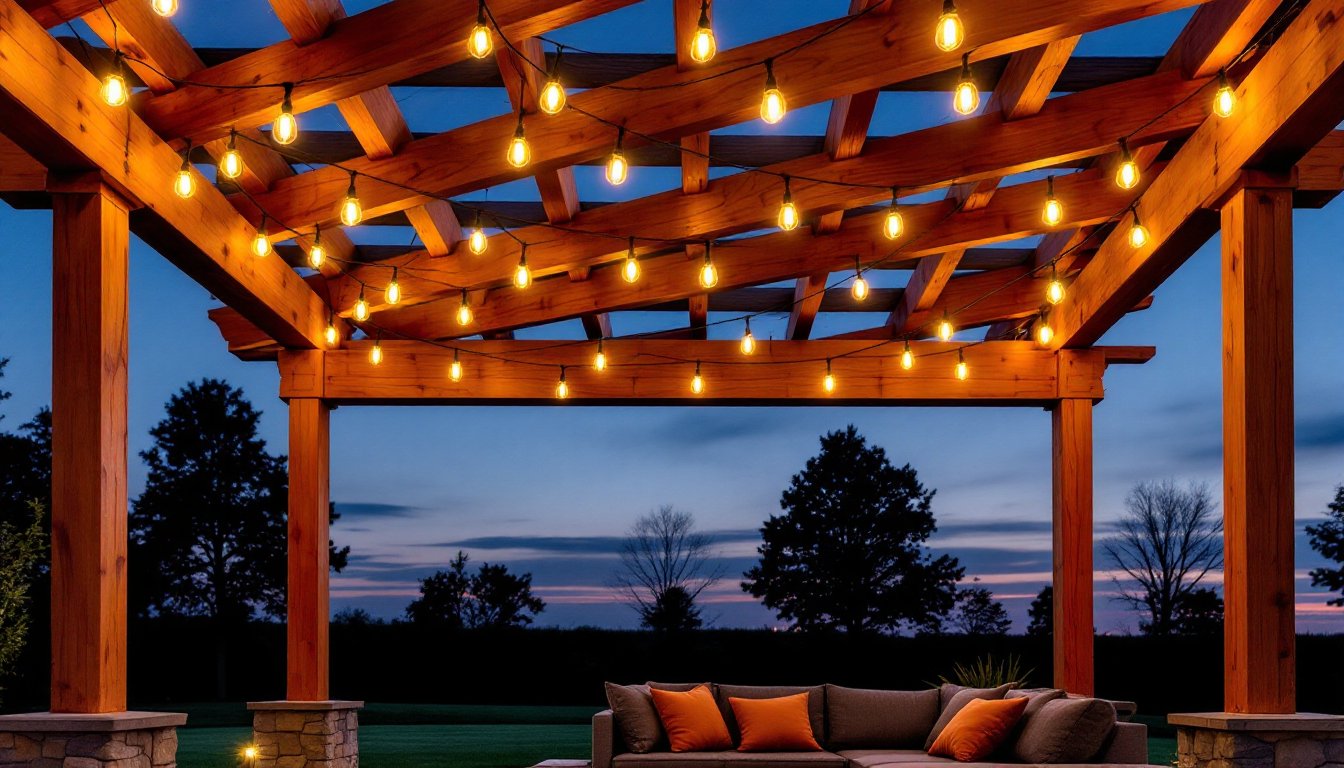
String lights on a pergola turn a simple backyard structure into a warm, inviting outdoor room. They’re practical, affordable, and forgiving, no need for an electrician’s precision or a designer’s budget. The right lighting pattern can define zones, extend evening hours, and add architectural interest to overhead beams. With weather-resistant options now widely available and installation as simple as securing hooks or cable, homeowners can achieve professional-looking results in an afternoon. This guide covers proven string light arrangements, bulb styles, and smart options that work for real pergolas, from open-beam timber frames to modern aluminum louvered systems.
Table of Contents
ToggleKey Takeaways
- Pergola string lighting transforms outdoor spaces affordably and practically by using built-in overhead support, with installation achievable in an afternoon without professional help.
- Choose weather-resistant lights with IP65+ ratings and commercial-grade wire (16–18 AWG) to ensure durability and consistent illumination across long runs.
- Classic crisscross, Edison bulb, globe, and draped patterns each suit different pergola styles and uses—select based on your structure’s design and whether you need even task lighting or ambient ambiance.
- Smart string lights with Wi-Fi or Bluetooth control enable dynamic dimming and color changes, but verify signal strength and group control capabilities for seamless operation across your pergola.
- Proper anchoring every 18–24 inches, correct drape calculations, and maintaining clearance heights (6.5–7 feet minimum for head strikes) ensure safety and longevity of your string light installation.
Why String Lights Are Perfect for Pergolas
Pergolas provide the infrastructure string lights need: overhead support every 12–24 inches, clear sightlines for even illumination, and built-in geometry that guides layout. Unlike freestanding poles or tree branches, pergola beams offer predictable anchor points at consistent heights.
Electrical access is simpler than many assume. Most pergolas sit within 50 feet of an exterior outlet. For permanent installations, homeowners can run UF-B underground cable from a GFCI-protected circuit, but code requirements vary, check local ordinances and consider hiring a licensed electrician for buried wiring. Temporary setups work fine with outdoor-rated extension cords rated for the total wattage.
Weather exposure matters. Look for string lights with IP65 or higher ratings, indicating dust-tight seals and protection against water jets. Shatterproof plastic or silicone bulb covers handle hail and accidental impacts better than bare glass. Commercial-grade strings with 18 AWG or 16 AWG wire resist UV degradation and support longer runs without voltage drop.
Pergolas also create a defined “ceiling” that contains light, reducing spill into neighbors’ yards and focusing ambiance where it’s needed. That contained glow makes spaces feel intentionally designed rather than randomly lit.
Classic Crisscross Canopy Lighting
The crisscross pattern divides the pergola’s open ceiling into smaller illuminated sections, distributing light evenly without dark pockets. Start by measuring diagonals, if the pergola is 12×16 feet, the diagonal runs about 20 feet. Add 10% for drape and connection slack.
Installation steps:
- Mark anchor points on opposite corners, then at beam intersections along each side.
- Install screw-in cup hooks or cable guide clips rated for outdoor use. For wood beams, predrill pilot holes slightly smaller than the hook shank to prevent splitting.
- Run the first string diagonally from one corner to the opposite, allowing a 4–6 inch droop between supports for a natural catenary curve.
- Repeat with the second string on the opposite diagonal, weaving under or over the first at the center crossing point.
- Add perimeter strings along all four sides to frame the space and hide connection points.
Bulb spacing of 12–18 inches works best for crisscross patterns. Closer spacing creates a denser canopy: wider intervals let more sky show through. This layout suits pergolas over dining areas where even, shadowless light improves visibility without glare.
For structures with cross beams or rafters spaced at 16 or 24 inches on center, add intermediate attachment points mid-span to prevent sagging. Use zip ties or insulated staples, never bare staples that can nick wire insulation.
Edison Bulb String Lights for Vintage Appeal
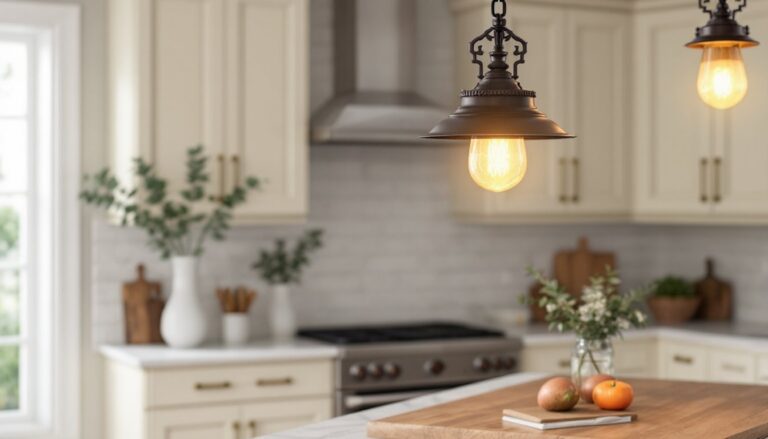
Edison-style bulbs with visible filaments, now almost exclusively LED replicas, suit pergolas with rustic or industrial materials: reclaimed timber, black steel brackets, or exposed hardware. The bulbs cast a warm amber glow (typically 2200K–2700K color temperature) that flatters natural wood tones and creates a nostalgic atmosphere.
These bulbs are larger and heavier than mini-lights. E26 or E27 sockets on commercial-grade strings handle the weight, but homeowners should verify the string’s maximum bulb wattage. Modern LED Edison bulbs draw 4–7 watts each, far below the 25–40 watt limits of most strings, but vintage incandescent replacements can overload circuits.
Layout considerations:
- Space bulbs 24–36 inches apart. Closer placement overwhelms: wider gaps create dark zones.
- Run strings in straight parallel lines along rafters rather than crisscrossing. The bulbs’ size makes complex patterns look cluttered.
- Keep runs to 25 bulbs or fewer per outlet to avoid voltage sag at the far end.
Dimming compatibility varies. Check whether the LED driver supports phase-cut or electronic low-voltage dimmers. Some “dimmable” LED Edison bulbs flicker or hum on incompatible dimmers.
For pergolas over gravel patios or permeable pavers, burial of supply cable is straightforward. Dig an 18-inch trench (or per local code), lay conduit, and backfill. For poured concrete or existing hardscape, surface-mount in-use weatherproof covers near a pergola post and run cable up the inside of the post if it’s hollow.
Globe String Lights for Modern Elegance
Globe string lights, spherical frosted or opal bulbs 1.5 to 3 inches in diameter, produce diffused, even light without harsh shadows. They’re popular on contemporary pergolas with clean lines: aluminum frames, cable rail systems, or minimalist white-painted structures.
The frosted lens softens LED point-source glare, making them comfortable for eye-level viewing when seated. Color temperature choices range from warm white (2700K–3000K) to daylight (5000K). Warm white suits evening relaxation: daylight blends better with dusk skies in summer months.
Installation tips:
- Use perimeter mounting for smaller pergolas (under 10×10 feet). Run a single string along all four sides, with corner loops or gentle curves at posts.
- For larger pergolas, combine perimeter strings with 2–3 parallel runs down the center, spaced 36–48 inches apart.
- Attach strings to the underside of the top beam or the outer edge depending on desired sight lines. Underside mounting hides hardware: edge mounting showcases the bulbs as architectural elements.
Voltage drop becomes an issue on runs longer than 50 feet. If covering a 16×20 foot pergola, split the circuit: one string for two sides and half the center, another for the remaining sections. Use plug-in splitters with built-in fuses at the power source.
Globe lights are heavier than wire fairy lights. Secure them every 18–24 inches with guide hooks or cable clamps. Don’t rely on a single anchor at each end, the weight will pull beams or create dangerous sag.
Draped and Swag String Light Patterns
Draping creates a softer, more organic look than geometric patterns. Strings swoop between anchor points in gentle curves, resembling a fabric canopy. This approach works especially well on pergolas with decorative corbels, finials, or arched details that complement the flowing lines.
Calculating drape length is critical. For a 10-foot span with a 12-inch drop, the curved length is roughly 10.5 feet (use the catenary curve formula or online calculators). Underestimate, and the string pulls taut: overestimate, and it droops too low.
Step-by-step setup:
- Mark primary anchor points at corners and midpoints of each beam.
- Install eye screws or J-hooks at these marks. For metal pergolas, use self-tapping screws with neoprene washers to prevent metal-on-metal rattling.
- Attach the string end to the first anchor, then drape to the next, allowing the desired arc.
- Secure with S-hooks or carabiners so adjustments are easy, clips let you fine-tune symmetry without redrilling.
- Repeat across the structure, alternating drape direction for visual rhythm.
Safety note: Keep the lowest point of any swag at least 6.5–7 feet above finished floor to prevent head strikes. Taller users and guests carrying trays or tools need clearance.
Draped lights suit lounge or conversation areas more than task-lit dining spaces. The varying height creates ambiance but uneven illumination. Pair with a secondary light source, a wall-mounted sconce or a portable lantern, for functional lighting.
Wind resistance is lower with moderate drape. Tight, flat strings act like sails: deep sags catch gusts. Aim for a 10–15% droop relative to span length.
Color-Changing and Smart String Lights
Smart string lights integrate with Wi-Fi or Bluetooth controllers, enabling dimming, scheduling, and color changes via smartphone apps or voice assistants. They’re practical for homeowners who use the pergola for multiple purposes: warm white for dinners, cool white for late-night reading, or colored modes for parties.
Key features to evaluate:
- Protocol compatibility: Wi-Fi systems (like those using common smart home platforms) require a strong outdoor signal or a mesh extender. Bluetooth works within 30–50 feet but won’t respond when the user is indoors.
- RGB vs. RGBW: RGB lights mix red, green, and blue to create colors but produce weak whites. RGBW adds a dedicated white LED for better neutral tones.
- Wattage and brightness: Many color-changing strings max out at 40–60 lumens per bulb, dimmer than dedicated warm-white LEDs (80–100 lumens). Check output specs if the pergola needs serious illumination.
Installation is identical to standard string lights, same hooks, same anchoring. The difference is the controller box, usually a small weatherproof module in the first few feet of the string. Mount it near the power outlet or on a pergola post with cable ties or a mounting bracket. Ensure it’s sheltered from direct rain if rated only IP44.
Group control is valuable for large pergolas. If running four separate strings, choose a system that lets the user assign them all to one zone. Individually controlling each string is tedious.
Battery backup isn’t common on plug-in smart strings, so plan for outages. Lights default to off when power returns, requiring manual restart unless the system supports auto-on settings.
Conclusion
Pergola string lighting balances aesthetics and function when planned around beam layout, bulb style, and intended use. Measure carefully, secure anchor points properly, and match light output to the space’s purpose. Whether threading Edison bulbs along timber rafters or programming smart LEDs for movie nights, the effort pays off in extended outdoor living and a space that feels finished. Start with one pattern, test the light levels after dark, and adjust before final installation.