

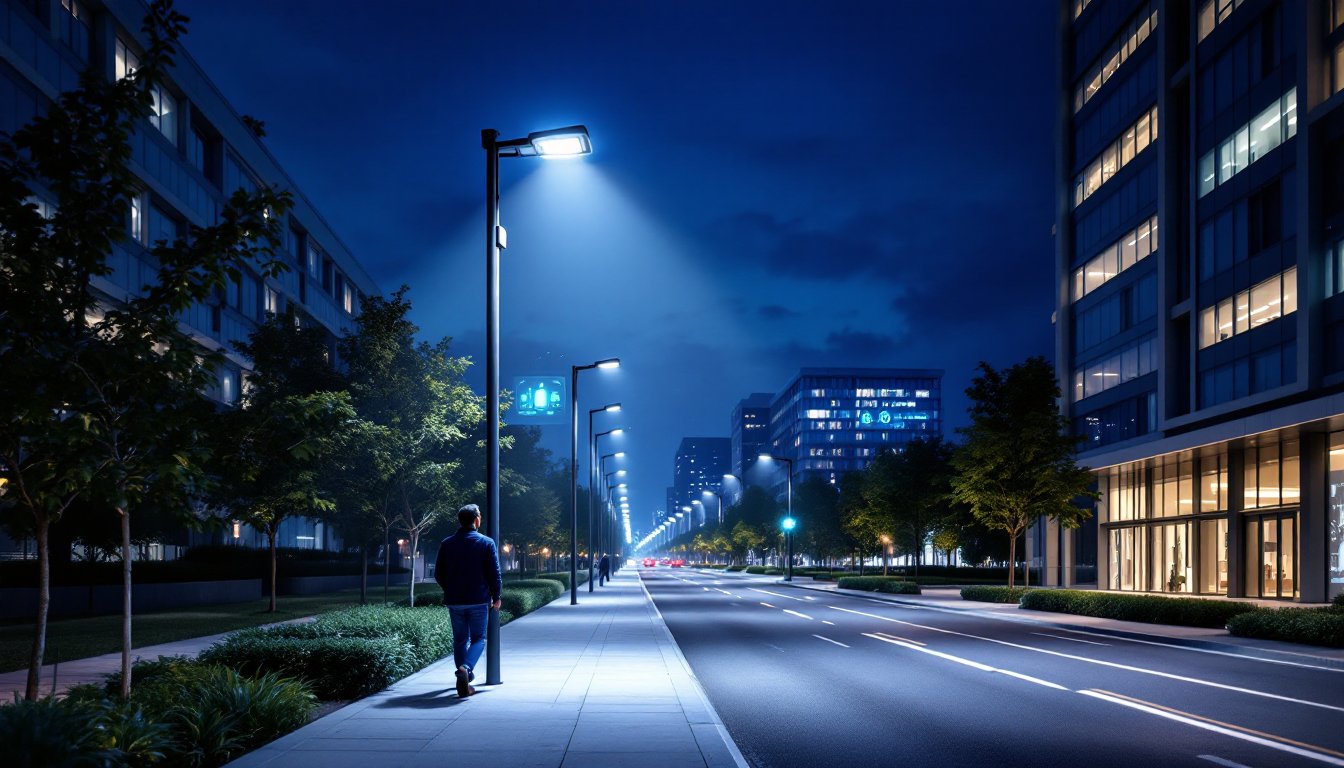
Cities across North America and Europe are replacing traditional high-pressure sodium (HPS) lamps with networked LED fixtures that do far more than illuminate sidewalks. Smart street lighting integrates sensors, wireless connectivity, and adaptive controls to reduce energy consumption by up to 80% while gathering real-time data on traffic flow, air quality, and public safety incidents. Unlike legacy systems that operate on fixed schedules, these intelligent fixtures adjust brightness based on pedestrian activity, weather conditions, and time of day. Municipalities treating streetlights as connected infrastructure, not just overhead bulbs, are seeing measurable returns in operational savings, reduced carbon emissions, and improved urban services. This article breaks down how these systems work, the technologies behind them, and the practical challenges cities face during deployment.
Table of Contents
ToggleKey Takeaways
- Smart street lighting systems reduce energy consumption by up to 80% through adaptive LED fixtures and intelligent controls, delivering $300–$500 in annual savings per fixture in mid-sized cities.
- Networked sensors embedded in streetlight poles enable real-time monitoring of traffic flow, air quality, and public safety incidents, transforming sidewalk illumination into distributed urban infrastructure.
- Motion-activated adaptive lighting and integrated safety modules—including gunshot detection and panic buttons—improve pedestrian visibility and emergency response times across cities.
- Open standards like TALQ and Zhaga connectors allow municipalities to avoid vendor lock-in and upgrade sensor capabilities modularly without rewiring existing installations.
- Deployment challenges including cybersecurity protocols (AES-256 encryption), GDPR compliance, and upfront capital costs ($400–$1,200 per fixture) require careful planning and often energy service performance contracts to offset expenses.
- Smart street lighting supports diverse urban priorities: adaptive parking management reduces search time, environmental sensors inform air quality policy, and dark-sky compliance enables seasonal dimming schedules.
What Is Smart Street Lighting and How Does It Work?
Smart street lighting replaces conventional fixtures with LED luminaires equipped with embedded controllers, wireless radios, and sensor arrays. Each light becomes a node in a networked system that communicates with a central management platform via mesh networks, cellular (4G/5G), or power line communication (PLC).
The basic workflow starts with sensors detecting ambient light levels, motion, or vehicle presence. A microcontroller in the fixture processes this data and adjusts LED output accordingly, dimming during low-traffic periods or ramping up when pedestrians approach. Data travels over the network to cloud-based or on-premises software that gives operators real-time visibility into every fixture’s status, energy draw, and maintenance needs.
Most systems use open protocols like TALQ or Zhaga-D4i to avoid vendor lock-in, allowing municipalities to mix hardware from different manufacturers. Pole-mounted gateways aggregate signals from clusters of lights and relay them to the central server. If a fixture fails or draws abnormal current, the platform flags it instantly, eliminating the need for routine patrols to spot outages.
Power delivery typically remains standard 120V or 240V AC, but some deployments integrate solar panels and battery storage for off-grid operation. Retrofitting existing poles is straightforward: disconnect the old ballast, install a compatible LED driver with control interface, and mount the antenna module. New installations may include NEMA sockets or four-pin Zhaga connectors for plug-and-play sensor upgrades.
Key Benefits of Implementing Smart Street Lighting Systems
Energy Efficiency and Cost Savings
LED technology alone cuts energy use by 50–70% compared to HPS lamps, but adaptive dimming pushes savings past 80%. A study from the U.S. Department of Energy found that networked controls reduced annual streetlight electricity costs by $300–$500 per fixture in mid-sized cities. Over a 15-year LED lifespan, that compounds into millions saved.
Smart systems also slash maintenance expenses. Predictive analytics flag fixtures nearing end-of-life before they fail, letting crews batch repairs instead of responding to individual outage calls. Remote diagnostics eliminate guesswork, technicians arrive with the correct replacement part, reducing truck rolls by 30–40%. Some platforms integrate with municipal work order systems, automatically scheduling preventive maintenance during off-peak hours.
Dynamic load management prevents grid strain. During peak demand, utilities can signal streetlights to dim slightly, imperceptible to residents but meaningful at scale. Conversely, fixtures can ramp up during emergencies or special events without manual intervention.
Enhanced Public Safety and Security
Adaptive lighting improves visibility where it matters most. Motion sensors detect pedestrians on sidewalks or vehicles approaching intersections, increasing brightness in real time. Studies from the UK’s Highways Agency show that well-lit pedestrian crossings reduce nighttime accidents by 22%.
Integrated cameras and acoustic sensors turn streetlights into distributed safety infrastructure. Gunshot detection modules triangulate the source of loud reports and alert police within seconds. Environmental sensors monitor air quality (PM2.5, NOx, ozone) and trigger alerts during hazardous pollution events. Some cities deploy panic buttons on poles that instantly brighten surrounding lights and notify emergency services.
Forensic lighting profiles help investigators. If an incident occurs, operators can query the system to see which fixtures were active, their brightness levels, and any sensor data captured during the event window. This metadata often corroborates witness statements or clarifies timelines.
Core Technologies Powering Smart Street Lights
LED drivers with 0–10V dimming or DALI (Digital Addressable Lighting Interface) enable precise brightness control. High-quality drivers maintain consistent color temperature (typically 3000K–4000K for street applications) across the dimming range and deliver >90% power factor to minimize harmonic distortion.
Wireless mesh networks like Zigbee, Thread, or proprietary protocols create self-healing topologies. If one node fails, data routes around it automatically. Mesh radios typically operate in the 2.4 GHz ISM band or sub-GHz frequencies (868 MHz in Europe, 915 MHz in North America) for better penetration through foliage and buildings.
Cellular IoT (LTE-M, NB-IoT) offers wider coverage and simpler deployment but incurs ongoing data charges. It’s ideal for sparse rural installations where mesh density is impractical. 5G brings ultra-low latency for time-sensitive applications like coordinated traffic signal prioritization.
Power line communication (PLC) uses existing electrical wiring to transmit data, avoiding the need for separate radios. It works well in dense urban grids but requires compatible utility infrastructure and struggles with electrical noise from industrial equipment.
Edge computing modules process sensor data locally, reducing cloud bandwidth and enabling faster response. A microcontroller in the fixture can execute dimming schedules, detect anomalies, and trigger alerts without waiting for round-trip communication to a distant server.
Standardized connectors like Zhaga Book 18 and NEMA ANSI C136.41 allow modular sensor upgrades. Cities can start with basic dimming controls and later add cameras, environmental monitors, or 5G small cells by swapping modules, no rewiring required.
Real-World Applications and Use Cases
Adaptive parking management: Fixtures with occupancy sensors relay space availability to mobile apps, reducing circling traffic and emissions. San Diego’s system guides drivers to open spots in real time, cutting search time by an average of 11 minutes.
Traffic flow optimization: Aggregated vehicle count data from streetlight sensors feeds into traffic management platforms, adjusting signal timing dynamically. Copenhagen uses this approach to prioritize buses and emergency vehicles during congestion.
Environmental monitoring: Poles outfitted with PM2.5 and NOx sensors create high-resolution air quality maps. Chicago’s Array of Things project correlates pollution spikes with traffic patterns, informing policy decisions on low-emission zones.
Public Wi-Fi and small cells: Streetlight poles provide power and backhaul for wireless infrastructure. New York’s LinkNYC kiosks offer gigabit Wi-Fi and USB charging, with revenue from digital advertising offsetting deployment costs.
Emergency response: During natural disasters or security events, operators can flash lights in specific patterns, boost brightness citywide, or guide evacuations by illuminating safe routes. Barcelona’s system integrates with emergency sirens and public address speakers mounted on the same poles.
Historical districts and parks: Smart controls let cities comply with dark-sky ordinances by dimming lights after midnight while maintaining safety. Flagstaff, Arizona uses astronomical timers that adjust schedules as sunrise/sunset times shift seasonally.
Challenges and Considerations for Deployment
Upfront capital costs range from $400–$1,200 per fixture depending on features, pole condition, and labor rates. Municipalities often finance projects through energy service performance contracts (ESPCs) or utility rebate programs that offset initial investment with guaranteed savings.
Cybersecurity is non-negotiable. Networked lights are potential entry points for hackers. Secure systems use AES-256 encryption, role-based access controls, and regular firmware updates. The National Institute of Standards and Technology (NIST) recommends segmenting streetlight networks from critical infrastructure like traffic signals or water systems.
Data privacy concerns arise when cameras or sensors collect imagery or movement patterns. Clear policies on data retention, anonymization, and third-party access are essential. GDPR in Europe and CCPA in California impose strict requirements on personally identifiable information.
Interoperability headaches crop up when mixing vendors. Even with open standards, implementation details vary. Cities should demand compliance certifications and conduct pilot tests before committing to large-scale rollouts.
Wireless coverage gaps in topographically challenging areas may require additional gateways or hybrid communication strategies. Dense tree canopies and tall buildings attenuate RF signals, especially at 2.4 GHz.
Permitting and codes: While lighting retrofits usually don’t require building permits, adding cameras or wireless equipment may trigger zoning reviews or historical preservation board approvals. The National Electrical Code (NEC) Article 410 governs luminaire installation, and ANSI C136 standards specify pole mounting hardware. Always verify local requirements before procurement.
Skilled labor for installation and ongoing management is scarce. Training existing electrical crews on network troubleshooting and software platforms takes time. Some cities partner with managed service providers to handle day-to-day operations while retaining strategic control.