

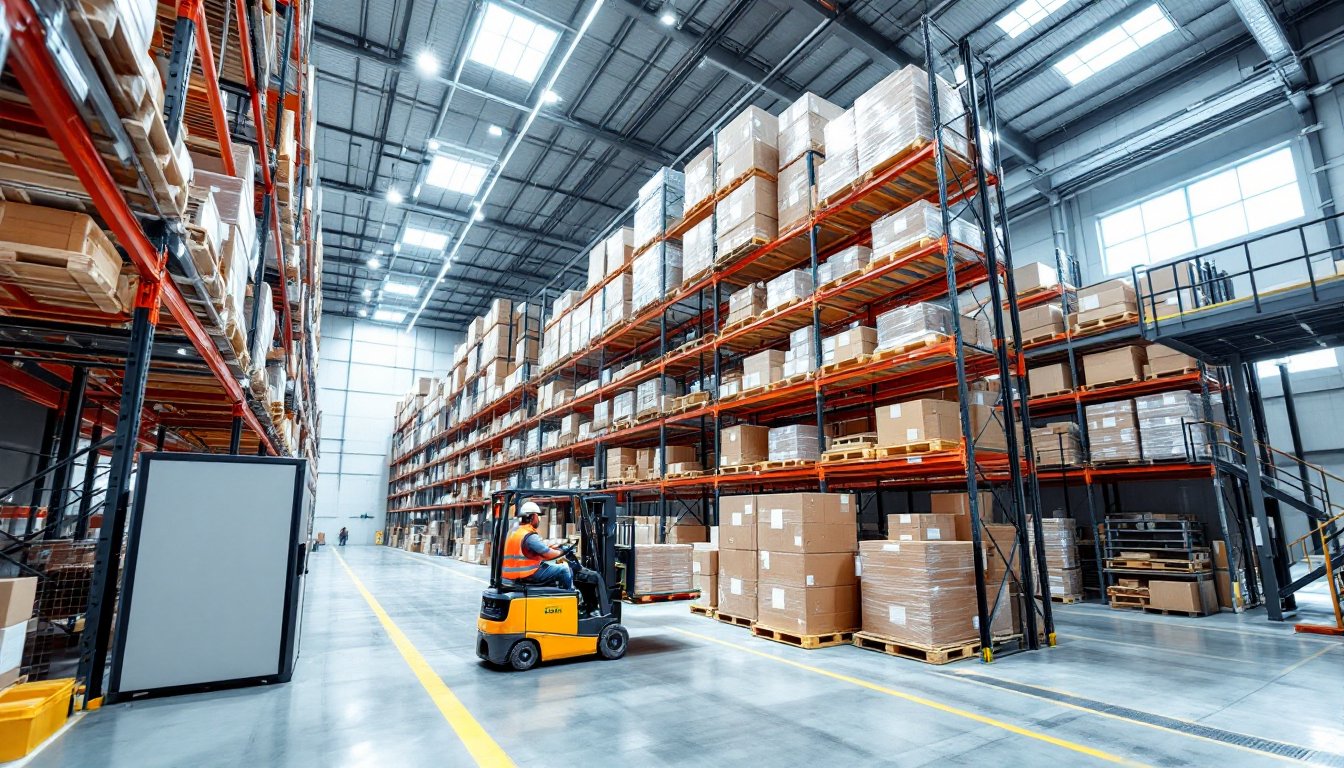
Most warehouses don’t have a space problem, they have a storage strategy problem. With real estate costs climbing and order volumes increasing, businesses can’t afford to stack boxes on the floor and hope for the best. The right storage solution transforms a cramped, chaotic facility into an efficient operation where every cubic foot earns its keep. From pallet racking to automated retrieval systems, the options have never been more diverse, or more confusing. This guide cuts through the noise and breaks down the most effective warehouse storage solutions available in 2026, helping facility managers and operations teams make decisions that maximize capacity, improve picking speed, and reduce long-term costs.
Table of Contents
ToggleKey Takeaways
- The right storage solutions for warehouse operations can increase space utilization from 50–60% to 80% or higher, effectively adding thousands of square feet of usable capacity without expanding the facility.
- Pallet racking systems remain the foundation of warehouse storage, offering flexibility and accessibility, while drive-in and drive-through options provide higher density for high-volume, low-SKU operations.
- Mezzanine floors double usable square footage by building vertically, making them ideal when ceiling height is available but floor space is limited.
- Small parts and e-commerce inventory require dedicated shelving and bin systems with proper labeling and integration to warehouse management systems for faster picking and improved accuracy.
- Automated Storage and Retrieval Systems (AS/RS) deliver 85%+ space utilization and labor savings but require significant capital investment ($500K–millions) and work best for high-volume operations with consistent SKU movement.
- A hybrid approach combining selective racking for fast movers, drive-in systems for bulk storage, and specialized shelving for small parts optimizes most warehouse operations without excessive investment.
Why Choosing the Right Storage Solution Matters for Your Warehouse
Poor storage choices cost money in ways that aren’t always obvious. A warehouse using the wrong racking system might achieve only 50-60% space utilization when it could reach 80% or higher with better infrastructure. That’s the equivalent of paying rent on 4,000 square feet of unused space in a 10,000-square-foot facility.
Beyond square footage, storage decisions directly impact labor efficiency. Workers spend less time walking and searching when inventory is organized logically and stored at appropriate heights. Pick rates improve, order accuracy goes up, and overtime costs drop.
Safety is another critical factor. Overloaded shelves, unstable stacks, and makeshift storage create hazards that lead to injuries and damaged goods. The Occupational Safety and Health Administration (OSHA) cites storage-related incidents as a leading cause of warehouse injuries. Properly engineered storage systems with appropriate load ratings prevent accidents and protect both people and inventory.
Finally, the right storage system scales with business growth. A system that works for 5,000 SKUs might collapse under 15,000. Planning for future expansion, whether through modular shelving or automation-ready infrastructure, avoids costly do-overs down the road.
Pallet Racking Systems: The Foundation of Warehouse Storage
Pallet racking remains the workhorse of warehouse storage, and for good reason. It handles heavy loads, accommodates standard 48″ × 40″ pallets (and other sizes), and offers flexibility that few other systems can match.
A basic selective racking system uses vertical uprights and horizontal beams to create adjustable shelving bays. Beam levels adjust in 2-inch increments, allowing facilities to customize heights based on product dimensions. Typical load capacities range from 2,500 to 4,000 pounds per beam pair, though heavy-duty configurations can handle much more. Always verify load ratings with the manufacturer and ensure anchor bolts secure uprights to the concrete slab per local building codes.
One major advantage of selective racking: every pallet is accessible without moving others. That makes it ideal for operations with high SKU counts and moderate inventory turnover. The downside is space efficiency. Selective systems require aisles wide enough for forklifts, typically 10 to 12 feet, which limits density.
For warehouses prioritizing cost per pallet over accessibility, push-back or gravity flow systems offer higher density by storing pallets multiple positions deep. These work well for products with consistent SKU movement, like bulk food distribution or beverage storage.
Selective vs. Drive-In Racking
Selective racking provides direct access to every pallet, making it the go-to choice for operations with diverse inventory. It’s easy to install, reconfigure, and expand. Forklifts drive between rows, so aisle width dictates overall density.
Drive-in racking eliminates aisles by allowing forklifts to drive directly into the rack structure, storing pallets on rails that run from front to back. Pallets load and unload from the same side (last-in, first-out, or LIFO), which increases storage density by 60-75% compared to selective systems.
The trade-off? Selectivity. Drive-in works best for high-volume, low-SKU operations like cold storage or seasonal goods where entire bays hold the same product. It’s also slower, drivers must carefully navigate the rack interior, and only the front-most pallet in each lane is accessible.
Drive-through racking is a variation that allows loading from one side and unloading from the other (first-in, first-out, or FIFO). This suits perishable goods that require stock rotation, though it demands access to both ends of the rack.
Both drive-in and drive-through systems require guide rails and structural reinforcement because forklifts operate inside the racking. Budget for potential damage, bumps and scrapes are common, and bent uprights compromise structural integrity.
Shelving and Bin Systems for Small Parts Management
Not everything ships on a pallet. Small parts, components, and e-commerce inventory need storage systems designed for piece picking, not bulk handling.
Boltless shelving (sometimes called rivet shelving) offers an affordable, flexible solution for items under 500 pounds per shelf. Shelves adjust without tools, and units can be reconfigured as inventory needs change. Standard units are 36″ or 48″ wide and 6 to 8 feet tall, perfect for hand-picking environments.
For higher-density storage of small parts, bin shelving or drawer systems reduce picking time and improve accuracy. Bins keep parts separated and visible, preventing the “dig through a box” problem that slows order fulfillment. Label each bin with SKU numbers, barcodes, or QR codes to integrate with warehouse management systems (WMS).
Carton flow racks use angled roller or wheel beds to move product forward as the front item is picked. Gravity does the work, and the system ensures FIFO rotation. These work especially well in pick modules where multiple workers access the same SKU simultaneously.
For very small, high-value parts (electronics, fasteners, medical supplies), vertical lift modules (VLMs) or vertical carousel systems deliver bins directly to the operator at an ergonomic height. These systems save floor space by building vertically, some reach 30 feet or more, and they reduce picking errors by presenting exactly the right bin.
No matter the system, proper labeling and zoning are essential. Small-part storage fails when items are misplaced or zones aren’t clearly defined. Use floor marking tape, overhead signs, and logical numbering schemes (aisle-bay-level notation is standard).
Mezzanine Floors: Doubling Your Storage Capacity Vertically
When floor space is maxed out but ceiling height isn’t, a mezzanine floor can double usable square footage without the cost of building a new facility or leasing additional space.
A mezzanine is a raised platform, essentially a second floor, supported by structural columns. Most warehouses have ceiling heights of 20 to 30 feet: mezzanines typically install at 10 to 12 feet above the ground floor, leaving adequate headroom above and below.
Structural steel mezzanines are the most common type, using I-beams or C-channel construction to support heavy loads. These can handle 125 pounds per square foot or more, making them suitable for shelving, pallet storage, or even light manufacturing. They’re considered permanent structures in most jurisdictions and may require building permits and inspections. Check local codes, some municipalities classify mezzanines as occupiable floors, triggering additional fire safety and egress requirements.
Rack-supported mezzanines integrate directly with pallet racking, using the rack uprights as structural support. This approach saves on material costs and works well when the mezzanine is solely for storage. But, these systems aren’t suitable for heavy foot traffic or equipment use.
Access is a key consideration. Stairs are the safest option for workers and meet International Building Code (IBC) requirements for egress. Some operations add conveyor systems or vertical lifts to move product between levels, reducing manual handling and speeding throughput.
Mezzanines shine in operations that mix picking and bulk storage. Use the ground floor for high-velocity items and forklifts: put slower-moving inventory upstairs. The added square footage also creates opportunities for offices, packing stations, or quality control areas, freeing up prime floor space for fulfillment.
Automated Storage and Retrieval Systems (AS/RS)
Automated Storage and Retrieval Systems (AS/RS) represent the high end of warehouse storage technology. These systems use computer-controlled cranes, shuttles, or robots to move inventory with minimal human intervention.
A typical AS/RS consists of high-density racking (often 40 feet or taller), automated cranes that travel on rails, and software that manages inventory location and retrieval. When an order comes in, the system locates the required pallet or tote, retrieves it, and delivers it to a pick station, all in a matter of minutes.
The benefits are significant: space utilization can exceed 85%, since aisles shrink to just the width of the crane (as narrow as 5 feet). Labor costs drop because fewer workers are needed for picking and putaway. Accuracy improves because the system tracks every movement and eliminates manual errors.
But AS/RS isn’t cheap. Systems start around $500,000 for smaller installations and can easily reach several million dollars for large-scale operations. The payback period typically ranges from three to seven years, depending on labor savings and throughput gains.
AS/RS makes sense for operations with high order volumes, consistent SKU movement, and limited floor space. Cold storage facilities, pharmaceutical distributors, and e-commerce fulfillment centers are common users. If inventory turns over slowly or SKU counts change frequently, the system’s rigidity can become a disadvantage.
Maintenance is another factor. Automated systems require ongoing service contracts and spare parts inventory. A single crane failure can halt operations, so redundancy and preventive maintenance are critical.
For businesses not ready for full automation, semi-automated solutions like shuttle systems or automated guided vehicles (AGVs) offer a middle ground. These integrate with existing racking and provide some efficiency gains without the full infrastructure commitment.
Choosing the Best Storage Solution for Your Warehouse Needs
There’s no one-size-fits-all answer. The best storage solution depends on inventory characteristics, order profiles, and operational priorities.
Start with an SKU analysis. How many SKUs does the facility handle? What’s the turnover rate for each? High-velocity items belong in accessible locations, selective racking or flow systems. Slow movers can go higher or deeper in drive-in configurations.
Next, evaluate space constraints. If floor space is limited but ceiling height is available, look at very narrow aisle (VNA) racking, mezzanines, or vertical storage. If the building is wide but short, prioritize horizontal density with drive-in or push-back systems.
Consider material handling equipment. Reach trucks and order pickers work in narrower aisles than standard counterbalance forklifts. Automated systems eliminate forklifts entirely but require significant capital investment.
Future growth matters, too. Modular systems like boltless shelving and adjustable pallet racks scale easily. Automated systems are harder to expand and may lock a facility into a specific footprint.
Finally, budget for installation and permitting. Pallet racking and shelving typically don’t require permits (though seismic bracing may be mandatory in certain regions). Mezzanines and structural modifications usually do. Factor in costs for professional installation, engineering drawings, and inspections.
For most operations, a hybrid approach works best: selective racking for fast movers, drive-in for bulk storage, and shelving for small parts. The goal isn’t to pick the trendiest system, it’s to match storage infrastructure to how the warehouse actually operates.