

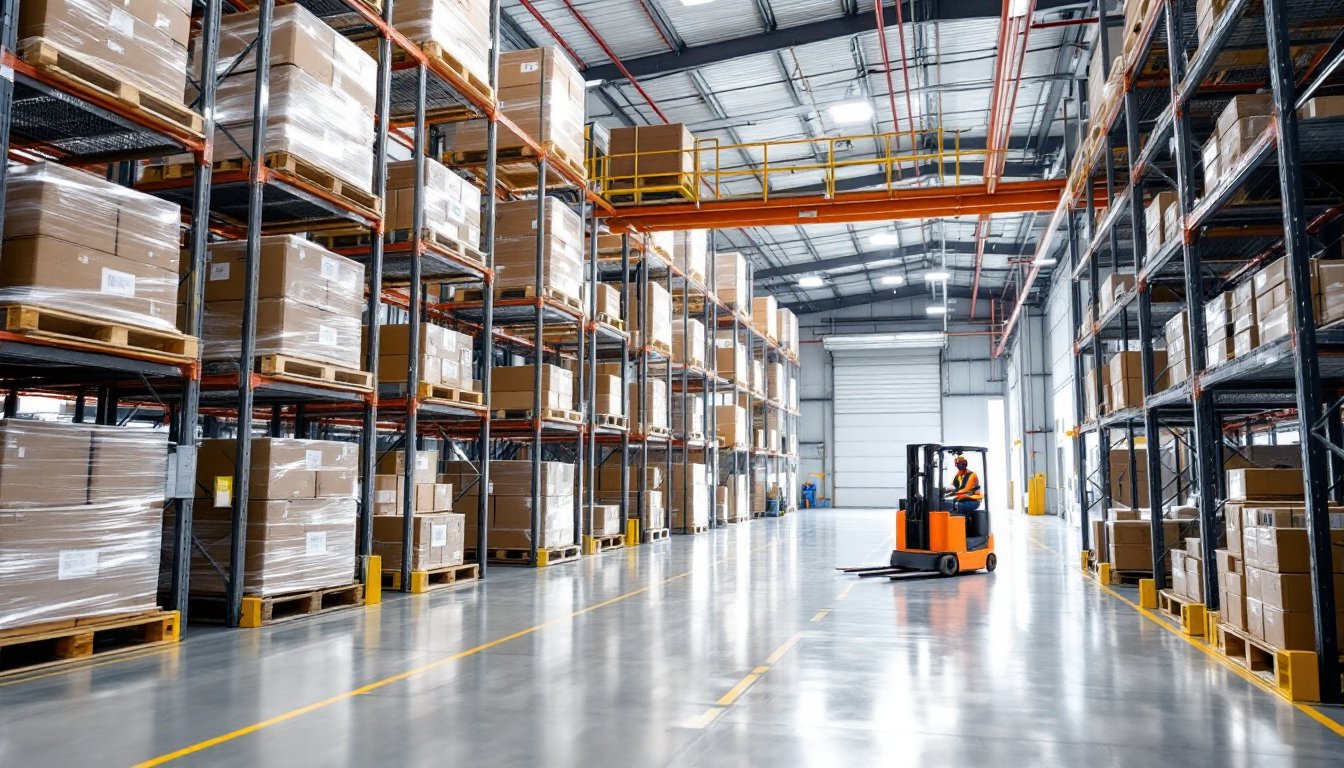
Running out of floor space doesn’t always mean a business needs a bigger warehouse. Often, the problem isn’t the square footage, it’s how that space is organized. With real estate costs climbing and inventory demands shifting, smart warehousing storage solutions can double usable capacity without adding a single square foot. Whether managing a small distribution center or a sprawling fulfillment operation, the right storage solutions warehouse setup reduces picking times, minimizes product damage, and keeps operations running smoothly. This guide breaks down proven systems, selection criteria, and layout strategies that deliver measurable returns in 2026.
Table of Contents
ToggleKey Takeaways
- Optimized warehouse storage solutions can increase storage capacity by 40–60% in existing facilities without expanding square footage, helping businesses avoid costly building expansions.
- Different storage systems serve specific needs: selective pallet racking for high-SKU operations, drive-in racking for bulk goods, and pallet flow racks for fast-moving items requiring FIFO rotation.
- Building structure, product characteristics, and material handling equipment must align for effective warehouse storage—mismatch between equipment and racking layout creates inefficiency and safety risks.
- Strategic layout design using ABC velocity analysis and aggressive vertical space utilization can reduce picking times by placing fast-moving items in accessible zones near shipping docks.
- Annual inspections, load capacity compliance with RMI standards, and OSHA adherence for aisles and stacking heights are non-negotiable for safe, scalable warehouse storage solutions.
- Modular, adjustable warehouse storage systems outperform static designs when inventory demands shift, allowing rapid reconfiguration for seasonal spikes or new product lines without major downtime.
Why Strategic Warehouse Storage Matters for Modern Operations
Warehouse storage isn’t just about stacking boxes higher. A well-planned system directly impacts throughput, safety, and bottom-line costs. Poor storage configurations create bottlenecks during peak seasons, increase labor hours for order fulfillment, and raise the risk of inventory shrinkage or damage.
Modern operations face unique pressures: e-commerce demands faster turnaround times, just-in-time inventory models require precise accessibility, and labor shortages make efficiency non-negotiable. Storage solutions warehouse designs that worked a decade ago, rows of static shelving and floor stacking, can’t keep pace with these demands.
The numbers back this up. According to industry benchmarks, optimized vertical storage can increase capacity by 40–60% in existing facilities. That means delaying or avoiding costly building expansions. Better organization also cuts picking errors, which directly affects customer satisfaction and return rates.
Beyond capacity, strategic storage improves workplace safety. Properly rated racking systems prevent collapses, clear aisles reduce forklift accidents, and ergonomic placement minimizes repetitive strain injuries. OSHA standards (1910.176) require safe stacking heights and load limits, compliance isn’t optional, and a solid storage plan makes adherence easier.
Finally, flexible systems adapt as inventory changes. Seasonal spikes, new product lines, or shifts in SKU velocity shouldn’t require a complete redesign. Modular warehousing storage solutions let operations scale up or reconfigure without major downtime.
Types of Warehouse Storage Solutions to Consider
Choosing the right system depends on product dimensions, weight, turnover rate, and handling equipment. Here’s a breakdown of the most effective options for 2026.
Pallet Racking Systems
Selective pallet racking remains the workhorse for many warehouses. Each pallet is directly accessible from the aisle, making it ideal for operations with high SKU diversity and moderate turnover. Standard configurations use uprights (vertical frames) and load beams (horizontal supports) rated for specific weight capacities, commonly 2,500 to 5,000 pounds per beam level. Always verify the manufacturer’s load rating and match it to actual pallet weights, including safety margins.
For high-density storage where FIFO (first-in, first-out) isn’t critical, drive-in or drive-through racking allows forklifts to enter the rack structure itself. This reduces aisle space and increases pallet positions per square foot, but limits SKU variety since pallets are stored multiple-deep. It works well for bulk products with low turnover, like seasonal goods or raw materials.
Push-back racking offers a middle ground: pallets load from one side and slide back on inclined rails, storing 2–6 deep. The LIFO (last-in, first-out) flow suits operations that don’t require strict rotation but need better density than selective racks.
For fast-moving goods, pallet flow racks (or gravity flow) use roller or wheel tracks. Pallets load at the high end and roll to the picking face by gravity. This system enforces FIFO automatically and is a favorite in food distribution and pharmaceuticals where expiration dates matter.
Cantilever racking handles long, bulky items, lumber, piping, steel bar stock, or furniture. Arms extend from a central column without front uprights, making loading easier with forklifts or overhead cranes. Capacities vary, but heavy-duty systems handle 3,000+ pounds per arm.
Shelving and Mezzanine Solutions
Industrial shelving suits smaller items, hand-picked orders, and parts storage. Steel shelving units typically support 500–1,000 pounds per shelf (evenly distributed) and are adjustable on 1-inch or 2-inch increments. Wire decking improves visibility and fire suppression sprinkler penetration, many jurisdictions require it for code compliance.
For warehouses with high ceilings (16 feet or more), mezzanine platforms create a second level for storage, packing stations, or office space. Engineered mezzanines must meet local building codes (often under the International Building Code, IBC) and typically require permits. Load capacities range from 125 pounds per square foot (office use) to 250+ psf for heavy storage. Factor in the cost of stairs, handrails, and potentially elevators or conveyors for material movement.
Vertical lift modules (VLMs) and automated storage and retrieval systems (AS/RS) represent the high-tech end of warehouse storage. VLMs are enclosed units with trays that deliver items to an access window, great for small parts in limited floor space. AS/RS uses robotic cranes to store and retrieve pallets or totes in high-density configurations. Both require significant upfront investment but can pay off in labor savings and space utilization for high-volume operations.
Key Factors to Evaluate When Choosing Storage Systems
Not every system fits every warehouse. Here’s what to weigh before making a purchase.
Building structure and floor capacity: Check the warehouse’s slab thickness and reinforcement. Standard warehouse floors support around 5,000–6,000 pounds per square foot (psf), but older buildings or those not originally designed for heavy racking may be lower. Heavily loaded racks concentrate weight at the uprights, so a structural engineer should review plans for high-density systems. Ceiling height and column spacing also limit options, clear height dictates how many beam levels fit, and interior columns can interfere with aisle layouts.
Product characteristics: Match the storage system to what’s being stored. Fast movers near shipping docks, slow movers toward the back. Fragile items need shelving with dividers or bins: heavy bulk goods need reinforced pallet racks. Measure actual pallet dimensions, standard 48″ × 40″ GMA pallets are common, but some industries use 42″ × 42″ or 48″ × 48″ variants. Beam spacing must accommodate the largest pallet (plus clearance) without wasted vertical space.
Material handling equipment: The racking system and forklifts need to work together. Counterbalance forklifts require wider aisles (typically 11–12 feet for selective racking): reach trucks operate in narrower aisles (8–10 feet) and can access higher levels: turret trucks or very narrow aisle (VNA) trucks work in aisles as tight as 5–6 feet but cost more and require guided rail systems. Choose racking first, then spec the equipment, or vice versa if equipment is already on hand.
Safety and compliance: Racking must meet RMI (Rack Manufacturers Institute) standards, and installations should follow ANSI MH16.1 guidelines. Inspections are required annually (or after impacts). Post load capacity signs on each bay, install column protectors at aisle ends, and ensure anchoring bolts meet seismic requirements if in an earthquake-prone region. Some jurisdictions mandate permits for rack installations over certain heights.
Budget and ROI: Selective racking is the most affordable (roughly $50–$100 per pallet position for materials), while push-back or flow racks run $150–$300+ per position. Mezzanines cost $25–$75 per square foot installed, depending on load rating and finishes. Calculate payback based on space gained, labor saved, and avoided building expansion costs.
Best Practices for Optimizing Your Warehouse Layout
Even the best racking system underperforms in a poorly planned layout. These tactics maximize warehousing storage solutions effectiveness.
Use vertical space aggressively: If the building has 24-foot clear height, don’t settle for 12-foot racks. Add beam levels to reach at least 20 feet (leaving clearance for sprinklers and lighting). This might mean upgrading to reach trucks, but the capacity gain justifies the equipment cost.
Zone by velocity: Apply ABC analysis, A items (top 20% of SKUs by volume) go in the most accessible locations near packing or shipping. B items fill mid-range zones, and C items (slow movers) occupy deep storage or upper levels. This reduces travel time and speeds picking.
Design logical traffic flow: Receiving at one end, shipping at the other, with cross-aisles for shortcuts. Avoid dead-end aisles where forklifts must back out. One-way aisles can work in VNA setups but require discipline and signage.
Carry out slotting software: Modern warehouse management systems (WMS) analyze order history and suggest optimal slot assignments. Even a basic slotting strategy, grouping frequently co-picked items, cuts minutes per order.
Plan for flexibility: Use adjustable beams and modular shelving. Seasonal peaks or new product lines will demand changes. Bolted systems reconfigure faster than welded ones.
Maintain clear aisles and safe stacking: OSHA requires 18-inch clearance below sprinkler heads and prohibits stacking that blocks exits or fire equipment. Mark aisle boundaries with floor tape or paint, yellow for caution zones, red for fire equipment. Keep aisles free of pallets and debris.
Regular audits and maintenance: Inspect racking monthly for bent beams, missing clips, or rust. After any forklift impact, assess the damage, even minor bends can compromise load capacity. Replace damaged components immediately.
Conclusion
Smart warehouse storage solutions turn wasted cubic feet into productive capacity. The right combination of pallet racking, shelving, and layout design directly improves throughput, safety, and scalability. Start by auditing current space usage, measuring actual product dimensions, and calculating load requirements. Match systems to handling equipment and building constraints, and don’t skip structural evaluations or code compliance. With 2026’s tighter margins and faster fulfillment expectations, optimized storage solutions warehouse setups aren’t optional, they’re the foundation of competitive operations.